Prime Minister Andy Burnham has convened a summit to improve the UK's response to wildfires following a summer of devastating blazes across the country. Speaking at the Wildfires 27 Resilience Summit, held at the National Resilience Centre of Excellence in Aintree, Liverpool, Mr Burnham thanked firefighters and said the response to the emergency showed the "best of Britain", but stressed the need to build resilience "for the next time".
Summit addresses growing wildfire threat
Mr Burnham brought together fire chiefs, industry leaders, ministers and academics to take action and prepare for future incidents. He told the summit, also attended by Communities Secretary Angela Rayner, that "words are not enough" and that action is needed. "I do believe we need to build up the resilience of the country, from the bottom up, and that does mean looking at our fire and rescue services and supporting them," he said.
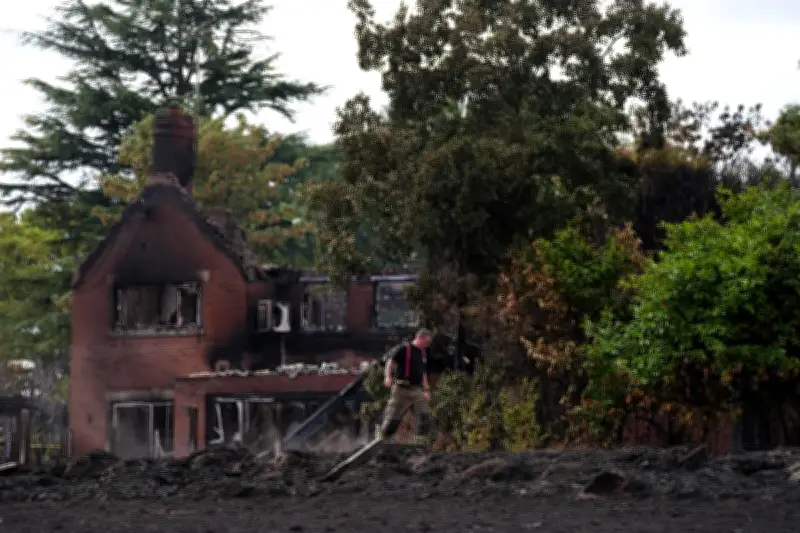
Reflecting on the blaze in Stourbridge, West Midlands, where 19 homes were destroyed, Mr Burnham said: "I'll never forget Stourbridge on that day. You know, we saw homes lost in a heartbeat, that's the only way to put it. The way the fire developed – devastating for those families that I'm sure they're still recovering." He added: "We saw in that moment the best of Britain, as always, people out there pulling together. It was a great response, in very challenging circumstances. And we thank everybody who was part of it, but also we commit to them now, to learn from it, to come back even stronger, next time, because sadly, there will be a next time."
New equipment and measures announced
Before speaking, Mr Burnham toured the resilience centre, which helps coordinate the fire service response to major incidents across the country. Fire service staff showed him high-powered drones, high-volume pumps and new vehicles equipped to tackle blazes on hillsides.
The Government has announced new measures, including equipping military planes and helicopters – such as the RAF's Chinook helicopters and A400M aircraft – to tackle blazes. This will provide the first military aerial firefighting capability based permanently in the UK. Frontline firefighters will also receive lightweight, wildfire-specific personal protective equipment, which is lighter and more breathable than the current kit designed for buildings, allowing it to be worn for longer periods.
To prevent fires from starting, £25 million has been allocated to restore dried-out peatlands in England so they hold more water and act as natural firebreaks. Financial support will also be provided for farmers to dig ponds and remove burnable materials in high-risk areas.
Record summer of wildfires
The summit follows one of the most severe summers for wildfires in the UK, amid the hottest summer on record and widespread drought. In England and Wales, fire crews responded to 1,132 wildfires in the year up to August 16 – more than the total recorded in the whole of 2025 – with major blazes in places such as Dunwich Heath, Suffolk, and Stourbridge.
An emergency alert was sent to mobile phones across England and Wales on August 14, warning of a very high national wildfire risk. The Government is also convening a meeting between UK and devolved governments to coordinate a nationwide response, after major blazes in the Cairngorms, Scotland, Northern Ireland's Mourne Mountains and the Rhinogydd mountains in South Wales.
Communities Secretary Angela Rayner said: "The wildfires we've faced this year have been unrelenting, leaving a devastating impact on communities, homes and our precious countryside. That's why we're taking immediate action now while working across government and the sector to build a stronger, more resilient national response to wildfires for the future."