Brazil's Amazon Oil Rush Divides Oiapoque: Hope and Fear in the Equatorial Margin
In the remote municipality of Oiapoque, located at Brazil's northernmost tip in the state of Amapá, a profound transformation is underway. This densely forested area, larger than Wales and home to about 30,000 inhabitants, has become the operational base for Petrobras's ultra-deepwater drilling in the Atlantic Ocean. As the state-controlled company explores for oil in the fragile Equatorial Margin, the community is caught between hope for economic development and fear of environmental devastation.
A Town on the Edge of Change
Oiapoque is an isolated region where less than 2% of houses have access to proper sewage treatment, and one-third of residents are Indigenous people from four ethnic groups living in 68 hamlets. Despite its remoteness, it is now at the heart of Brazil's ambitious oil expansion plans. The Equatorial Margin, stretching 2,200km along the coast, includes 19 blocks in the Amazon River mouth basin, with Petrobras holding a 100% stake in six blocks. Exploratory drilling began in October 2025 on block FZA-M-59, with production potentially starting between 2032 and 2035.
This development promises significant economic benefits, including projections of 54,000 direct and indirect jobs and a 60% increase in Amapá's GDP. Already, new residents are flocking to Oiapoque, drawn by opportunities in safety infrastructure and improved air transport. A rescue exercise in August generated 50 million Brazilian reais in economic activity, equivalent to 10% of the city's GDP. However, this growth has led to rising food and rent prices, with 800 students waiting for school vacancies and new neighbourhoods emerging in deforested areas.

Environmental and Indigenous Concerns
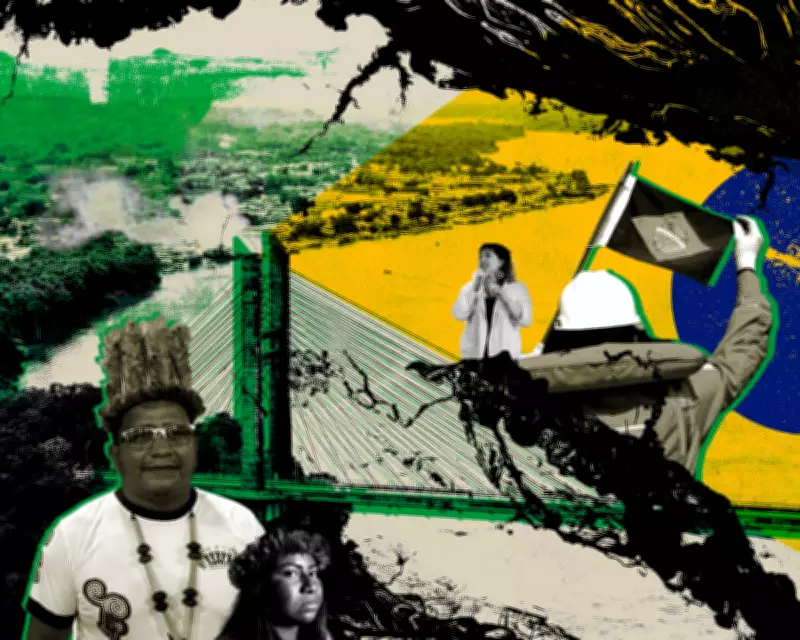
Indigenous leaders, such as Edmilson dos Santos Oliveira, Mariazinha Baré, and Luene Karipuna, emphasize that they are not against development but demand their voices be heard. They fear that oil exploration could irreversibly damage their way of life. "If they pollute our rivers, what will become of us?" asks Oliveira, general coordinator of the Council of Chiefs of the Indigenous Peoples of Oiapoque. He notes that daily low-flying aircraft have already driven birds away, disrupting local ecosystems.
The Equatorial Margin is renowned for its biodiverse marine ecosystems, including rare mangroves and coral reefs that regulate global temperatures. A study in Nature Sustainability warns that containing an oil spill here would be more challenging than the BP disaster in the Gulf of Mexico, threatening species like jaguars and economic activities such as açaí harvesting and fishing. In January, a leak of 113 barrels of drilling fluid occurred, leading Ibama, the federal environmental regulator, to fine Petrobras 2.5 million Brazilian reais and express serious concern about toxic substances affecting marine life.
Broader Implications and Historical Context
Brazil faces a paradox as it positions itself as a global leader in the energy transition while aspiring to become the world's fifth-largest oil producer by 2030. Oil has been the country's main export for two consecutive years, surpassing soya beans. Miriam Garcia of World Resources Institute Brasil notes that this tension is common in nations transitioning away from fossil fuels, highlighting the need for increased energy efficiency and universal access to renewable energy.
Critics argue that Brazil lacks mandatory safeguards for large-scale projects, with environmental legislation weakened over time. Caroline Rocha of Laclima points out that public consultations often occur too late, after significant investment has been made. Federal prosecutor Felício Pontes Jr. adds that affected communities are frequently rendered invisible, a practice dating back to the military dictatorship.
Historical examples, such as the Belo Monte dam, show that promises of improved living standards often go unfulfilled. Communities there still lack electricity and food, with fishers receiving inadequate compensation. Similarly, in the Urucu field—Brazil's largest onshore oil and gas project—cities like Carauari and Manaus face basic shortages despite receiving royalties.

Economic and Policy Challenges
Brazil's oil revenue distribution model, based on royalties from the 1980s, has been deemed "obsolete and disconnected" by the federal court of accounts, leading to excessive resource concentration. This geographical lottery creates wealth disparities, with some beneficiaries ranking among the world's richest nations per capita. Promises from pre-salt reserves remain unfulfilled due to governance issues, and Brazil's sovereign fund was abolished in 2018 to pay public debts.
In response, President Luiz Inácio Lula da Silva has ordered guidelines for an energy transition fund financed by oil and gas revenues, aiming for a just transition away from fossil fuels. However, this document has yet to be published. Meanwhile, 20 billion Brazilian reais from oil revenues were allocated in 2024 to address climate crisis impacts, such as floods in southern Brazil.
Research by the Institute for Socioeconomic Studies indicates that at least 45 billion Brazilian reais is tied up in disputes or stranded, with fiscal rules limiting social and climate policy investments. Alessandra Cardoso of Inesc concludes that "social redemption through oil revenues is a mirage," underscoring the complex challenges facing Brazil as it navigates development and environmental stewardship in the Amazon.