
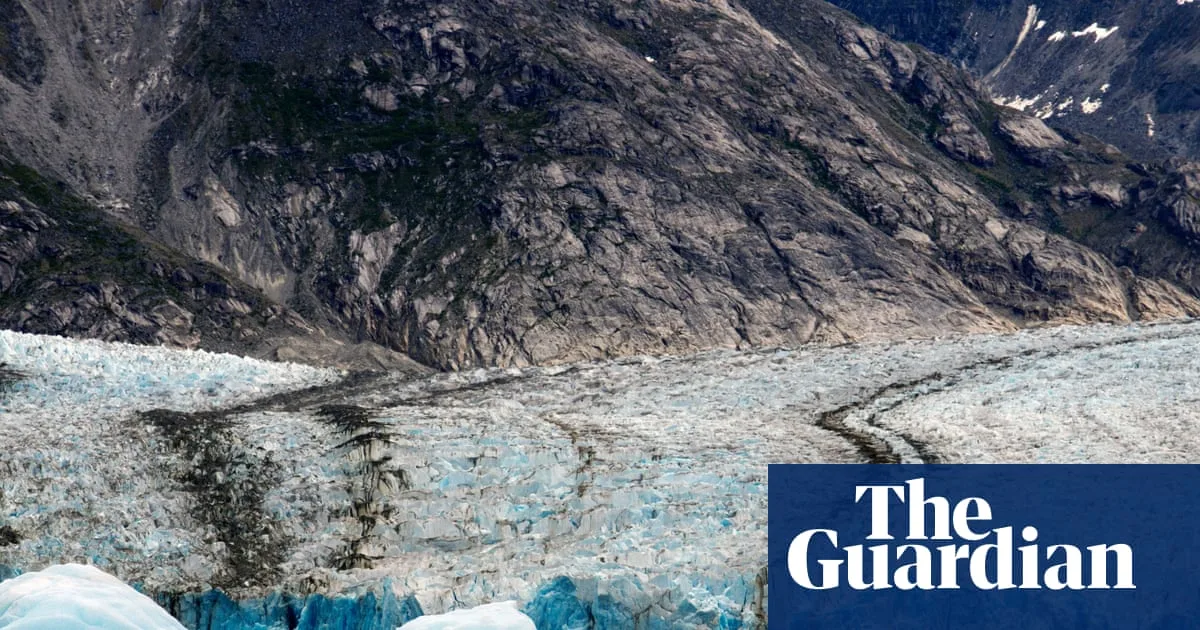
A mega tsunami in Alaska last year has underscored the growing threat to cruise ships from climate-driven rockslides and glacier retreat, according to a new study. The 481-metre wave struck the Tracy Arm fjord in south-east Alaska in August 2025 after a massive rockslide near the toe of a glacier, making it the world's second-tallest tsunami ever recorded.
The event began at 5.26am local time on 10 August 2025, when a landslide collapsed 1km vertically onto the South Sawyer glacier and into the narrow, 48km fjord. Researchers from the University of Calgary, led by geomorphologist Dan Shugar, reported that the tsunami reached a height of 481 metres, taller than the Eiffel Tower at 330 metres. No fatalities occurred due to the early hour, but the area is frequented by cruise ships, with approximately three vessels passing through daily.
Just hours after the landslide, a sightseeing vessel from Juneau and a National Geographic tour boat, each capable of carrying over 100 passengers, were due to enter the fjord. The day before, two cruise ships carrying thousands of passengers had visited, with another scheduled for the following day. Dennis Staley of the US Geological Survey described the event as 'a historic event' and said, 'I feel like we dodged a bullet.'
The study, published in Science, noted that the tsunami was only slightly smaller than the world's tallest, recorded in Lituya Bay, Alaska, in 1958 at 530 metres. It also triggered a 36-hour seiche, a standing wave that oscillates within a closed body of water. Eyewitness accounts included kayakers camping 55km away who reported water surging past their tent, and a motor vessel observer 50km from the landslide who saw a 2 to 2.5 metre wave cresting along the shoreline.
Researchers highlighted that landslide-generated tsunamis can have substantially higher runups than earthquake tsunamis, especially in confined water bodies like fjords. They attributed the increased risk to climate crisis-driven glacier retreat, stating that 'without the rapid glacier retreat, the landslide would likely not have resulted in such a wave.' Annual cruise passenger numbers in Alaska have risen from about 1 million in 2016 to 1.6 million in 2025, while glacier retreat and permafrost degradation accelerate across the Arctic.
The study called for stronger risk mitigation measures, including systematic monitoring of unstable slopes, more realistic tsunami modelling, and enhanced protection for communities, tourists and infrastructure. Previous Alaskan tsunamis include an 18 to 55 metre wave in Kenai fjords in 2024 and a 193 metre wave in Taan fjord in 2015, both linked to landslides near receding glaciers.




