
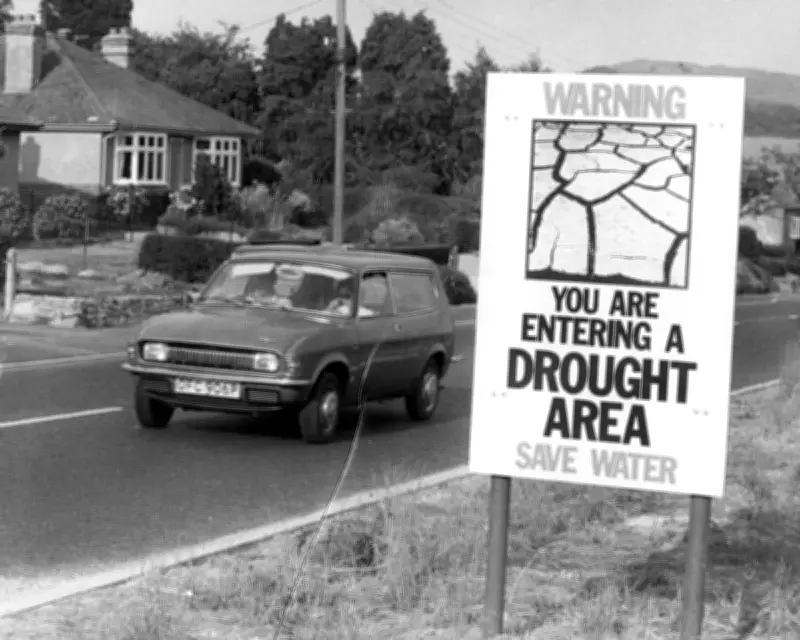
Historic 1976 Heatwave Now the New Normal
The summer of 1976 remains seared into national memory as a record-breaking heatwave that brought 15 consecutive days with peak temperatures above 32C. Harvests failed, farmers despaired, Britain imported an extra million tonnes of grain, food prices rose by 12%, taps ran dry, and each day 250 people died from heat-related causes. Half a century later, 32C no longer feels shocking as Britain braces for temperatures up to 40C.
On Monday, the UK Health Security Agency (UKHSA) issued its second-ever red heat health alert for six regions of England, while the Met Office issued a rare red weather warning for Wednesday and Thursday. With temperatures predicted to pass 40C, people are being advised to close doors and windows and shut curtains to stay cool at home.
Warnings and Personal Impact
Stephanie Robson, of Parents for Future, spoke at a summer of 1976 anniversary event organised by the University of Reading, Newcastle University and the Royal Meteorological Society in partnership with the Met Office. Holding her six-month-old child, she said: "When I was a child, sunny summer days felt exciting. I do not want drawn curtains and closed windows to become the defining image of [my child's] summer."
The event, held in an air-conditioned basement in King's Cross, brought together MPs, policymakers and members of the public. Several phones lit up as the UKHSA issued its red warning.
Climate Context and Temperature Rise
While the 1976 heatwave was an extraordinary weather event, it took place in a much cooler world. In the past 50 years, average global temperatures have risen by about 1C. But for southern England, this number is between 3C and 4C. Ed Hawkins, professor of climate science at the University of Reading, explained: "This increase is roughly what we're seeing in today's forecast. Greenhouse gas emissions, primarily from burning fossil fuels, means British summers have already become hotter. Our new research shows that a comparable event to 1976 would be 3 degrees hotter today. Our summers are becoming increasingly unrecognisable."
Despite its place in national memory, 1976 is only the sixth-warmest summer on record, with the summer of 2025 topping the rankings – for now.
Future Projections and Drought
The Met Office has issued a new projection of what a heatwave like that of 1976 could look like in the 2050s. Under this modelling, the UK could see a 14-day heatwave event with temperatures over 40C for nine consecutive days. Temperatures could peak at 45C in England, 38C in Scotland, 41C in Wales and 30C in Northern Ireland. "This is only plausible because of high greenhouse gas emissions, the majority of which come from burning fossil fuels," the Met Office said in a statement.
Laura Tobin, English broadcast meteorologist and scientist, recalled reporting on the first red heat health alert in the summer of 2022: "I remember I stood there and said that temperatures will reach 40 degrees and the reality hit me. I just had to take a moment and go to my room and realise what I said and what it meant, that people will die. And they did. It played out that nearly 3,000 people died in the UK and 61,000 people died across Europe. The reality in [today's heatwave] is that people will die. It has stopped becoming a hot weather story and it has become an extreme weather story."
Alongside record heat, 1976 also brought historic drought, when many homes did not have running water and depended upon standpipes. New modelling by Hayley Fowler, professor of climate change impacts at Newcastle University, shows that if the same heatwave were to happen today, it would be 20% dryer and the water deficit would be 10% greater.
Water Supply and Adaptation
Without investment to reduce water leakage, build more reservoirs and create better water storage, England alone could face a public water supply shortfall of about 5bn litres per day by 2055. Emma Pinchbeck, chief executive of the Climate Change Committee, said: "What was extraordinary for my mother's generation is not extraordinary for my children. Even if we cut emissions, we need to prepare for a fundamentally different climate to the one of 1976."
Pinchbeck added: "The Climate Change Committee puts a cost on almost anything, but as a mother I have found no relative cost to the grief of what my child will lose."




