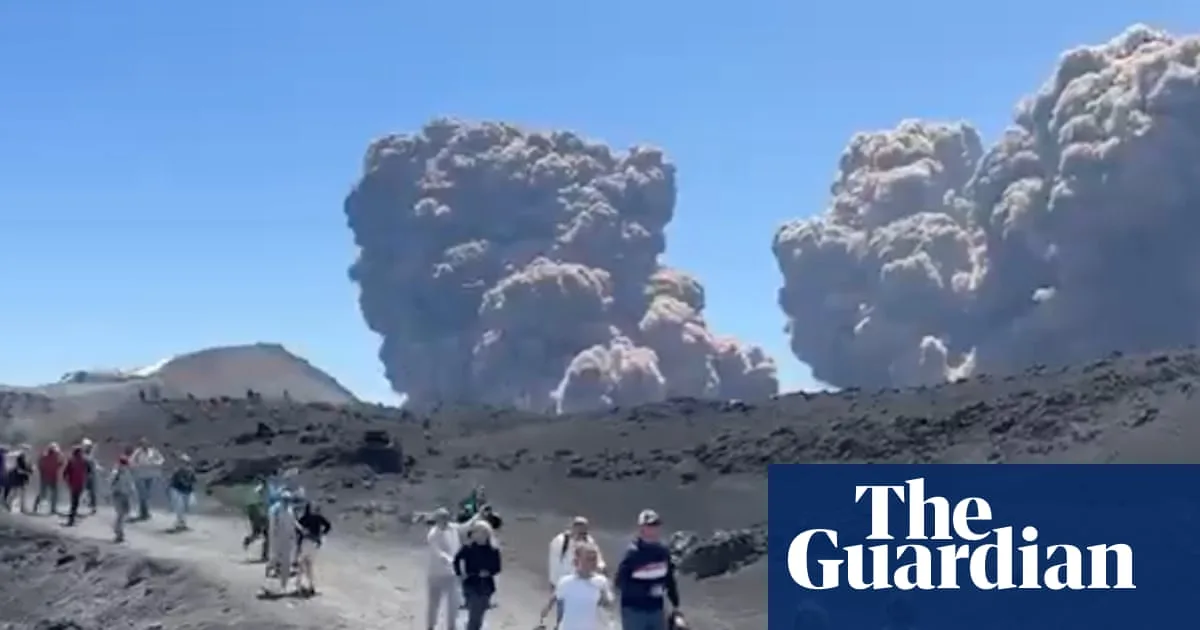
Mount Etna, Europe’s largest active volcano, erupted on Monday, sending a massive plume of ash, gas and rock high into the sky above Sicily. The National Institute of Geophysics and Volcanology (INGV) reported that the activity began at around 11:24 local time, with surveillance cameras capturing a pyroclastic flow from the northern flank of the south-east crater.
Pyroclastic flows, which consist of volcanic rock, ash and hot gases, are extremely dangerous. However, regional authorities stressed there was no immediate danger to the population. The flow did not extend beyond the Valley of the Lions, a tourist-frequented area, according to Renato Schifani, president of the Sicily region.
The INGV noted that the explosive activity had transitioned into a lava fountain, with the ash plume expected to drift towards the south-west. A red alert for aviation estimated the volcanic cloud's height at 6.5 kilometres (over four miles).
Salvo Cocina, head of the regional civil protection unit, advised tourists to avoid the area due to the potential for further activity. Videos on social media appeared to show tourists descending the volcano, but their authenticity could not be verified.