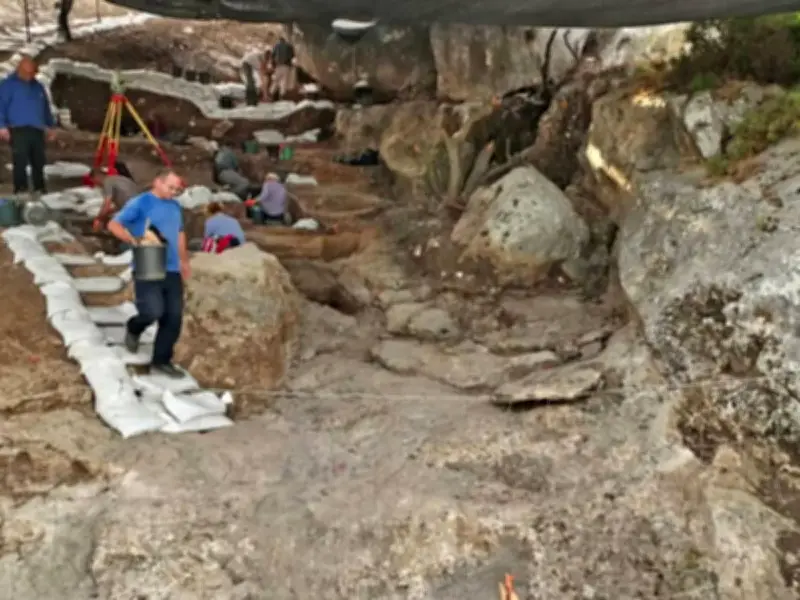
Archaeologists have uncovered a prehistoric cave in Israel that has remained undisturbed for millennia, offering an unprecedented glimpse into daily life during the Lower Paleolithic era, between 400,000 and 250,000 years ago. The site, described as a 'time capsule', contains flint tools and animal bones left exactly where they were used by early hunter-gatherers.
Discovery and Significance
The cave, located in Israel, dates back to the end of the Lower Paleolithic or Old Stone Age, a period predating agriculture, urban settlements, and written records. Researchers from the Israel Antiquities Authority and the University of Haifa have identified the relics as belonging to the Acheulo-Yabrudian culture, an archaeological label for sites with similar technological developments and daily patterns in the Levant.
Archaeologist Ron Shimelmitz from the University of Haifa stated: 'This time capsule belongs to a unique period at the end of the Lower Paleolithic era, just before Neanderthals and modern humans became dominant and spread across many regions. Only a handful of sites from this important phase have been uncovered in Israel and the wider Levant, and most of them are inaccessible for research.'
Contents of the Cave
Inside the cave, flint tools such as handaxes, scrapers, and blades were found alongside the bones of gazelles, deer, and horses. Evidence suggests water was accessible nearby, making the cave an attractive campsite for prehistoric hunter-gatherers who returned repeatedly. The tools and bones remain exactly where they were left, providing a rare opportunity to reconstruct authentic daily activities.
Research Goals
Researchers aim to determine how long people lived in the cave and whether the arrangement of tools and bones indicates longer stays and more complex social interactions. The Acheulo-Yabrudian culture is characterized by increasingly advanced stone tools, more frequent use of caves, and growing evidence of controlled fire use, marking a significant transitional period in prehistory.
Ron Shimelmitz added: 'There are few surviving sites from this prehistoric chapter and it could offer a revolutionary new insight into the lives of prehistoric hunter-gatherers.' The discovery is expected to shed light on a poorly understood era, just before Neanderthals and modern humans became widespread.