
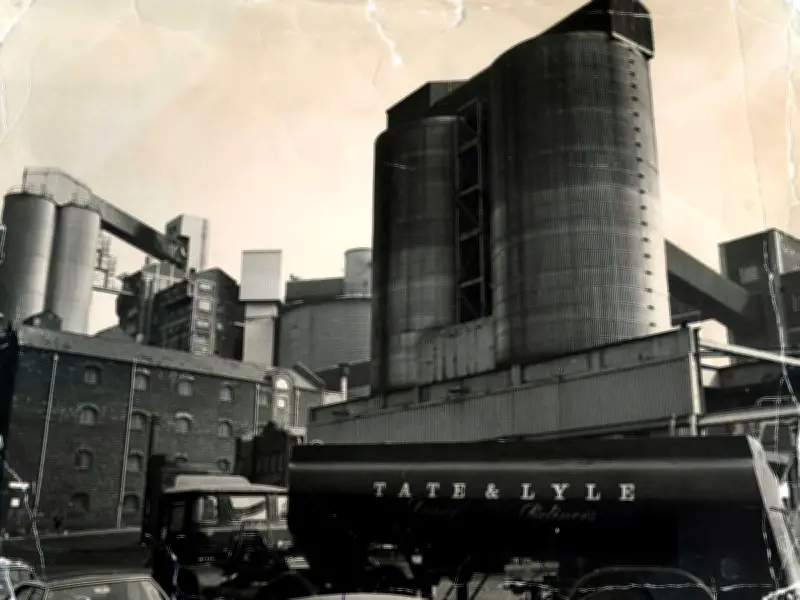
For generations of Liverpool families, Tate & Lyle was more than just a name on a packet of sugar. Thousands of people worked at the company's Liverpool refineries, while generations of "sugar girls" and dock workers helped build a business that would go on to dominate Britain's sugar industry. Today, while the Tate & Lyle brand remains familiar across the country, fewer people realise the company grew from a Liverpool enterprise founded by one of the city's most influential Victorian businessmen.
Henry Tate's Rise
According to author and chef Thomas Farrell, the story of Henry Tate is one of Liverpool's great industrial success stories. Speaking to the ECHO, the 36-year-old from Hartlepool said: "Liverpool was the heartland of the British sugar refining industry. It had fantastic access to all the sugar imports coming in from the Caribbean and South America, and it became one of the most important centres of sugar production in Britain."
Thomas explores Tate's rise in his book The Origins of Famous Brands, which examines the histories behind some of Merseyside's best-known household names, including Typhoo Tea and Hartley's. Born the son of a Unitarian minister, Henry Tate began his working life as a grocer, opening his first shop at Old Haymarket in Liverpool in 1839. As his business expanded with four shops in Liverpool, one in Birkenhead and one in Ormskirk, he moved into the wholesale trade before recognising an opportunity in sugar refining.
The Sugar Cube Revolution
In 1862, he built his first refinery on Earl Street. A decade later, Henry made the decision that would transform both his business and the way Britain consumed sugar. In 1872, he acquired the rights to a new sugar purification process that rival refiners had rejected, allowing him to open a new refinery on Love Lane that produced more than 400 tons of sugar a week and employed hundreds of people. Thomas said: "No one wanted it. It was only Tate that recognised its potential, and this gave him an advantage over his rivals because it was a much more efficient process than the existing methods."
Then, in 1875, he secured the exclusive rights to manufacture sugar cubes in Britain. Thomas said: "Before sugar cubes, you'd go into a grocer's shop and ask for sugar, and they'd bring out a large cone or loaf of sugar. They'd chip pieces off with a hammer. It was messy, time-consuming and inefficient. All of a sudden, sugar was pre-packaged and pre-weighed. It was revolutionary. He was the largest sugar producer in the UK."
The Merger and the 'Sugar Girls'
The innovation helped propel Henry into the ranks of Britain's most successful industrialists and by the end of the 19th century, his Liverpool and London operations employed around 3,000 people. In 1883, Abram Lyle & Sons, based just a mile and a half away from Tate & Sons, began melting their sugar to make Golden Syrup, which became an instant success, soon selling a tonne a week. By 1885, the syrup was sold in the instantly recognisable green and gold tins, featuring the world's oldest branding. However, in 1921, the two rivals merged to create Tate & Lyle Ltd, and under one name, they were refining about 50% of the UK's sugar.
But for many Liverpool families, the company's legacy was measured in more than production figures. Among the best remembered workers were the "sugar girls", generations of women who worked at the refinery and became a familiar part of Liverpool life. Thomas said: "People used to say that if you had a job at Tate & Lyle, you had a job for life. Everyone on the street worked in the same factory, side by side with their friends and neighbours. The sugar girls would say after they finished their shifts, their socks would be filled with sugar, so they were sugar through and through. There was a tremendous sense of community spirit and belonging. People really enjoyed working there."
The Painful Closure
Despite the company's success, Liverpool's role in the story came to a painful end. Following Britain's entry into the European Economic Community and changes to sugar production policy, the Love Lane refinery closed in 1981, resulting in the loss of 1,750 jobs. The closure was one of several major industrial blows the city suffered during a difficult period for Liverpool's economy. Thomas said: "The problem was that there was now too much sugar and there wasn't a need for two factories, so sadly, despite the best efforts of the unions, it was the Love Lane factory that was forced to close. I think it's a shame that a viable factory was closed due to political decisions that were not the fault of the workforce. It was a horrible blow to the city and a sad ending, really."
Philanthropy and Legacy
However, the company's influence extended far beyond the factory gates. A committed philanthropist, Henry Tate donated to libraries, hospitals and education, with his name living on through the world-famous Tate galleries. He also funded what became the Tate Library at the University of Liverpool and built the Hahnemann Hospital on Hope Street. Thomas said: "He was a fantastic benefactor to Liverpool. I think he had something called the non-conformist conscience and that he felt a tremendous sense of social responsibility."
Yet more than four decades later, memories of Tate & Lyle remain strong. Stories of grandparents, parents and relatives who worked at the refinery continue to be shared across Merseyside, while the company's name remains woven into the city's industrial heritage. Thomas said: "Sugar was so important to Liverpool, and Tate & Lyle was the great survivor. It survived because it had great employee relations, and it was innovative. Its story highlights how important Liverpool was as a centre of commerce and industry in the Victorian era and how it was one of the key cities of what was then the British Empire."




