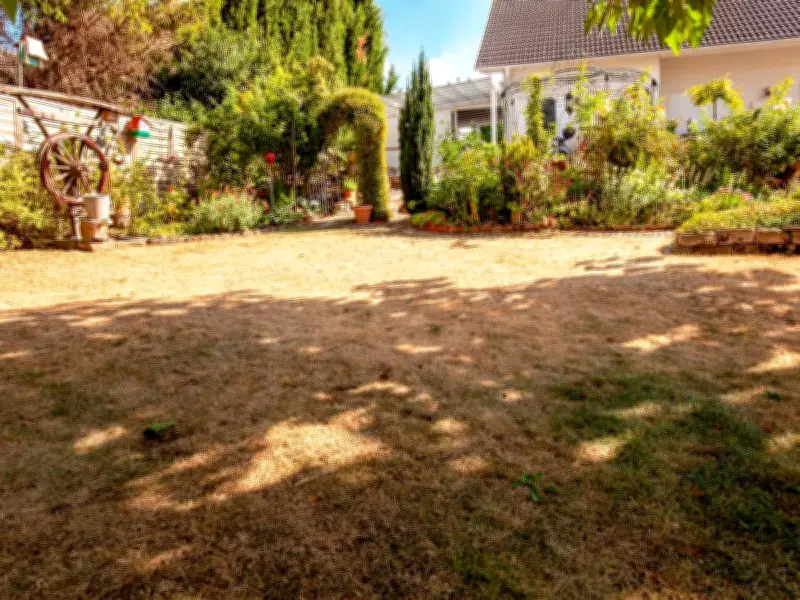
Much of the UK continues to swelter in the heat, despite the Met Office's red warning having officially been lifted. But it's not just people who feel the strain when temperatures soar – garden lawns can become stressed too. The scorching conditions can burn grass, leaving behind brown, dry patches that can spoil the overall appearance of your garden.
Before you panic, however, it's worth heeding some expert gardening advice that could help rescue your lawn. Lucie Bradley, gardening expert from Easy Garden Irrigation, shared with David Wilson Homes some of the key warning signs to watch out for, along with one early morning task that could make all the difference.
Why Lawns Turn Brown in Heat
Your lawn may be looking dry or brown due to a lack of rainfall, but compacted soil can also be a contributing factor. Lucie said: "In periods of drought, grass often goes dormant to conserve resources, and in doing so, it stops producing chlorophyll, the pigment that gives it a green colour. Often in the summer, we spend a lot of time in the garden walking over the lawn, which, over time, can compact the soil. Soil compaction can also cause strain on grass, starving it of essential nutrients, water, and oxygen."
The 5-Minute Fix: Watering at the Right Time
According to Lucie, staying on top of watering is the single most important thing you can do to rescue your grass – but it needs to be carried out at a specific time of day to avoid making matters worse. While aiming to water your lawn roughly twice a week during a heatwave is recommended, it's essential to do so early in the morning. Lucie explained: "This avoids the soil from drying out and becoming hydrophobic (meaning it repels water). The best time of day to water a lawn is during the early morning between 6 am and 10 am, as this is typically the coolest time of day, so the water will not evaporate."
Avoid Mowing During Heatwaves
Another crucial piece of advice is to avoid mowing your grass altogether in such sweltering conditions. It's already under strain, and reaching for the lawnmower could mean, as Lucie warned, it 'may never recover'. She added: "Instead, wait until the temperatures cool down and for at least 24 hours after rainfall or watering."
Additional Tip: Aerate Your Lawn
And if you have a little extra time to spare, it may also be worth aerating your lawn. Piercing the grass with a garden fork could help resolve soil compaction issues - just ensure the holes are no deeper than six inches.