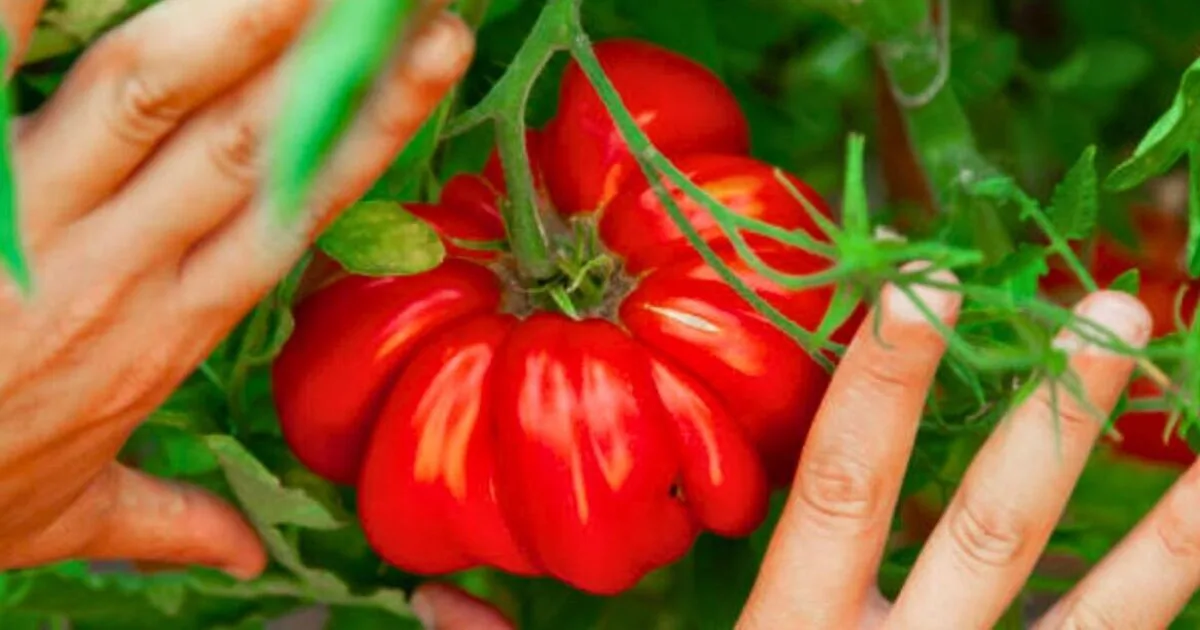
Tomatoes are a popular crop in many gardens due to how simple they are to grow, but the key to producing bigger and more bountiful fruit is by using the right fertiliser. The best time to feed tomato plants is when they have established themselves around two to three weeks after planting them outdoors, which usually tends to be early to mid-May.
Laura Azcarraga, an RHS-certified horticulturist and founder of the Meadowlark Journal, has shared that a “tried and tested” homemade fertiliser is the best to use for juicier crops. She said: “While there’s a vast market of commercial products out there, nothing quite matches the sustainability and purity of a homemade tomato fertiliser. Not only is this method environmentally friendly and cost-effective, but it also provides a direct connection between the grower and the grown, ensuring that what goes into the soil is natural, organic, and free from harmful chemicals.”
Epsom salt contains magnesium and sulfur, which are key nutrients tomato plants need for photosynthesis, while eggshells are rich in calcium, which is needed for cellular development and prevents blossom end rot, a very common disease in tomatoes. Bone meal is also rich in calcium but also contains phosphorus, which is essential for when tomatoes begin fruiting, and baking soda helps in disease prevention.
To make the fertiliser, rinse eggshells completely to remove egg residue and then place them somewhere to dry out. Once fully dried, crush the eggshells into a fine powder by placing them into a clean plastic bag and hitting them with a rolling pin, or use a food processor, blender or coffee grinder. Add the eggshells, Epsom salt, bone meal and baking soda to a container, then slowly pour in water while stirring constantly to ensure all the ingredients dissolve. Laura said: “This step dilutes the mixture to a safe concentration for the plants.”
Use this mixture to water tomato plants at the base, being careful not to get any on the leaves. Apply the fertiliser every four to six weeks during the growing season. Any leftover fertiliser can be stored in a container with a lid in a cool, dry place. Laura added: “This DIY fertiliser provides a balanced mix of nutrients, but it's important to observe your plants for any signs of nutrient deficiency or excess and adjust your fertilisation practices accordingly.”