Midwest Soybean Farmers Grapple with Mounting Financial Pressures
Midwest soybean farmers are confronting a perfect storm of financial challenges, with tariffs, trade disputes, and the Iran war compounding long-standing economic pressures. As the spring planting season begins, producers across the region face soaring input costs, depressed commodity prices, and uncertain market conditions that threaten their viability.
Compounding Crises Strain Agricultural Operations
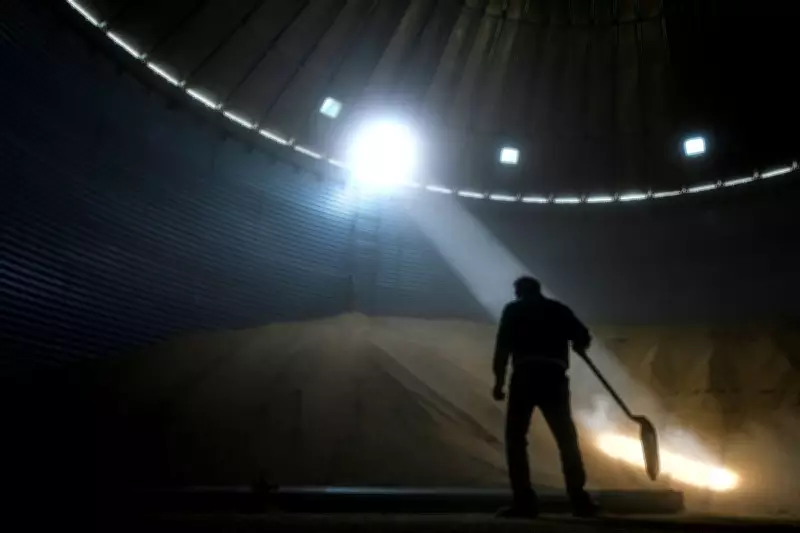
Strong winds whipped around Doug Bartek, a fifth-generation farmer, as he headed into a grain bin to shovel soybeans onto a conveyor chute. The 60-year-old Nebraska farmer expressed deep anxiety about the multiple issues affecting his family's 2,000-acre operation near Wahoo.
"Our biggest struggles are our inputs, be it fertilizer, seed, chemical, parts," said Bartek, who chairs the Nebraska Soybean Association. "There has been so much drastic markup in all of these. And I just kind of feel like the farmer's kind of painted in the corner."

Bartek's concerns reflect widespread anxiety among Midwest soybean producers. Equipment costs have steadily increased while soybean prices remain stubbornly low. The situation worsened significantly with tariffs imposed by the Trump administration last year, triggering a prolonged trade war with China that devastated export markets.
Global Market Dynamics Depress Prices
Soybeans, used for livestock feed, food products, and biofuels, rank among America's top agricultural exports. However, global oversupply has created persistent price pressures. Brazil surpassed the United States years ago as the world's largest soybean producer, contributing to record global production levels.
"If we look at global soybean production over the past several years, it continues to set record, after record, after record," explained Chad Hart, an agricultural economist at Iowa State University. "There's been just large supplies globally, and that has led to depressed prices."
Meanwhile, production expenses have climbed steadily. According to U.S. Department of Agriculture data, operating costs for soybean production have remained elevated since 2020 and are projected to increase again in 2026. Land costs present another major challenge, with Midwest crop land values rising and rental rates increasing pressure on farmers who lease substantial portions of their acreage.
Trade War Fallout Creates Lasting Damage
Market forces alone don't explain farmers' predicament. Sweeping tariffs levied by President Donald Trump in April 2025 exacerbated trade tensions with China, the top buyer of U.S. soybeans. China responded with retaliatory tariffs and effectively boycotted American soybeans, severing a crucial export market and driving prices even lower.
"When that was announced and soybean prices basically collapsed, if you could afford to hold on to your beans and wait for better times, you were OK," said Mike Cerny, a soybean and winter wheat corn farmer in Sharon, Wisconsin. "If you had a mortgage due or payments due or cash flow needs and you had to sell at that point, you were taking it pretty rough."
Although the U.S. and China reached a deal in late 2025 committing Beijing to substantial soybean purchases, and the Trump administration rolled out a $12 billion temporary aid package, the damage proved substantial. Even with federal assistance, farmers lost almost $75 per harvested acre of soybeans in the 2025 crop, according to the American Soybean Association.
Iran Conflict Disrupts Critical Supply Chains
The Iran war created additional complications when U.S. and Israeli attacks in late February disrupted shipping through the Strait of Hormuz. This bottleneck sent oil prices soaring and severely limited fertilizer exports from the Persian Gulf region, where about half the global supply of urea originates.
While soybeans don't require nitrogen fertilizer, most soybean farmers also grow corn, which depends heavily on these inputs. The price of urea, the most widely traded nitrogen fertilizer, skyrocketed following the shipping disruptions.
"We burn a lot of diesel fuel," said Chris Gould, a corn and soybean farmer in Maple Park, Illinois. "It's hard to say if I'm gonna come out ahead or behind on this whole deal. But I suspect I'm going to come out behind."

A ceasefire agreement announced April 7 raised hopes that bottlenecks might ease, but traffic remained slowed amid ongoing regional tensions, keeping fertilizer prices elevated.
Financial Strain Threatens Farming Future
The cumulative pressures are manifesting in concerning trends. Farm bankruptcies, while still relatively low, continued climbing in 2025. A late March survey of 400 farmers conducted by Purdue University researchers found almost half reporting their operations were financially worse off than a year earlier.
"There's just a liquidity cash crunch for a lot of them and they're just trying to figure out how to deal with everything," said Paul Mitchell, a professor of agricultural and applied economics at the University of Wisconsin-Madison.
After 43 years of farming, Bartek still feels excitement at the smell of fresh dirt during spring planting. But he's also witnessed farmer suicides, bankruptcies, and "retirement sales" where financial problems force producers to auction their operations. He compares farmers to gamblers who put "millions of dollars in the dirt" hoping for returns.
Bartek even questions his own career choice and worries about his son, who purchased a farm recently. "Did I do the right thing helping him get into farming?" he wonders, capturing the profound uncertainty facing America's agricultural heartland.