
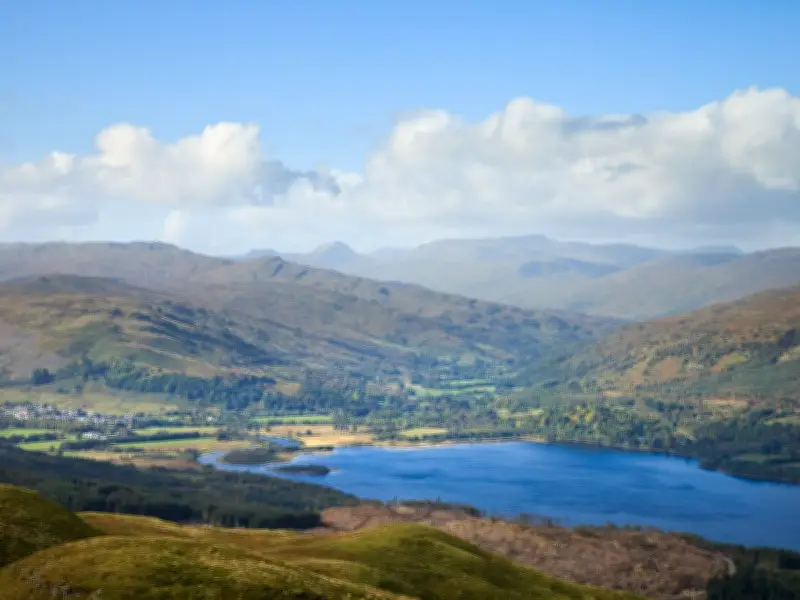
Residents near Killin on the banks of Loch Tay have voiced opposition to plans to expand an existing rainbow trout farm, citing concerns over water safety and ecology.
Expansion plans and phosphorus increase
Oban-based Kames Fish Farming Limited operates the rainbow trout development in the loch, which runs across the northern edge of the Stirling boundary. The company has applied to the Scottish Environment Protection Agency (SEPA) to increase its annual phosphorus discharge limit from 2,730.7kg to 5,783.7kg, a 112 per cent rise.
A public consultation led by SEPA is open until August 13.
Loch Tay Association's opposition
The Loch Tay Association believes the proposals represent an “unacceptable risk” to the loch. Donald Riddell, the association’s spokesman for environmental matters, said: “Loch Tay is not just a beautiful stretch of water - it’s a living system that supports salmon, brown trout, freshwater pearl mussels and a whole community which depends on a healthy loch.”
Mr Riddell added: “We have already seen algal blooms, anecdotal declines in fish and insect numbers and rising nutrient levels. Doubling the phosphorus from this one single source, on top of everything else the loch already absorbs from agriculture, forestry and sewage, is simply too great a risk to take on the strength of modelling alone.”
He also highlighted the loch’s recreational users: “Our cold water swimming, canoeing and paddleboarding community is one of the loch’s biggest year-round groups now and they rely on Loch Tay being clean and safe to be in. A discharge increase on this scale raises real questions about water safety for these users, not just about the ecology of the loch.”
SEPA and Kames respond
A SEPA spokesman said the agency is reviewing the plans, adding: “As part of that determination, SEPA will consider the supporting information provided by the applicant, monitoring data held by SEPA and any information provided by stakeholders as part of the consultation process, which is currently underway. Any increase will only be authorised if SEPA are satisfied that the nutrients or ecology of the loch won’t be significantly impacted by the changes proposed.”
Andrew Cannon, Managing Director of Kames Fish Farming, said: “We fully respect the right of individuals and organisations to comment on our application. We all share the same objective of protecting Loch Tay for future generations. However, it is important that this debate is based on scientific evidence and the independent regulatory process rather than speculation.”
He continued: “Our application has been developed over many months and is supported by detailed environmental assessment, including independent nutrient modelling undertaken by specialists at the University of Stirling. That work concludes that the proposed increase in production can be accommodated without changing Loch Tay’s overall ecological classification.”




