
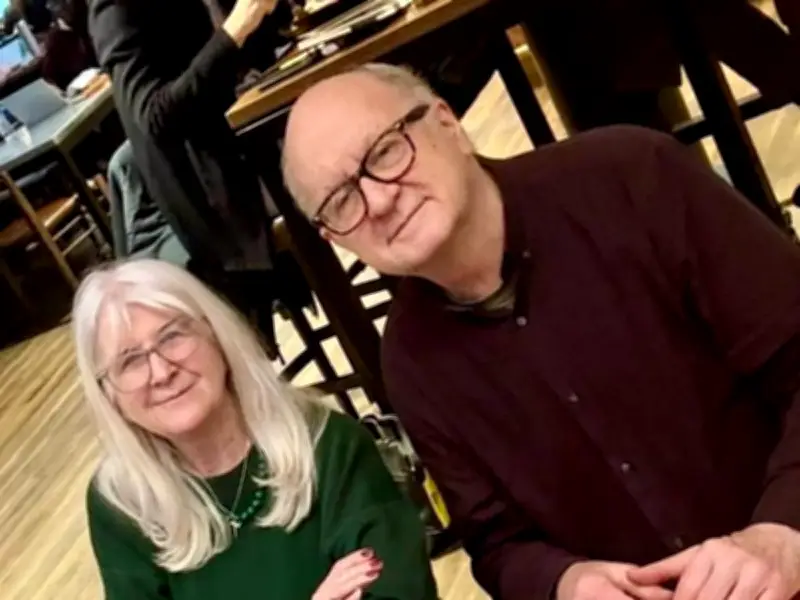
Martin Ralph, 74, began working with Liverpool's Sudanese community 13 years ago after a conversation with his wife, Margaret McAdam, a support worker at the Merseyside Refugee Support Network. Since then, he has helped hundreds of Sudanese refugees settle into life in Merseyside.
How it started
Margaret told Martin about the Sudanese community's struggles, sparking his involvement. He said: "Margaret's role was as a support worker, so when the Sudanese people said we want to do some things, Margaret said 'if you want to meet my husband, who is involved in the trade union and political movement, then you can'." At the time, Martin worked as a support worker at the University of Liverpool's Faculty of Medicine and was an active member of the University and College Union.
Around 5,000 Sudanese refugees have moved to Merseyside since conflicts began in the early 2000s. Martin has heard firsthand the dire situations they fled. He told the ECHO: "One of the things you find is when people go through really horrendous problems, they don't necessarily want to talk about them. But when you're working with them, occasionally the stories come out."
Harrowing stories
One anecdote that stayed with Martin involved a young man and his sister. He said: "One story was when the Janjaweed group went into a village and a young man and his sister had a horse and the Janjaweed demanded the horse and she said no so they just killed her. Then the father came out of the hut and they killed him in front of this guy. So, clearly it was not safe to remain and he had to flee and then he goes through a whole number of countries which themselves are very unstable, such as Libya."
Martin noted that refugees often find it difficult to share their experiences, but trust built over time allows stories to emerge. "Leaving your family and friends, not knowing how you're going to survive, no one does that unless there are really important things [going on]," he added.
Building a voice
After being put in touch with the community, Martin helped them organise. He said: "We started to work with them and what they wanted to do was to show that they had not forgotten about the people back home and the situation they were facing which was the attacks, particularly in Darfur and another area called the Nuba Mountains." They formed a group called Justice for Sudan, held marches from the Asylum Link centre into town, and gave speeches with local trade unionists.
Martin also helped refugees integrate, particularly with language. He said: "One of the problems is the language, so many people arrive without speaking English, but it's one of the first things they want to do, to be able to learn English. But if the language is very different, it takes time." He signposted ESOL classes and colleges, which he said "can help enormously."
Ongoing challenges
Despite progress, access to English classes remains a major hurdle, especially for Sudanese women. Martin said: "When Sudanese women have children they tend to look after them in the house and they don't get out as much and learn English. It is a real worry for the Sudanese that has been expressed much more fervently and strongly than it has done before."
Martin also expressed concern about rising anti-immigration sentiment. He said: "We noticed in the recent march on County Road, some cars being driven by people who could be looked at as immigrants, being targeted. There are clearly increasing dangers for the Sudanese and all the other immigrants here as well, that shouldn't be taking place. They are a threat to nobody."




