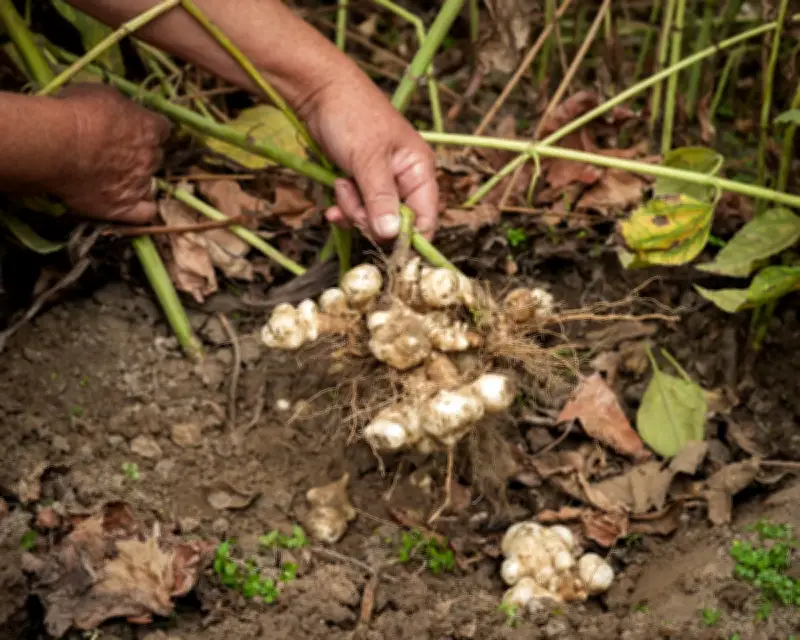
Jerusalem artichokes are a nutty, delicious crop that is surprisingly easy to grow, yet they are rarely seen in gardens. They belong to the sunflower family and are not related to the globe artichoke. The plants produce tall, leggy stems topped with bright yellow flowers, and while they lack the size and sturdiness of sunflowers, they make up for it by appearing in great numbers and developing edible tubers underground.
Why they are not more common
There are good reasons why Jerusalem artichokes are not a common sight. First, although they are nutty and delicious, the tubers can be quite hard to digest, earning them the nickname “fartichokes”. They contain a carbohydrate that can be tough on the gut, so it is recommended that they are cooked well and introduced into your diet incrementally. Some people eat them raw, so for those who are devoted to them or have a fierce digestive system, they are never off the menu.
The second reason they are not that common is that once you plant them, you have probably got them for ever. They know how to run rampant. Once established, some sections of their root systems will remain in the ground after harvest, and they will grow the following year, whether you like it or not.
Growing and harvesting tips
Jerusalem artichokes thrive in full sun with plenty of moisture. They can be planted along the top of a slope to help absorb excess water, as they do that job beautifully when there is an abundance of moisture available to their roots. However, they will not do well on poorly draining, waterlogged soil, as this will cause the tubers to rot. Being planted in the right spot and generously watered is all they need to grow. They are fairly drought tolerant, though the resulting tubers will be smaller.
Start your Jerusalem artichokes with bought or given tubers planted in early spring, about a foot apart. Once established, you can repeat this every year using tubers harvested the winter before. Harvest the tubers after the flowers have died back in October or November, though they can be stored in the ground as long as it does not freeze entirely. They do not keep well once lifted, so they are best eaten as soon as possible, though like other root vegetables they can be kept in a dark, cool environment for a short time. Tubers destined for planting next year can be stored in the ground under a mulch of straw, or in a container filled with moist soil or sand, stowed in a sheltered spot such as a greenhouse.