Henry Astor returned to his family farm in the Cotswolds and, inspired by his grandfather's methods, has restored biodiversity by planting trees and wildflowers and switching to heritage wheat. The farm now supports red-listed bird species and supplies flour to more than 40 bakeries.
From documentary maker to farmer
Astor grew up on the 490-hectare farm his grandfather bought in 1936, but left for a career in documentary making and advertising. In 2017 he returned with his wife and three young sons to run the farm. His father advised him to let the farm manager handle it and not get involved.
The farm Astor returned to was not the one he remembered. When the Milk Marketing Board was abolished in 1994, causing prices to plummet, Bruern ditched dairy. It went from a mixed farm to wholly arable, farmed by contractors who, Astor says, "don't really care about trees or hedgerows or nature; it's a business, they just want maximum yield".
Restoring biodiversity and heritage wheat
Between 30,000 and 40,000 trees have been planted over the past decade, many as part of a flood-mitigation scheme, some in a 17-hectare (42-acre) agroforestry section interspersing wheat with heritage fruits such as Cox's pippin and Blenheim orange apples. Wildflower meadows are rebuilding soil fertility.
Astor co-founded the North East Cotswold Farmer Cluster, and as part of his obligations a plot is left for bird feeding. According to cluster co-chair Tim Field, this has resulted in flocks of linnets, goldfinch and chaffinch across 40 farms, while one farm has seen more than 400 teal feeding among watercress in a wetland area. There are 18 red-listed birds on the farm, and this year Astor ringed 23 barn owls, three kestrels, two little owls and goshawk chicks.
Switching to heritage grains
Bruern Farms' transition from conventional to heritage wheat happened in stages. In 2020, Astor was approached by Fielden whisky to grow heritage grains, including red lammas, orange devon and kent old hoary, on 140 hectares. He sources "population wheat" from the South East Grain Alliance, which he says builds disease and weather resistance, and has much longer roots to reach minerals.
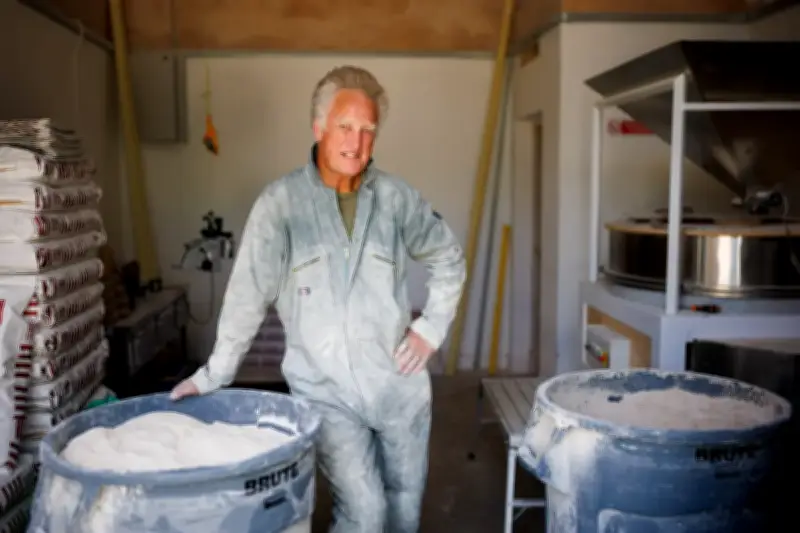
In 2021, Helen Evans, a baker at the now-closed Flor in London, inquired about Astor's conventional wheat, which he still grows on some land but hopes to phase out. Astor began personally delivering 300kg of flour a week to Flor. He did not make a profit, but the idea of bypassing wholesalers took shape. He contacted local bakeries and bought a mill.
Supplying bakeries and future goals
Now supplying more than 40 bakeries, Astor operates the mill as a separate business, paying his farm £800 instead of £600 a tonne for heritage grain. Last year, the bakery chain Gail's introduced its Bruern Farms sourdough, which is being launched on Ocado in September, followed by Waitrose in November.
Astor's goal is to mill 500 tonnes a year, which will allow him to reduce his cropping by half, promote biodiversity on the remaining land, reduce carbon emissions and run a viable business. This year, he harvested 190 tonnes of heritage wheat, up from 48 last year, and expects to reach 500 by 2028.
Soil expert Carlos Guerra at the University of Coimbra in Portugal supports the approach, saying modern wheat monocultures have "simplified soils as much as they have simplified landscapes". Replacing these systems with a diversity of cultures, eliminating pesticides, planting wildflower meadows, reducing soil disturbance and using organic or microbial preparations can help rebuild soil structure, biodiversity and nutrient cycling.
Astor hopes his system can be replicated throughout the country, which he believes would make farms profitable and boost food security. "I have three missions," he says. "Growing nutritional food, feeding the community, and increasing biodiversity."