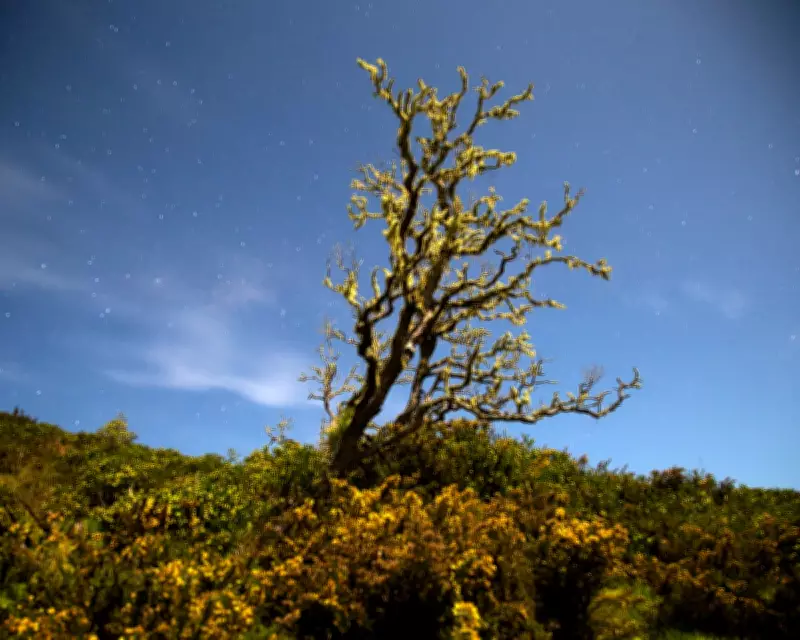
In the serene landscape of Cornwall, a solitary tree stands resilient against a night sky adorned with stars, encircled by a meadow of vibrant yellow wildflowers. This picturesque scene, captured in a photograph by Connect Images/Alamy, contrasts sharply with the fiery transformations described in historical accounts.
A Nighttime Journey Through Cornish Lanes
Driving through Cornish lanes at nightfall in 1926, the experience was likened to viewing the world through a segmented windscreen, reminiscent of the back of an envelope. The lower segment revealed the road, illuminated by headlights, while the upper segment was engulfed in darkness. Along the sides, gorse bushes appeared as glowing silhouettes, with one particularly flowery head standing out as a solid yellow disc against the obscure blue sky.
The Blaze of Gorse Fires
During a spell of dry weather, the gorse on the moor was set ablaze day and night, a practice intended to enhance grazing and hunting opportunities. However, the observer expressed a deep sorrow at witnessing this destruction, especially late in the year when growth was advanced. The fires not only consumed the ancient forest of gorse but also threatened local wildlife, forcing stonechats, whinchats, and yellow-hammers to seek new nesting places and scorching delicate anemones to death.

Despite the ecological loss, the spectacle of the flames was described as both lovely and fearsome. Whether seen as a pillar of smoke across the sea, a rosy scarlet glare wavering behind the skyline, or a windswept sea of flames visible from a house, the transformation from lush growth to black ashes was swift and dramatic.
Historical Context and Reflections
This account, originally published in The Guardian on 26 March 1926, offers a poignant glimpse into rural life and environmental practices of the time. It highlights the tension between agricultural needs and conservation, a theme that remains relevant today. The diary entry serves as a reminder of the fleeting nature of natural beauty and the impact of human interventions on ecosystems.
In a related note from 1951, it was observed that while the gorse remained golden, Cornwall still bore a wintry look, suggesting the enduring challenges of the landscape. These historical perspectives underscore the importance of balancing tradition with sustainability to protect habitats and biodiversity.