Beinn Eighe: A 75-Year Legacy of Natural Splendor in Scotland
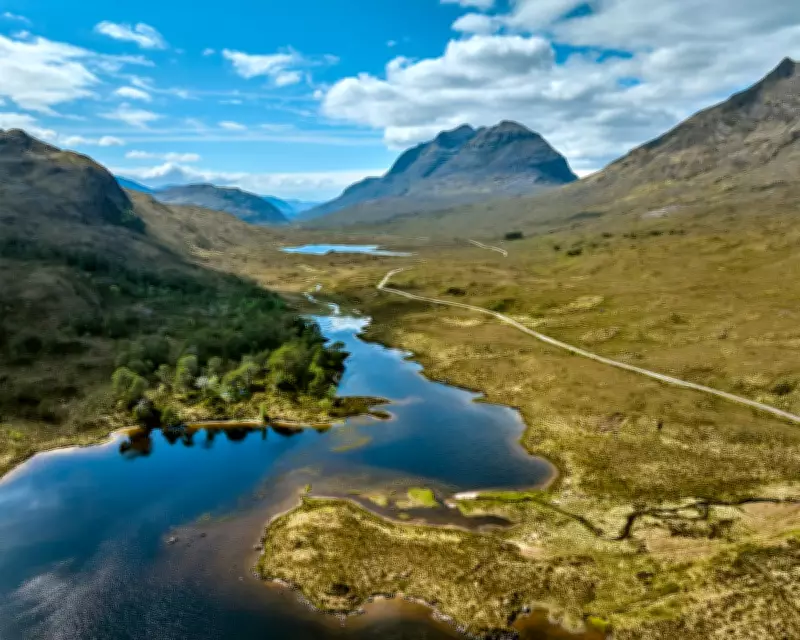
Gazing towards Beinn Eighe from the serene shores of Loch Coulin and Loch Clair, one is met with a vista that captures the essence of Scotland's wild beauty. This year marks a significant milestone as Beinn Eighe national nature reserve (NNR), Britain's very first NNR, celebrates its 75th anniversary. It is a landscape that stirs the soul, revered not only by climbers but by all who wander through its awe-inspiring mountains and ancient pinewoods.
The Mountain Trail: A Journey Through Time and Terrain
The waymarked quartzite path glistens under the sun, bordered by amber-gold grasslands. As I embark on the four-mile mountain trail, the scenery unfolds dramatically. Ancient Caledonian pines guide the eye towards the metallic shimmer of Loch Maree, while across the water, the winding river separates the steep slopes of Beinn a’Mhùinidh from the majestic knuckle ridge of Slioch, a Torridonian sandstone giant in Wester Ross.
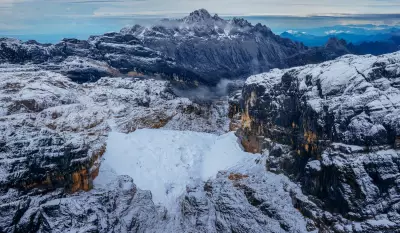
Doug Bartholomew, the reserve manager, emphasized the trail's significance. "The mountain path gives you a real flavour for Beinn Eighe," he explained. "It takes you right through the heart of the ancient Caledonian pinewood, then you climb steeply up to this rocky upland with views of Beinn Eighe mountain itself." At the high point, approximately 550 meters, the view is breathtaking—a jagged ridgeline resembling Atlantic waves frozen in stone, overlooking a lonely valley.

Conservation Triumphs: From Exploitation to Restoration
Spanning 48 square kilometers from Loch Maree to the mountain summit, Beinn Eighe NNR was established in 1951 with a crucial mission: to protect Coille na Glas Leitir, the Wood of the Grey Slope. This woodland, the largest remaining fragment of ancient Caledonian pinewood in north-west Scotland, has endured centuries of challenges. Historically, it was felled for ironworks in the 1600s, impacted by forestry and farming, and even exploited during World War II for ammunition boxes.
However, pioneering restoration efforts, including deer management and tree planting, have led to a remarkable recovery. Woodland cover has increased by over 40% in the past 75 years. Bartholomew noted, "We've now got continuous woodland linked from Glas Leitir all the way through to Coulin Estate, where you've got other remnants of ancient woodland, and we're moving more to natural processes." Today, visitors can walk beneath centuries-old, twisted pine branches alongside younger, conical trees, witnessing a landscape in regeneration.
Accessible Beauty: Trails and Wildlife Encounters
Descending into Coille na Glas Leitir, the trail winds through a mosaic of birch and pines adorned with lichen. This path, a public access landmark since the early 1970s, remains well-marked, though winter snowfall can obscure it. The sounds of stags roaring across Loch Maree echo through the air, while crossbills, with their unique crossed mandibles, forage for pine cones. In warmer months, dragonflies like the northern emerald and azure hawker flit among rare mosses.
While the mountain trail is steep, it is not technical, making it accessible to many. Complemented by the easier woodland path and short loops from the visitor centre, the reserve offers diverse experiences. Local providers, such as Shieldaig Outdoor Adventures, enhance visits with canoe or kayak explorations of Loch Maree's islands during warmer seasons.
Torridon: A Gateway to Grandeur
Staying at Torridon youth hostel, nestled at the head of Upper Loch Torridon, provides an ideal base for exploring Beinn Eighe and the surrounding Torridon hills. Debbie Maskill, the hostel manager, shared, "When we mention that we live in Torridon, people get misty eyes. For us, it's the best part of Scotland. A real jewel." The area's grandeur, with its immense mountains and shifting light, captivates all who visit.
The hostel, celebrating its 50th anniversary last year, serves as a pilgrimage site for hikers. Its communal spaces foster camaraderie among walkers and climbers, while floor-to-ceiling windows offer stunning views of Wester Ross peaks. Private rooms provide comfort, and guests often share tales of aurora sightings over Loch Torridon, adding to the magical experience.

Future Visions: A Regenerative Forest in the Making
On a six-mile loop around Loch Clair and Loch Coulin, just outside the reserve, the landscape continues to impress. The grey, dotted ridge of Beinn Eighe resembles a snow leopard's coat, while Liathach's pyramidal mass reflects in the water. Though heavy rain thwarted plans to visit the Triple Buttress of Coire Mhic Fhearchair, it offered an excuse to enjoy venison lunch at Bo & Muc, a field-to-fork restaurant at The Torridon hotel.
Departing via the road to Achnasheen, a stop at the Glen Docherty viewpoint provides a final glimpse of Kinlochewe, lapping mountains, and Loch Maree. After centuries of deterioration, the reconnection of ancient pinewood fragments is heartwarming. In another 75 years, the young pines of Beinn Eighe are poised to stand taller, promising a fully regenerative forest for future generations to cherish.
Accommodation was provided by Hostelling Scotland. Torridon youth hostel offers private rooms for two from £52 per night and dorm beds from £20.50. The Beinn Eighe NNR trails are open year-round and free to visit, with the visitor centre operating from April to October, 10am to 5pm.