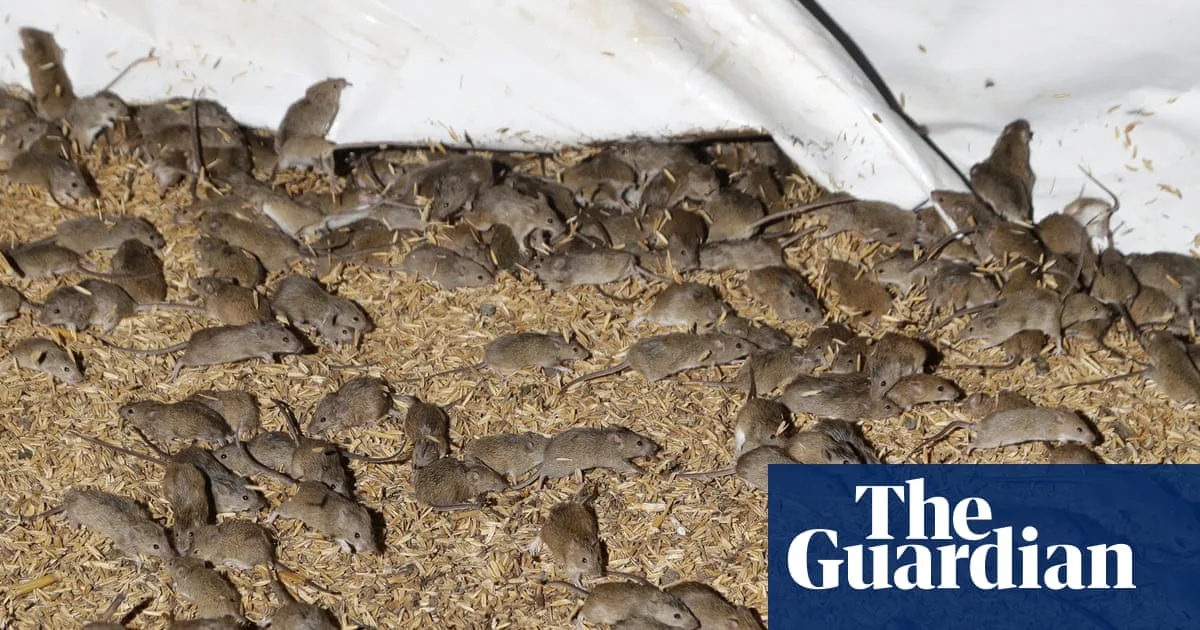
Farmers and their families across Australia are enduring a months-long mouse plague, with rodents infiltrating homes, swimming pools, and even beds. High mouse activity has been recorded in South Australia's Mid North, Lower Yorke, and Eyre regions, as well as Western Australia's Northern and Sandplain areas this week. Moderate levels have also been detected in central and eastern WA.
Personal Accounts of the Infestation
A concerned father from the Shire of Moora, 200km from Perth, reported that his teenage daughter woke to find a mouse crawling inside her bed. Leighton Wilksch, 48, a father of three, told the Daily Mail he has been removing mice by the bucket-load from his pool at his Yorke Peninsula home. 'I have learned to mouse-proof our house, but we do have a swimming pool, and every morning there's about 10 dead mice in it. It's pretty horrific,' he said. 'Our kids, when they're home from university in Adelaide, they've been a little bit grossed out by the mice. It's chlorinated water, and we're not swimming in it at the moment. It'll be fine come summer-time, but just at the moment it is pretty gross.'
Mr Wilksch, an agricultural technologist, noted the plague is similar to an outbreak a decade ago in the region's southern grain belt. He attributed the surge to unseasonable February and March rainfall, which provided moisture and germinated seeds, creating ideal breeding conditions for mice.
Widespread Impact on Communities
Elyssa Giedraitis, a business owner in the Wheatbelt, shared a callout for advice on safely eliminating mice in homes with pets and children. 'We are currently going through the most disgusting mice plague ever. It's so gross. Basically they're invading crops but they're also invading houses,' she wrote. 'There are mice everywhere. I have never had mice in this house until this started - and my cat has decided this is the perfect time to run away.'
Small mouse populations can explode into large infestations within weeks, significantly impacting farmers and the agricultural sector. A devastating plague in 2021 caused an estimated $1 billion in damage across several states, with rural New South Wales alone facing $660 million.
Economic and Logistical Challenges
Farmers in affected regions have already reduced movements across paddocks to conserve petrol amid the ongoing fuel crisis. Duncan Young, a crop farmer in WA's wheatbelt, described the mouse outbreak as part of a 'perfect storm' for the sector. 'You've got massive fertiliser hikes due to the war, you've got fuel shortages and fuel price hikes. This outbreak is another cost on top of that, and potentially in a year where budgets were already pretty tight before the war began. Farming is a very big revenue driver for Australia with our exports. Potentially, you could be talking about over a billion dollars worth of damage.'
The Australian government introduced an emergency use permit for Grain Producers Australia to use a stronger bait, zinc phosphide 50 g/kg (ZnP50), on Monday. This allows manufacturers to sell and use the bait until December in zones with moderate to high mouse activity. The rodents need to eat two or three poison-coated grains to receive a lethal dose. Previously, only a weaker 25g strength was available, which often failed to kill mice if they stopped eating. The 50g strength ensures higher efficiency and better control, potentially stopping the breeding cycle.
Mr Young emphasised that the problem extends beyond farms. 'It can happen all over Australia. It just doesn't affect farmers. There's a lot of people in towns where the plagues are getting just as badly affected as farmers. They are in the houses, you're talking about huge numbers of mice, and they build up very quickly. You want to stop it, because you don't want it to spread and get bigger and bigger. The quicker it can be stopped and contained, the better.'