
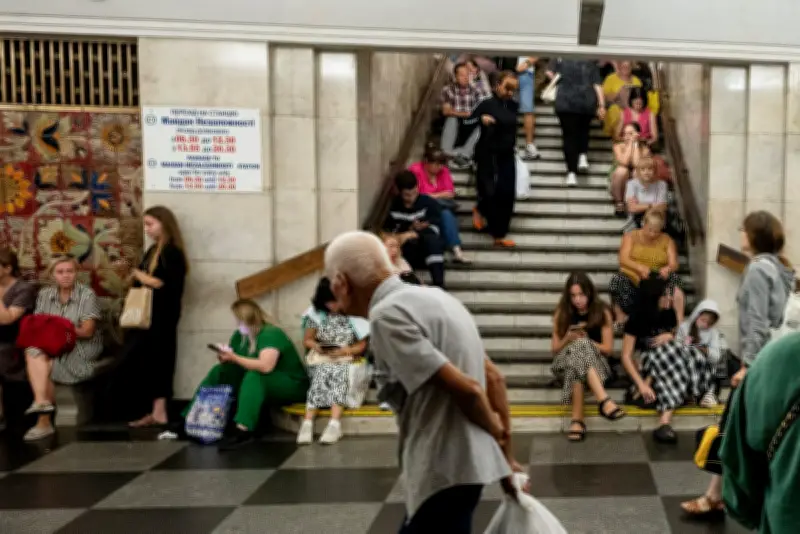
Ukrainian writer and cultural manager Diana Berg examines the deep, unspoken divide between Ukrainians who left the country after Russia's full-scale invasion and those who stayed. In a personal essay, she describes how this quiet rupture has grown over time, creating different versions of the same war for those on either side of the border.
Different realities of war
Berg recounts an incident where a colleague who had left for Europe in 2022 asked to reschedule a meeting. The request felt like an accusation, even though it was innocent. She notes that while western colleagues often fail to understand war from inside, this time the request came from a fellow Ukrainian.
She describes how for those who stayed, a strike on Kyiv begins with sirens and explosions, while for those abroad, it begins when it appears in their social media feed. Berg admits to feeling anger and hypocrisy when seeing friends share posts about her city burning and then continue their day.
Shared fear across distance
During a summer trip to Europe, Berg met friends on a terrace. When air raid alerts sounded on their phones, everyone fell silent. The alerts for drones over Kyiv and missile threats triggered fear for loved ones in the city. She saw the same fear on her friends' faces—a mirror of helplessness. This was the first time she realized they might be living through the war too, just differently.
Berg reflects on the struggles of refugees—bureaucracy, loneliness, uncertainty—but also catches herself thinking they are lucky to be safe. She feels shame for these thoughts. A colleague who left the country blamed depression for not completing a project, leading Berg to think, "Are you really complaining about your depression while we are being shelled?" She then felt shame.
Guilt and shifting closeness
Another colleague asked, "How long can people keep using the war to make the rest of us feel guilty?" Berg says the remark frightened her, as she had already felt ashamed to mention her reality too often. Hearing it from a fellow Ukrainian felt like a blow.
When her mother returns to Kyiv, Berg feels happy that someone she loves is in the same world, then guilty for being glad they are in a bombed city. She envies friends who can take spontaneous trips, while her own travel requires military-like planning. She acknowledges that the map of closeness has shifted quietly, and she misses the feeling that loved ones live in the same reality.




