
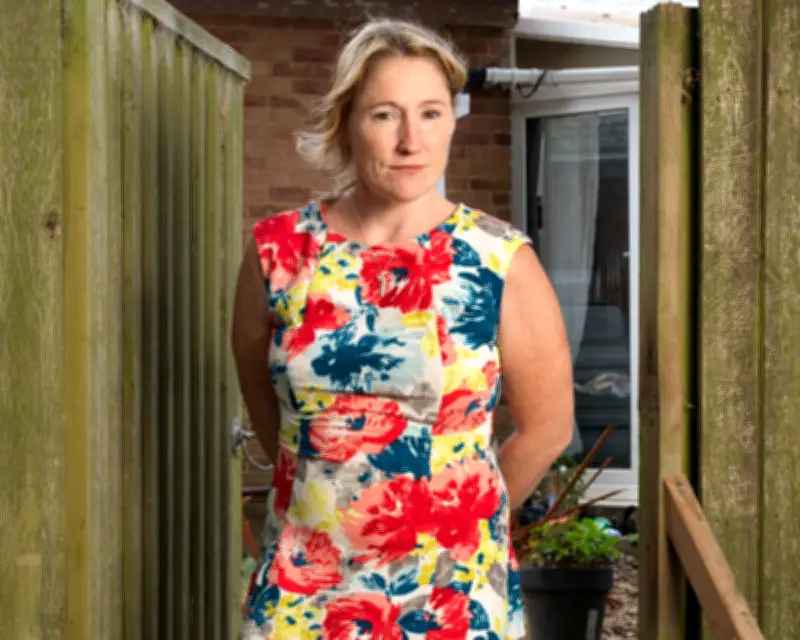
In September 2024, Amanda Stanhope watched from her home in Manchester as the Gisèle Pelicot case made headlines worldwide. 'Gisèle's case was the first time I knew of somebody else who had been raped while they were drugged,' she said. 'I remember feeling: Thank God I'm not alone. There's one other person in the world that this has happened to.' Stanhope's former partner, David Rogerson, was under investigation for raping her while she slept and filming the abuse. Pelicot's husband, Dominique, was convicted for drug-facilitated rape and sexual assault (DFSA), along with 50 strangers he recruited online.
Survivors find solidarity
In Exmouth, Devon, Zoe Watts also followed the Pelicot case. Her ex-husband, father of her four children, was serving an 11-year sentence for drugging and raping her over years. 'I'd never heard of it before and I absolutely did feel as if it was only me,' she said. 'Gisèle was like fresh air. Drug-facilitated rape is one of those doors she opened.'
The shock of the Pelicot case suggested a monstrous anomaly, but Stanhope and Watts knew otherwise. Recently, at Northampton crown court, a man pleaded guilty to filming himself and another person raping his partner over 11 years, including tying her and writing on her body. Earlier, former Swindon councillor Philip Young pleaded guilty to multiple rapes of his former wife over 13 years, administering a substance to stupefy. In September, another case involves 14 men accused of drugging and raping one of their wives.
Global DFSA networks exposed
A German case convicted four men for drugging and raping women, part of a Telegram group using coded words. Investigators Isabell Beer and Isabel Ströh uncovered a network on Motherless, where a man uploaded footage of his sedated wife for almost two decades. After pressure, German police intervened; the wife had consulted doctors about deep sleeps but never suspected. CNN's investigation led to an arrest in Poland. In April, Project Medusa launched to dismantle DFSA networks, identifying 156 perpetrators and victims to date.
Watts, 43, and Stanhope, 53, were brought together by the CNN report, inspiring Watts to found #EndEyeCheck, a survivor-led campaign. The name refers to perpetrators pulling open an unconscious victim's eyelid to check sedation. Objectives include education on DFSA in schools, an inquiry into policing and prosecution, greater medical awareness, and banning 'sleep content' from porn sites.
Watts's story of abuse
Watts met her husband at 17; he was 28. They married, had four children, and ran a printing business. She learned of the abuse in February 2018, when he confessed after a church service, saying he put medication in her tea and 'had sex' with her, taking photos. He also admitted an affair. It took six months before she reported him. 'You don't understand what you're hearing,' she said. 'The experience of DFSA alters your whole reality. The bed you thought was safe isn't – it hasn't ever been.'
She noted signs: recurrent urinary infections, thrush, tiredness, nausea, confusion, migraines. She once thought she had a brain tumour. Medical professionals were told directly; her husband claimed he didn't know why he had sex with her while she slept, but didn't mention sedating her. He was prescribed antidepressants and advised to wear trousers and a belt to bed. 'He framed it in such a way that none of them deemed it a crime,' Watts said.
Stanhope's ordeal
Stanhope met Rogerson in 2019. The relationship moved fast, but his jealousy and rages took a toll. She was prescribed antidepressants, beta blockers, and sleeping pills. She didn't know when the rapes began, but saw signs: waking with a towel underneath, missing pyjamas. Rogerson gaslighted her, saying she was losing her mind. She was referred to a psychiatrist and neurologist, diagnosed with pseudodementia, and given antipsychotics, sedatives, and lithium. 'If they'd only asked the right questions: How is your relationship? Maybe it could have been spotted,' she said.
Rogerson's crimes came to light when Stanhope took an overdose; he raped her unconscious body while waiting for an ambulance. She later ended the relationship but let him sleep on the sofa; she woke to find him raping her again. She went to the police. Rogerson was charged with five counts of rape and later took his own life.
Campaigning for change
Watts and Stanhope are pushing for awareness and vigilance. 'The first step has to be gathering information,' said Watts. The #EndEyeCheck survey has been completed by more than 400 people. Survivors range from early 20s to 70, still recovering from decades-old abuse. 'This crime really dissociates you from understanding it,' Watts said. 'It's a silent crime, just like domestic violence was 20 years ago.'
Prosecutions are rare. In the crime survey for England and Wales ending March 2025, almost a quarter of victims were unconscious or asleep during the most recent sexual assault. 'Unless you stumble across the video evidence, what do you have to prove it happened?' Watts asked. Regulating platforms is crucial under the Online Safety Act. An Ofcom spokesperson said the act imposes duties to mitigate criminal offences, and Ofcom is assessing platforms' compliance.
For Watts and Stanhope, recovery is lifelong. 'Sleep doesn't exist for me any more,' said Watts. 'I don't trust myself in making decisions any more.' Stanhope said, 'Nobody realises the impact. It took me a year to even be able to say the word rape.' Finding each other has helped. 'For so long, no friend, no doctor seemed to think I was being raped,' said Watts. 'Meeting Amanda changed all that.'




