
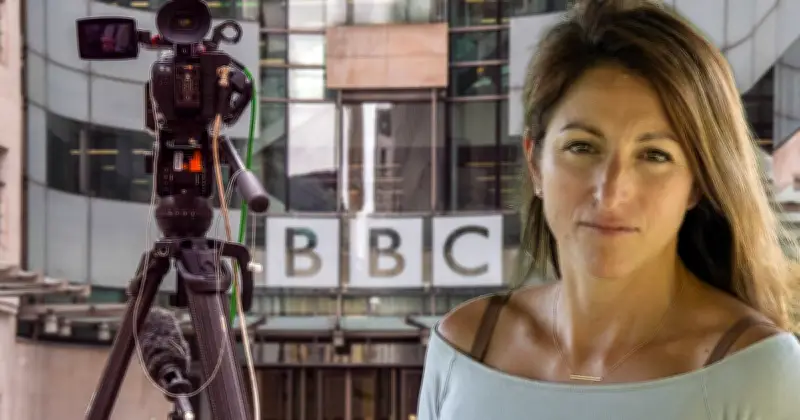
The Labour government's latest proposal to force social media companies to give prominence to 'trusted' public broadcasters such as the BBC, ITV, and Channel 4 is a deeply Orwellian and sinister move that must be rejected, warns guest columnist Molly Kingsley.
Plato's cave and the illusion of freedom
Drawing on Plato's allegory of the cave, Kingsley argues that a man who knows he is trapped can try to escape, but a man who believes himself free does not even attempt to claw his way out. This is directly relevant to the government's 'Watch This Space' Green Paper, which would require social media platforms to foreground content from a handful of state-approved sources, effectively curating the online information environment according to governmental preference rather than algorithmic or personal choice.
Sinister narrative control
While the Green Paper claims the measures are intended to 'foster a healthy information environment' and combat 'misinformation, polemic, and manipulated material', Kingsley argues they represent a form of narrative control that rigs digital spaces to promote state-approved narratives. The proposals would give the BBC, ITV, STV, Channel 4, Channel 5, and S4C disproportionate prominence, sidelining alternative and independent news sources.
According to Kingsley, the essence of healthy democracy is debate, but what cannot be seen cannot be debated. By burying unfashionable opinions and inconvenient events out of sight, the proposals would ensure that unfavored narratives, awkward politicians, and even political parties remain outside the scope of public discourse.
Fallacious justifications
Kingsley, co-founder of parent-led campaign group UsForThem, recounts her own experience of being censored by the government's Counter Disinformation Unit during the pandemic for voicing opinions such as 'playgrounds should stay open'. She argues that examples from Galileo to the gender debate show how today's misinformation can become tomorrow's facts.
Regarding the BBC's trustworthiness, Kingsley points to a leaked dossier from November 2025 by Michael Prescott, former independent adviser to the BBC's Editorial Guidelines and Standards Board, which set out a litany of failings including doctored footage of Donald Trump. Trust in legacy broadcast media has fallen off a cliff since the pandemic, with millions turning to alternative, independent news sources.
Rigged consultation process
The consultation itself is a series of multiple-choice questions that are virtually impossible to complete without generating the responses the government wants, Kingsley asserts. The suggestion that these measures are especially essential during times of social unrest or crisis is particularly chilling, as lives can depend on the ability of courageous minorities and journalists to ask intelligent questions in the public sphere.
Kingsley concludes that while this is not called censorship, it is as sinister a censorship measure as any Orwell might have conceived and must be roundly rejected.




