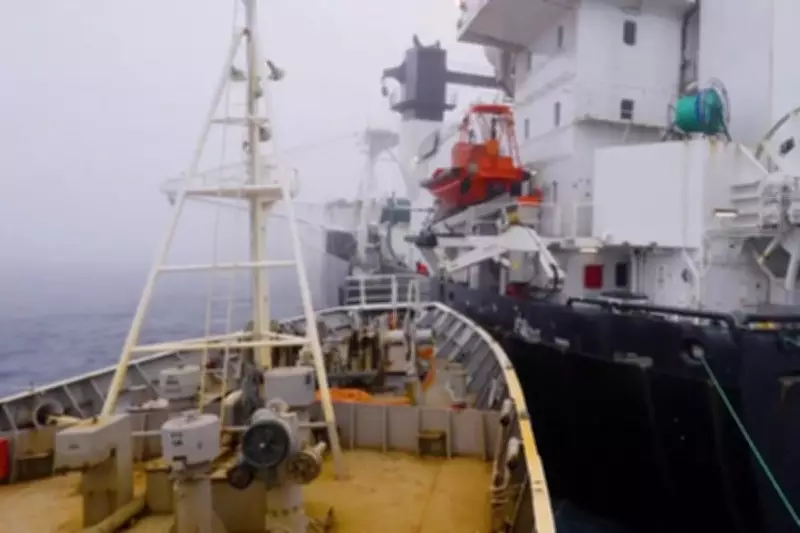
In a dramatic confrontation off the coast of Antarctica, eco activists have been accused of perpetrating a 'terrorist attack' after ramming their vessel into a Norwegian krill trawler. The incident occurred on Tuesday, 31 March, when activists aboard the M/V Bandero targeted the trawler in a protest against whaling and krill fishing operations in the sensitive Antarctic region.
CEO Labels Incident as Terrorism
Matts Johansen, CEO of Aker BioMarine, the company operating the trawler, strongly condemned the activists' actions. He described the ramming as a 'terrorist attack', alleging that the activists not only collided with the trawler but also cut fishing lines and narrowly avoided hitting a diesel tank. Johansen argued that the activists' intent was to cause harm and instil fear, driven by ideological or political motivations rather than peaceful protest.
Environmental Risks Highlighted
The company issued a stark warning about the potential consequences of the near-miss with the diesel tank. They emphasised that a spill could have devastated the ocean habitat, which is rich in marine life including whales, seals, and seabirds. This area of Antarctica is known for its fragile ecosystem, and any contamination from fuel could lead to long-term ecological disaster, threatening biodiversity and local wildlife populations.

Activists Defend Their Actions
In response, activist Paul Watson, founder of the Captain Paul Watson Foundation, disputed the 'terrorist attack' label. He stated that the ramming was a deliberate action to draw global attention to what he called the trawler's 'ecologically destructive operations'. Watson defended the activists' methods as necessary to halt activities they believe are harming the Antarctic environment, particularly through krill fishing that impacts whale food sources.
Broader Implications for Environmental Activism
This incident raises significant questions about the boundaries of environmental protest. While activists argue that direct action is essential to combat ecological threats, critics warn that such aggressive tactics could escalate conflicts and undermine legitimate conservation efforts. The clash highlights ongoing tensions between industrial fishing interests and conservation groups in remote, protected areas like Antarctica.
As investigations continue, both sides are likely to intensify their campaigns, with potential legal and diplomatic repercussions. The event underscores the volatile nature of environmental activism in polar regions, where stakes are high for both economic interests and ecological preservation.