
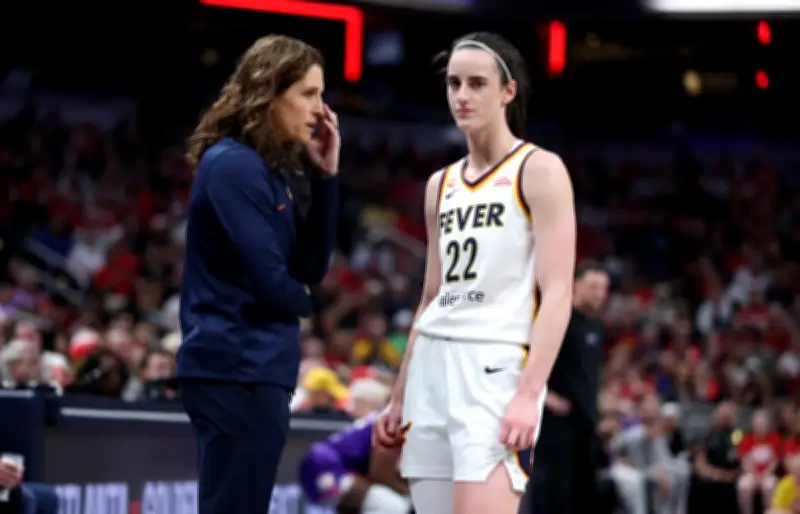
Caitlin Clark, in her third WNBA season with the Indiana Fever, has become a lightning rod for culture-war grievances. Her most ardent fans portray her as a victim of jealous rivals, negligent referees, and league officials who resent her popularity. This narrative, however, does a disservice to Clark and her fellow players.
Poster Snub Sparks Outrage
Last week, the WNBA released a 30th-anniversary poster featuring 20 players. Clark's absence ignited conspiracy theories, with fans suggesting she was deliberately excluded. However, WinCraft, the poster's producer, reportedly lacked the rights to use Clark's image. Other legends like Candace Parker, Diana Taurasi, and Tamika Catchings were also omitted, a fact lost on Clark's zealots.
Collision with Alyssa Thomas
During a game between Indiana and Phoenix, a collision between Alyssa Thomas and Clark sent Clark to the floor. Fever coach Stephanie White called it a “cheap shot.” Thomas was not called for a foul but later suspended for one game after review. Phoenix coach Nate Tibbetts criticized the investigation, saying, “This was not a thorough investigation... The one thing she is not is cheap.” Despite this, Clark's fans demanded harsher punishment, and Thomas reported receiving racist abuse and death threats.
Media Amplifies Victim Narrative
On WFAN, former NFL quarterback Boomer Esiason defended Clark, saying, “She's a straight, white basketball player, and she is not being treated with any sort of respect whatsoever.” He suggested she consider playing overseas. Most WNBA fans dismissed his comments as uninformed. The narrative that Clark is targeted because she is a straight white woman ignores the league's history of white stars like Rebecca Lobo and Sabrina Ionescu, and it exacerbates divisions at a time when politics are sharpening against Black women and the LGBTQ+ community.
Clark's Growing Pains Overlooked
The most obvious story—that Clark's struggles are ordinary growing pains of a young superstar—is missed. This vacuum allows conspiracy-minded fans to thrive. Clark remains undersized for her position, a limited defender, and a frequent complainer about calls. Instead of focusing on her development, fans attribute her challenges to external factors. Even Clark's efforts to quiet her supporters are ignored.
The impulse to protect Clark carries a whiff of paternalism, treating her as a “basketball tradwife” rather than allowing her to evolve into a dominant force. This fantasy crumbles against established stars like A'ja Wilson and newcomers like Paige Bueckers. Clark's gritty Midwestern persona once made her a role model, but the longer her fans cast her as a victim, the more they risk making her a symbol of perpetual victimhood.




