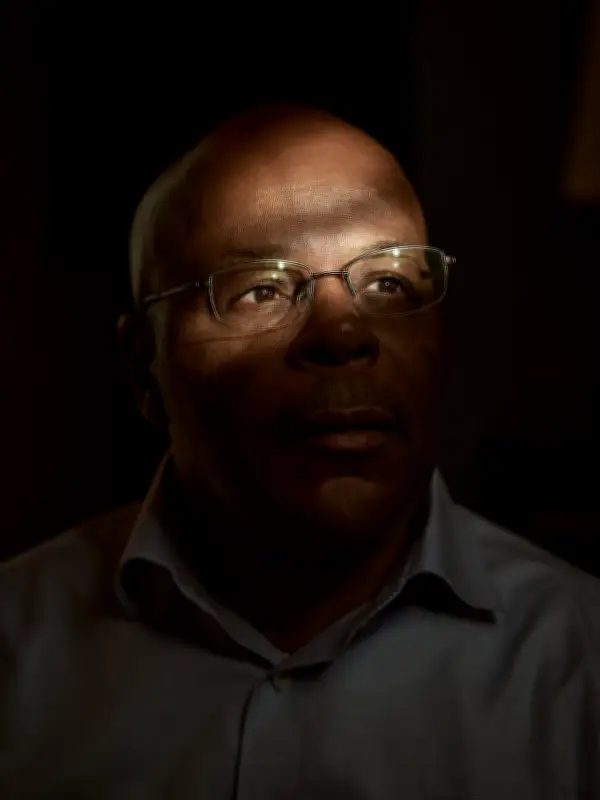
Calvin Duncan, a legal advocate and prisoner rights activist, held the elected office of Orleans Parish criminal court clerk for only three hours before a court cleared the way for a law that abolished his position. He won the race in a landslide with 68% of the vote, but the Republican-dominated state legislature moved to merge his office with another position in the local court system.
Duncan, now 64, was sentenced to life without parole in 1985 for a murder he did not commit. He taught himself law while in prison and helped secure the release of hundreds of people. After his exoneration in 2021, he ran for clerk and won. His inauguration in April 2025 was a moment of catharsis for him, but the victory was short-lived.
Three Hours in Office
On the day he took office, Duncan entered the courthouse, sat at the executive desk, and smiled for a photograph. He toured the archives and saw scattered boxes of records. Then word came from the fifth circuit of appeals, which stayed an earlier ruling allowing him to take office. His time was up. He left through the back door.

“Everything I was believing in had been crushed,” Duncan recalls. “I believed in the democratic process. I was out there saying ‘times have changed,’ but this [running for office] has told me ain’t nothing changed. It’s still Reconstruction. They will take your seat just like they did during Reconstruction.”
A Life of Struggle and Achievement
Duncan grew up in the Desire housing projects in New Orleans and lost his mother to cancer as a child. He was arrested at 19 for the murder of David Yeager, relying on a single eyewitness. He spent three years in jail before trial, where he began teaching himself law using improvised law books made from newspaper cuttings bound with chewing gum.
He filed his first legal motion in 1984, requesting a law book, and won. But his trial lasted a single day, and he was wrongly sentenced to life without parole. It took more than three decades to correct the miscarriage of justice, with the Innocence Project of New Orleans uncovering new records that led to his release in 2011 and full exoneration in 2021.
While in prison, Duncan worked as an “inmate counsel substitute” on death row, helping others. Between 1991 and 2002, eight of his clients and friends were executed by lethal injection. He describes the work as a mixture of legal representation and personal counseling.
Political Attack and Abolition
During the campaign, Duncan’s quashed murder conviction became a political attack line. Louisiana’s attorney general threatened legal action if he referred to himself as an exoneree, and his opponent, Darren Lombard, called him a convicted killer on live television. Duncan believed these attacks were acts of weaponized white supremacy.
Despite the attacks, Duncan won in a landslide. Almost immediately, the state legislature moved to abolish his office. Duncan accused the attorney general and governor of targeting him in a “coordinated conspiracy” due to his pursuit of racial justice. The state argued the abolition was driven by efficiency measures.
“White supremacy, to me, is a spirit,” Duncan says. “These statues were erected right after the civil war to remind people that spirit still exists. And it looks for a host. And the host is generally us, whether it’s a white person or a Black person.”
Looking Ahead
Duncan’s role has been subsumed, with little legal recourse left. He plans to run for the modified position of clerk when it is next available in four years. He hopes his experience will inspire others to realize: “Damn, nobody is coming to save us. We’ve got to save ourselves.”
Despite the outcome, Duncan considers his three hours in office a victory. “God gave me those three hours,” he says. “I was the clerk. That’s what I wanted to be. And nobody could take that away from me.”