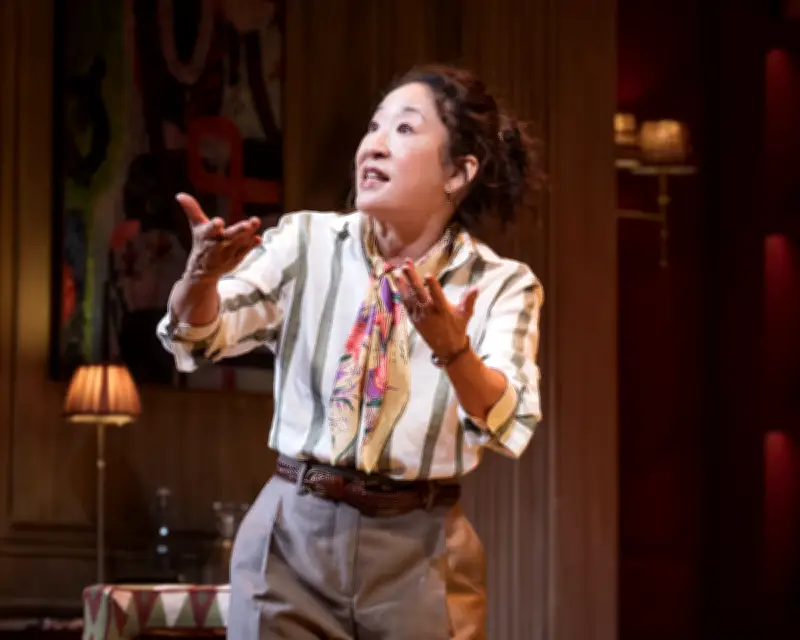
Sandra Oh stars as Alice, a gender-swapped and Americanised version of Molière's Alceste, in Martin Crimp's modern adaptation of The Misanthrope at the National Theatre's Lyttelton theatre. The play, which runs until 1 August, presents a heroic but imperfect reworking of the 17th-century classic, stuffed full of debates about how we might live differently.
Plot and Characters
Alice is a bestselling writer in a stylish trouser suit, who, when an aspiring novelist asks for literary advice, tells her to always make her writing 'seductive'. The play explores her relationship with the younger Stefan (Tom Mison), an actor, charmer and former alcoholic going through an acrimonious divorce. The human drama focuses on the jittery insecurity Alice feels in this relationship.
The adaptation incorporates Molière's subtle reflections on the transformative effects of romantic passion: Alice's focus on clear-eyed sincerity hits a blind spot in love. 'Doesn't he [Stefan] represent everything you hate?' asks John (Paul Chahidi), her best friend, wryly.
Themes and Satire
Crimp's version is stuffed full of debates of our time around female empowerment, patriarchy, digital rage, misinformation and the hollow language of 'acceptance', with plenty of pops at theatre and bad writing. However, not all of these issues seem to belong to a single play; they are bitten off but barely chewed. The satirical elements are hard to anchor—who is being satirised and why? The production sends up everyone from Gen Zers who speak about their authentic selves to women who rail against misogyny, the latter mainly through Alice, who is angry and an uncompromising paragon of truth.
Direction and Design
Indhu Rubasingham's direction is very fine, set on Robert Jones's set of drawing rooms marked by modern opulence with edges of 17th-century baroque. The drawing room lifts off in the final moments to be replaced by candles, chandeliers and bustled gowns amid a sea of empty blackness, capturing a costume party that departs from realism and veers into Molière for surrealists.
Performance
Oh brings heart, fire, vulnerability and comic timing to the role. In the best dramatic moments, the play flies, and the return of comedy feels like an interruption. The acrimony between Stefan and his ex-wife Elaine (Jemima Rooper) and the tenderness between Alice and John are riveting.
As a production, it is imperfect but heroic in all it tries to say about the way we live, how we might live differently and escape the toxicity of the digital world. Except, like Molière's Alceste, no one else is up for finding a free, honest corner of the earth. Alice's flight from dishonesty feels less like liberation than self-elected banishment.