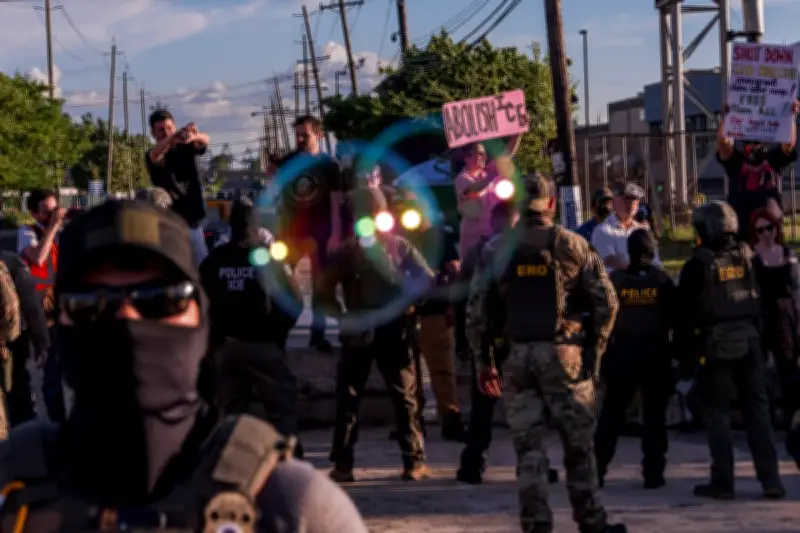
Protesters and ICE agents faced off outside the Delaney Hall detention center on June 7, 2026, in Newark, New Jersey. Amid horror stories, hunger strikes, and police presence, one voice has consistently rung out for local communities: that of Radio Jornalera NJ, a small grassroots media outlet.
Grassroots Coverage of Delaney Hall
The outlet uses multiple platforms, with reporters and volunteers streaming live from outside the facility, posting on Instagram about conditions inside, and broadcasting into local cars and homes. Richard Torres, the director, has made it his mission to cut through the confusion. When state police turned back families at the gates last week, Torres called the detention center, confirmed visitation was on, and personally questioned officers until families were allowed in.
Empowering the Community
Radio Jornalera NJ provides on-the-ground coverage, rolling updates, and quick-turnaround dispatches, pressing officials for answers. It has been constantly at the site, interviewing released immigrants and their families while documenting protests and police response. Torres said, “One of the things we do is empower people and build trust around the community.”
During the Delaney Hall hunger and labor strike, the battle to control the narrative has been intense. Social media influencers, streamers, and traditional news outlets have flocked to the site, but Radio Jornalera NJ provides a counterbalance by elevating the voices of detained immigrants and their families.
Risks and Resilience
Reporting comes with risks. On May 31, a volunteer reporter was arrested by state police despite wearing press credentials. She was released the next day. Meanwhile, detained immigrants continue to release letters and statements, while the Department of Homeland Security and Geo Group deny any strike or subprime conditions.
Radio Jornalera NJ was launched in 2021 by Resistencia en Acción after community members sought to build their own narrative. The outlet is part of a larger network of independent stations in California, Minnesota, and Washington DC. It now has eight shows focusing on migrant workers, domestic workers, activism, public policy, healthcare, and more.
Torres concluded, “There are a lot of very talented folks who always wanted to do journalism or media, and they never got a chance to do it. So we are that outlet where we give them that chance.”