Strange things are unfolding at 1600 Pennsylvania Avenue, prompting an obvious question: how did we get here? Rising from the South Lawn of the White House is a 92ft-tall skeletal structure known as 'the Claw.' Beneath it sits an octagonal cage surrounded by sponsor logos, temporary grandstands, and thousands of seats for a mixed martial arts card on Sunday night to celebrate Donald Trump's 80th birthday and the Ultimate Fighting Championship brand.
The event has drawn comparisons to 'Idiocracy,' Mike Judge's satire of a future US where politics, entertainment, and corporate branding become indistinguishable. Others have dismissed it as a 'kleptocratic spectacle.' The commercial trappings are difficult to overlook, with commemorative 'Freedom 250' coins bearing Trump's likeness marketed at prices ranging from roughly $250 to $12,000.
The Rise of Dana White
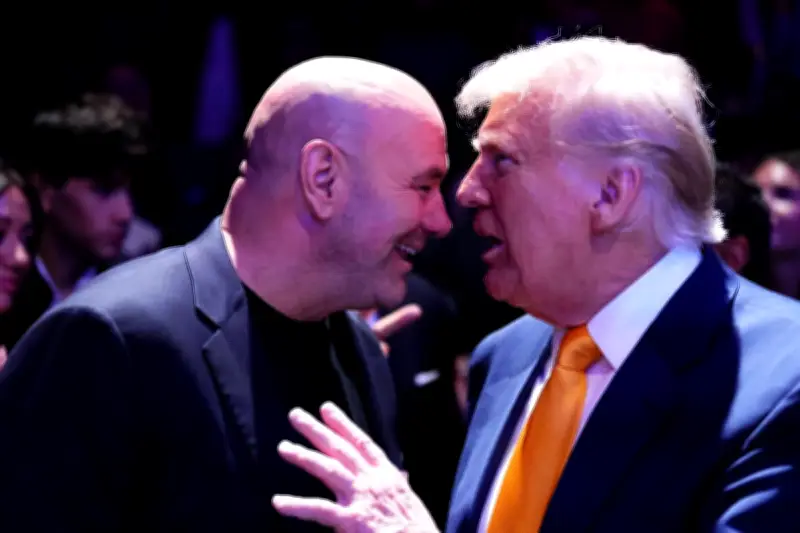
The keys to this extravaganza lead to one man: Dana White. The UFC chief executive has appeared on NPR, sat for an interview with David Remnick on the New Yorker Radio Hour, landed a feature in Rolling Stone, and appeared on the cover of Time magazine. This marks a striking turn for a fight promoter who spent most of his career farming influence outside traditional centers of power.
White has become the most recognizable carnival barker in American life since Don King. Unlike King, his influence extends beyond the fight game. Over the past decade, White evolved from sports executive into a cultural power broker, political surrogate, Meta board member, and one of Trump's most trusted advisers.
A Valuable Demographic
The White House event rests on an origin myth central to both men: Trump threw the UFC a lifeline when nobody else would. In the early 2000s, the UFC was a fringe spectacle banned in 36 states, branded 'human cockfighting' by Senator John McCain. Trump, navigating fallout from his casino troubles, hosted three UFC events at his Taj Mahal casino in Atlantic City from 2000 to 2001.
Today, White tells the story as if the road from outlaw years to the White House runs through the Taj Mahal. However, for much of the UFC's rise to a multibillion-dollar powerhouse, Trump was absent from its narrative. That changed starting in 2016, when the Atlantic City episode was retconned into a foundational chapter in their mythology.
The UFC, now valued at over $12bn, cultivated a younger audience that came of age on WWE, reality television, and internet culture. One industry executive described the core demographic as 'white kids from the suburbs who grew up watching pro wrestling and aren't married yet' – a demographic that became coveted in American politics.
Political Alliance
White invested heavily in podcasters, streamers, and internet personalities. Joe Rogan's rise from UFC commentator to influential media personality mirrored the promotion's growth. The Nelk Boys, Barstool Sports, Theo Von, and Adin Ross became central figures in an alternative-media ecosystem commanding millions of young men's attention.
Trump's appearances at UFC events felt different from elsewhere. He stepped into a community whose media habits and distrust of traditional authority aligned with his political appeal. White and Trump share a similar relationship with the press, treating journalists as adversaries and portraying criticism as bias.
An American Spectacle
The relationship moved to the foreground during Trump's 2016 campaign. White spoke at the Republican national convention and returned in 2020 and 2024. During the 2024 campaign, Trump credited White with facilitating the Joe Rogan appearance that became a defining media moment.
White's recent media blitz focuses as much on Trump and politics as on fighters. The UFC increasingly functions as a parallel campaign arena where Trump performs strength and bypasses traditional media. The temporary arena on the South Lawn, costing over $60m, transforms public land into a venue for cage fighting.
The White House says the UFC covers costs, commanding resources of seven federal agencies. The expense is an investment in a spectacle benefiting nearly everyone involved. Fighters will make entrances from the Oval Office to an octagon on White House grounds – scenes unthinkable five years ago, but the visible endpoint of a relationship that helped reshape our world.