The BBC has taken a completely new direction for its 2026 World Cup coverage this summer, implementing several major changes that have stirred debate among fans. The 2026 World Cup is now underway, and UK viewers face the familiar choice between BBC and ITV for tournament coverage. However, early signs indicate that a significant portion of the audience is leaning toward ITV this year, following a series of structural and presentation shifts by the BBC.
Among the most controversial decisions is the scrapping of a dedicated tournament highlights show from the traditional TV schedule, a move that has drawn immediate scrutiny. Here, we examine the various changes the BBC has made to its World Cup coverage and why they have caused such a stir.
BBC Scraps World Cup Highlights Show
Unlike previous major tournaments, including Euro 2024, the BBC has opted not to broadcast a traditional, scheduled daily highlights show on its linear TV channels. This represents a significant departure from standard terrestrial tournament formatting, leaving viewers unable to tune into a fixed late-night recap on BBC One. The broadcaster has strongly pushed back against suggestions that this constitutes a reduction in output, clarifying that the decision is a direct response to scheduling and time-zone logistics.
According to a BBC statement: "BBC Sport is producing highlights from every single match so audiences are always across the moments that matter. Catch all the post-match reaction and highlights on BBC iPlayer, or dive in via the BBC Sport website and app." The corporation argues that a traditional television broadcast slot does not align with the late-night and early-morning kickoff times of matches in North America. Their statement added: "It would be inaccurate to report that BBC Sport is not producing highlights for audiences; we are creating round-the-clock coverage throughout the tournament, across more platforms than ever before. Given the time difference—matches taking place late at night and in the early hours of the morning—we are producing highlights that can be accessed by fans at whatever time suits them, on BBC iPlayer, the BBC Sport website and app, and across social media."
Gary Lineker's Exit
Another major disruption to the broadcaster's traditional presentation is the high-profile exit of long-serving frontman Gary Lineker. This tournament marks the first time in over two decades that the BBC has entered a World Cup without Lineker anchoring the studio coverage. The former England striker left last year following a series of public controversies regarding his use of social media and adherence to impartiality guidelines. While the upcoming tournament was widely expected to serve as his final major international broadcasting appearance for the network, his tenure was cut short after he was effectively sacked from his role amid accusations of antisemitism.
The sudden nature of his departure left the BBC forced to overhaul its long-term presentation plans, with Gabby Logan, Kelly Cates, and Mark Chapman now sharing the main hosting responsibilities, as they do on Match of the Day. Lineker's absence has left many traditional viewers adjusting to a completely revamped punditry lineup, breaking a multi-decade continuity that fans had grown accustomed to.
No On-Location Studio
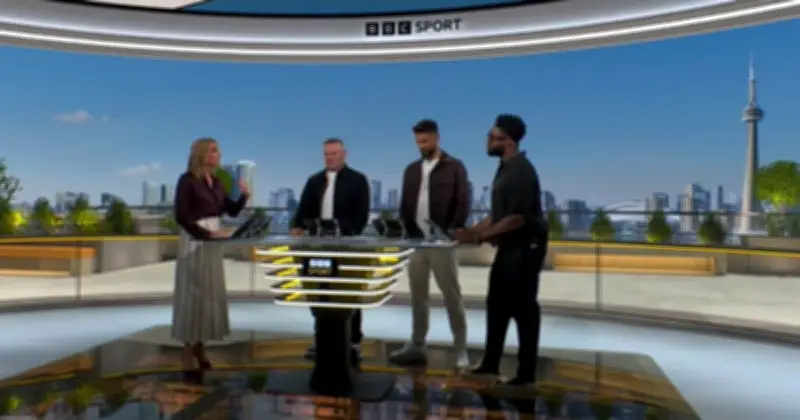
Perhaps the most jarring change to the programming is that the BBC has opted against constructing a physical studio set on location in North America. Instead, it is anchoring the first part of the tournament entirely from its domestic base in Salford. This cost-cutting decision relies heavily on a virtual green-screen studio to project digital backdrops of the host cities behind the pundits. The minimalist, studio-bound approach has drawn sharp criticism from viewers and media analysts, many of whom have described the virtual aesthetic as uninspired and lacking the authentic atmosphere of a major tournament.
The setup contrasts sharply with rival broadcaster ITV, which has invested in a prominent, physical studio located in Brooklyn that features the actual New York City skyline as a backdrop. Critics have noted that while ITV's presentation feels in line with the scale of the North American event, the BBC's reliance on a Salford studio risks making its coverage feel detached and overly clinical.