Glyndebourne's summer season follows a thematic thread: after Tosca and L'Orfeo, Richard Strauss's Ariadne auf Naxos—an opera about an opera—takes the stage. The work begins backstage as two troupes, one high art and one low, prepare after-dinner entertainment for a wealthy patron, then performs the combined act forced upon them. The real subject is love, but Laurent Pelly's production conveys this only partially.
First Half: Wit and Comedy Shine
The first part showcases Pelly at his wittiest. The setting is the home of Vienna's richest man, whose taste is immediately questionable; Massimo Troncanetti's set features a huge doorway of gilded, inlaid wood clashing with a very 20th-century statement chandelier. William Relton's fearsome Major-Domo appears everywhere, cowing even Michael Kraus's classily sung Music Master. Ru Charlesworth's chainsmoking Dancing Master slinks around dressed as a sequined, velvety advert for Silk Cut. Samantha Hankey, her mezzo-soprano mellow but gleaming, portrays the Composer as an irascible would-be genius. Zerbinetta, the comic leading lady, teeters in stockings and suspenders.
Conducted buoyantly by Robin Ticciati, the reduced London Philharmonic players revel in the characters' grand hopes and small tragedies, as per Strauss's stipulations. Pelly plays to the stereotypes brilliantly, hitting comic marks without sending things up.

Second Half: Less Sparky and Insightful
However, this is an opera of two parts. The audience is told repeatedly that the dinner guests will find the combination of rich food and serious opera conducive to sleep. Disappointingly, post-picnic, Pelly's handling of the second half is less sparky and insightful than the first. Ariadne and the rest must clamber over a huge mound of earth that feels like an operatic in-joke, and in the twilight, it is hard to discern the effect of each character's words on others.
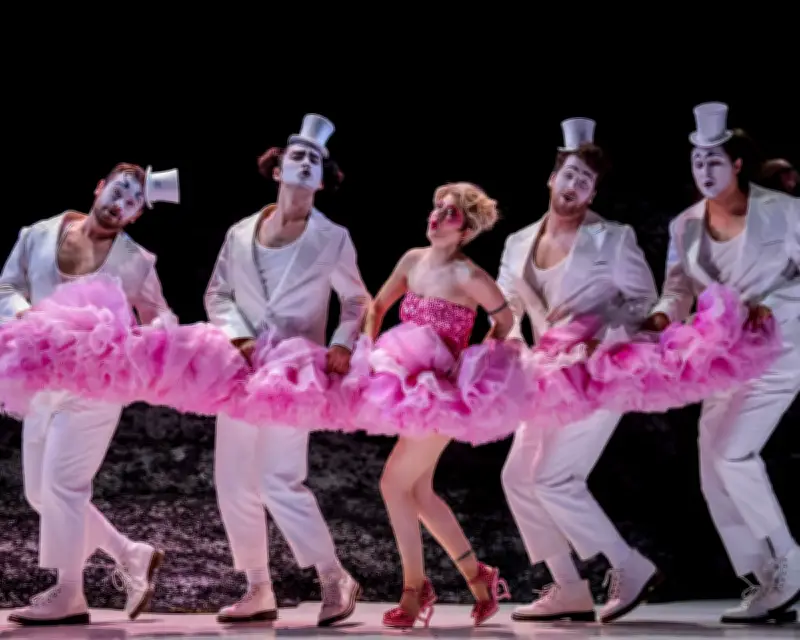
Alina Wunderlin is a dazzling spotlight of brightness in Zerbinetta's monologue, throwing out high notes and little waves to the audience with equal ease. However, her potential subplot with Mikhail Timoshenko's Harlequin does not amount to much. He and his scene-stealing comedian companions remain in puppet-like character throughout, with no glimpse behind the facepaint. As the Prima Donna who sings Ariadne, Rachel Willis-Sørensen has a soaring voice but barely hints at the vulnerable woman beneath, either in her long-phrased aria or in duet with David Butt Philip's powerfully sung Bacchus.
Conclusion: Enjoyable but Unmoving
We at least see the Composer vindicated, mirroring Ariadne's movements in the gloaming behind her—and well may he revel in 'his' music, as lushly played as it is here. But have any of the characters been changed by their experience? It seems not, leaving this Ariadne enjoyable but ultimately unmoving. Runs until 29 August.