The Remarkable Challenges of Filming BBC's Lord of the Flies
The sheer emotional power displayed by the child actors in the BBC's adaptation of Lord of the Flies has captivated millions of viewers, creating such an overwhelming experience that few have paused to consider the monumental production challenges behind this remarkable drama.
An Almost Impossible Task
How does a production crew successfully transport more than thirty boys, aged between five and twelve years old, to a remote Malaysian island and film them acting out one of English literature's most beloved and surreal stories? As revealed in an hour-long documentary following the final, shattering episode, the answer is: with extraordinary difficulty.
It wasn't merely the oppressive heat, torrential rain, persistent flies, and vast distances that transformed this production into what many considered an almost impossible undertaking. The logistical challenges of managing young children in such an environment proved equally daunting.

Herding Cats on a Tropical Island
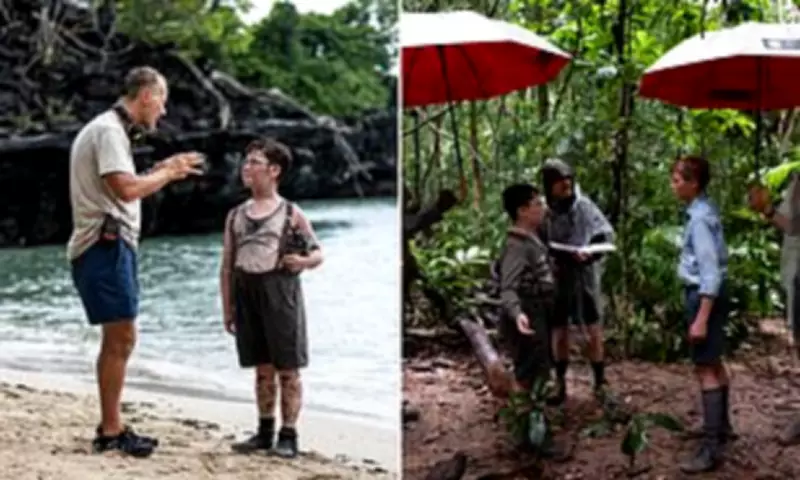
'It's like herding cats,' lamented one exasperated location manager, attempting to coordinate a group of Big'uns and Littl'uns (the older and younger boys) along a beach while cameras continued to roll. The scene perfectly encapsulated the production's daily struggles.
One young actor carried a handheld electric fan—a distinctly modern convenience that appeared strikingly incongruous within the drama's 1950s setting. Meanwhile, other children darted off in various directions, requiring constant redirection from the beleaguered crew.
Educational Requirements and Creative Solutions
With all child actors legally required to complete fifteen hours of school studies each week, filming schedules became even more restricted. This educational mandate directly influenced the production's creative choices, resulting in numerous transitional shots featuring lizards, crabs, and coconuts between scenes.
Director Marc Munden demonstrated remarkable patience and creativity when working with his young cast. In one particularly memorable moment, he gathered a trio of mischievous Littl'uns to prepare them for a scene where fear and hysteria overwhelm the boys' camp.
'I want you to be really, really crazy,' Munden explained with focused intensity. Pointing specifically at a Littl'un named Jake, he added, 'I've seen you being crazy.' The young actor responded with an ear-to-ear grin, perfectly capturing the blend of professionalism and youthful energy that characterized the entire production.
Surprising Dedication from Young Performers
While millions of viewers have marveled at the intense performances—particularly during harrowing scenes like Simon's murder and Piggy's slow death—it remains genuinely surprising to discover how seriously the young actors approached their roles.
Lox Pratt, who portrayed the increasingly savage Jack, and Winston Sawyers, who played the principled Ralph, both spoke eloquently about how they enhanced scenes by incorporating their authentic emotional reactions. Their commitment to character development belied their youth.
In a particularly unexpected revelation, Winston Sawyers—who perfectly captured the postwar, middle-class received pronunciation of his character—actually possesses an American accent in real life. His linguistic transformation demonstrated remarkable acting versatility for such a young performer.
Audition Insights and Future Stars
David McKenna, whose portrayal of Piggy proved revelatory to audiences, shared fascinating details about his audition process. When casting agents posed a trick question—'If you were stranded on a desert island, who would you want to be stranded with and why?'—McKenna responded with perfect comedic timing.
'I would want to be stranded with the West End cast of Les Mis,' the young actor shot back without hesitation. 'Because, you know—who else?' His witty response not only secured him the role but suggested a natural charisma that extends beyond dramatic performance.
As noted in initial reviews of the series' first episode, audiences will undoubtedly see much more of young David McKenna in the future. His audition anecdote confirms that he possesses the personality and quick wit to shine equally brightly on chat shows and interview programs.

The behind-the-scenes documentary ultimately revealed that creating this acclaimed adaptation required navigating a perfect storm of logistical nightmares, educational requirements, and unpredictable tropical conditions—all while eliciting extraordinary performances from dozens of child actors. The result stands as a testament to what television production can achieve against seemingly impossible odds.