Stand By Me Returns with Added Poignancy on 40th Anniversary
Rob Reiner's timeless coming-of-age drama Stand By Me receives a special 40th anniversary re-release in UK cinemas from 10 April, presenting audiences with a masterclass in directing, storytelling, and acting that has only grown more powerful with time. Adapted by screenwriters Raynold Gideon and Bruce Evans from Stephen King's novella The Body, Reiner transformed King's story into a glorious American classic reminiscent of Mark Twain's work.
A Film Forever Changed by Tragedy
Originally released in 1986, the film gained its first layer of sadness in 1993 when actor River Phoenix died from a drug overdose. Now, a terrible new dimension of grief has been superimposed on the film's themes of innocence and death following the 2025 murder of director Rob Reiner and his wife Michele Singer Reiner. This tragic event adds profound resonance to a film already deeply concerned with mortality and memory.
The Journey of Four Boys in 1950s Oregon
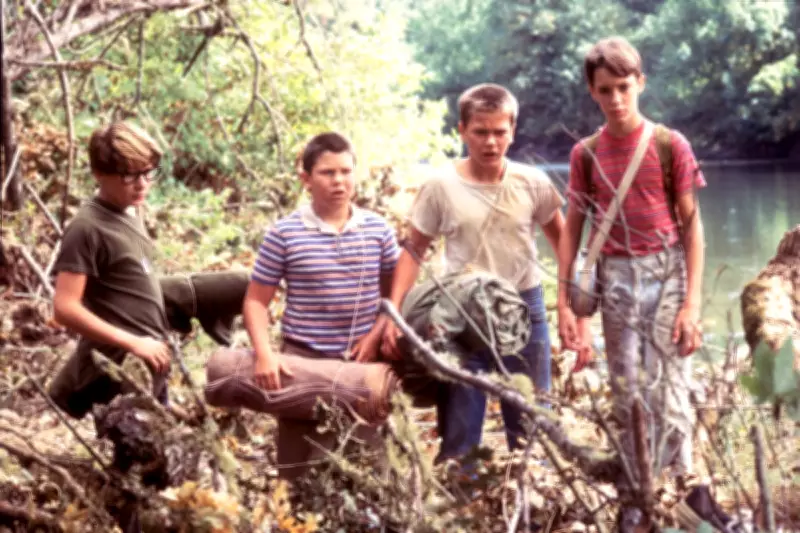
Set during a hot summer day in the late 1950s and told through flashback with narrative voiceover, the story follows four twelve-year-old boys from the fictional Oregon town of Castle Rock as they embark on what becomes a secret, secular pilgrimage. Their mission: to find the corpse of a missing boy their own age, rumored to lie beside distant railway tracks after being hit by a train.

The resulting adventure proves bizarre, mysterious, and deeply moving—exploring lost youth and the recovery of innocence through writing and memory. This remains one of those vanishingly rare films where child actors carry almost the entire dramatic weight.
The Gang of Castle Rock
The four chipmunk-faced boys represent different facets of childhood experience:
- Chris (River Phoenix) serves as the tough leader of the group
- Teddy (Corey Feldman) wears glasses and bears a burnt ear from his abusive father, who suffers wartime PTSD
- Vern (Jerry O'Connell) provides the clumsy comic relief
- Gordie (Wil Wheaton) emerges as the quieter, more thoughtful would-be writer who narrates the story, traumatized by the accidental death of his older brother Denny (John Cusack)
Their hot, dusty, and dangerous trek along railway lines nearly gets them killed in precisely the same manner as the boy whose death they morbidly seek to confront. Death proves not to be some abstract concept for these children; Gordie understands mortality intimately, as do his friends, reinforced when a gloomy storekeeper reveals his own brother was killed in Korea.
Danger, Conversation, and Survival
The boys engage in extensive conversation—"the kind of talk that seemed important until you discovered girls"—while facing multiple life-threatening situations. Along their journey, they nearly get hit by a locomotive, almost drown, and barely escape a savage junkyard dog.
Their adventure remains near-fatally dangerous—a stark contrast to modern children staying indoors with electronic devices—yet this never descends into Lord of the Flies-style treachery. Though hardly innocent (part of the film's unstated moral concerns bringing a gun to a knife-fight), their essential decency survives intact. Perhaps the grisly corpse awaiting them just over the horizon pre-empts violence, with the dead boy's fate already redeeming them.
Storytelling Within Storytelling
The film's most unexpectedly complex and metatextual moment arrives when the talented Gordie regales his friends with a fireside story of his own composition: The Revenge of Lard-Ass Hogan. This tale about a pie-eating competition and an overweight child getting spectacular payback on bullies becomes a miniature film-within-a-film when dramatized by Reiner, expertly intuiting everything occurring in the boys' real lives: cruelty, voyeurism, cynicism, and fear.
Significantly, the film removes from King's original a second, darker story by Gordie, focusing instead on this single narrative that mirrors their experiences.

Memory and Completion
All these events are recalled by the adult Gordie, portrayed by Richard Dreyfuss, who has grown into a successful writer (similar to his character in George Lucas's American Graffiti, a film Stand By Me resembles in its use of period hits by the Chordettes and Buddy Holly). The final scene reveals green, glowing letters on his computer screen—clearly the work he has waited his entire life to complete, triggered by news of a contemporary's death.
An Imperfect Yet Sublime Portrait of Childhood
While the narrative may gloss over the almighty beating the boys would likely have received from grownup hoodlum Ace (Kiefer Sutherland), Stand By Me remains a sublime film about childhood. Its return to cinemas offers both longtime fans and new audiences an opportunity to experience this masterpiece with fresh eyes, now carrying additional layers of meaning from real-world tragedies that have unfolded since its original release.