Siri Hustvedt's 'Ghost Stories': A Raw Memoir of Life After Paul Auster
Siri Hustvedt's 'Ghost Stories': Life After Paul Auster

In September 2022, the celebrated American author Paul Auster found his progress on a new novel interrupted by a fever that laid him low every afternoon 'like clockwork', requiring him to step away from his beloved typewriter earlier than usual each day. Three months later he was diagnosed with lung cancer, dying in April 2024, aged 77.

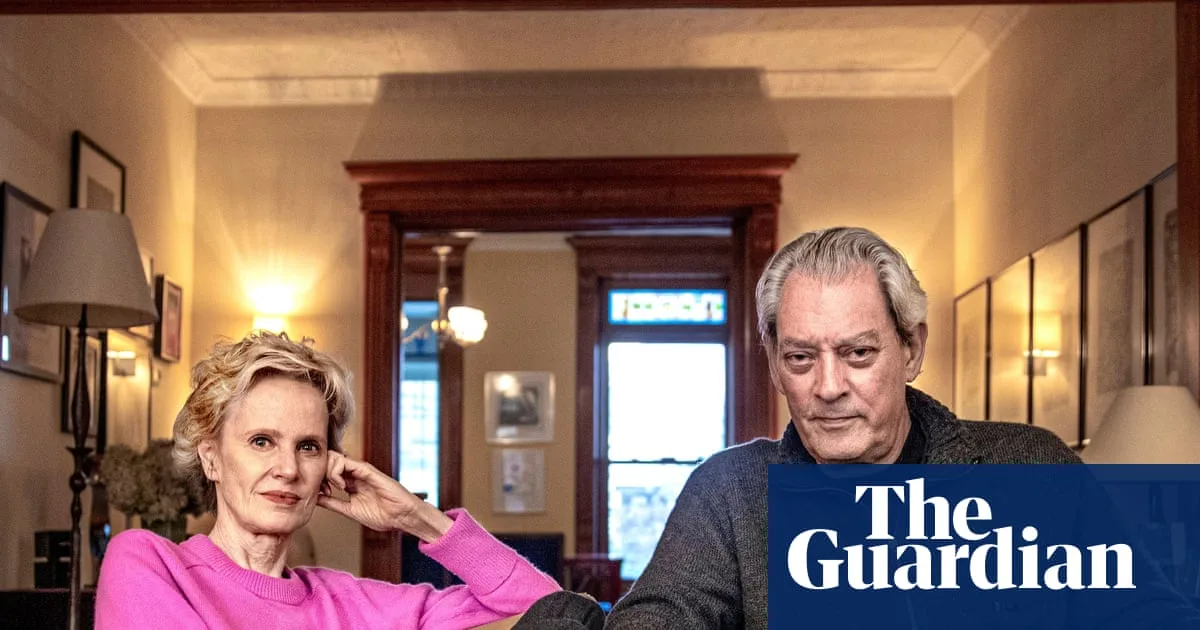
That pain lies at the core of this raw and touching memoir by his widow, the Norwegian-American author Siri Hustvedt. They first got together in 1981, when he caught her eye at a poetry reading, wearing a black leather jacket, cigarette in hand. Auster – then in his 30s – wasn't yet the world-renowned name behind The New York Trilogy (1987), a trailblazing literary mash-up of hardboiled detective fiction and polo-necked existentialism. Hustvedt was a 26-year-old postgraduate student at work on a thesis about Charles Dickens while batting away interest from a modelling agency who wanted her to go to Paris. Auster told Hustvedt that she might be the only person in the world to subscribe to a scholarly journal of 'consciousness studies' as well as Vogue.

Now, after 42 years of marriage, suddenly alone in their four-storey Brooklyn home, Hustvedt writes piercingly of the countless tiny ways her loss startles her anew each day. Hosting her daughter and son-in-law for dinner, she momentarily finds herself wondering why there are only three plates, not four. Opening a drawer, she sees a cap that Auster wore during his cancer treatment, hairs still clinging to the inside. After a prize ceremony in Washington DC, she has to remind herself not to call home. 'You will not wonder with Paul what to do for dinner. You will not feel Paul's hands on your body tonight or his warm skin against yours.'

Wide Pickt banner — collaborative shopping lists app for Telegram, phone mockup with grocery list

Hustvedt writes plainly about the duties of bereavement: disposing of unused medication, organising financial affairs, clearing her husband's wardrobe (sparing his leather jacket, which she now wears). She brings equal clarity to the trials of care. 'I was afraid I would give him the wrong pills or fail to recognise a symptom of an imminent emergency, but mostly I was afraid of what I couldn't control – his death.'

After publishing the novel he had been working on when he became ill (Baumgartner, released late in 2023), Auster's health worsened. Undaunted, he began a new book – a series of letters to his newborn grandson. The letters he managed to write are seeded throughout Ghost Stories. You feel a bittersweet surge of happiness hearing Auster's voice again – a mark of how cleverly Hustvedt has organised this book.

Yet her recollections are by no means rose-tinted. As she observes: 'Love doesn't have to be blind.' Auster could be stubborn, grumpy and tactless. A fan who handed him a photo of his child was told: 'What an ugly baby.' Hustvedt recalls wearing a new dress he said looked like 'a shower curtain'. He received gifts by asking: 'Why did you get me this?'

Nor does the book shy away from the darkness in his life. Auster's diagnosis came little more than a year after the unutterably tragic death of his ten-month-old granddaughter Ruby, following an overdose of heroin and fentanyl. Auster's son Daniel – Ruby's father – had been alone with her when she died. Six months later he was arrested and charged with manslaughter, criminally negligent homicide and endangering the welfare of a child. He died of an overdose hours after he was bailed in April 2022. Born to Auster's first wife, the writer Lydia Davis, Daniel had long been troubled. An ex-convict in and out of rehab, he stole money from Hustvedt, who did his homework for him in high school. It's moving to read just how loyally Auster kept his door open to Daniel – until the cause of Ruby's death was discovered.

Pickt after-article banner — collaborative shopping lists app with family illustration

For a literary novelist, Auster was unusually well known. Fans mobbed him in Paris and alarmingly threw themselves at his car in Buenos Aires. That relative level of celebrity made his family a target for intrusive reporting after Daniel's arrest. It also coloured the reception of Hustvedt's work. Journalists interviewing her for her latest book would patronisingly ask what it was like being married to Auster. (She rolled her eyes when he suggested she respond by telling them: 'Oh my God, you can't believe what he's like in bed.') She suspects his renown ultimately turned reviewers against him. Hustvedt once saw a second-hand copy of one of his books that, having been sent to a newspaper critic, still contained a note from the commissioning editor: 'I think this guy needs taking down a peg or two.'

Auster's heaviest clobbering came at the hands of The New Yorker magazine's James Wood, who snidely parodied his style. Unmentioned here, that 2009 takedown hangs silently over a passage in which Hustvedt scorns the literary in-crowd. When she and Auster went to parties buzzing with chatter about 'the same article or story in The New Yorker "everyone" had read, and "everyone" loved, and "everyone" was talking about', Auster 'calmly . . . let the breezes of verbiage pass him by'. Hustvedt, for her part, 'bristled silently at the chummy complicity of it all and every once in a while let out a critical bark – generally met with startled silence'. She was Team Auster, rightly so, and naysayers be damned.

Sorrowful, tender, candid, even funny, Ghost Stories is a book about death that brims with life, in all its misery and joy. This is a story of partnership: romantic, domestic, literary. 'This will be the first book of mine Paul won't read before it's published,' writes Hustvedt, 71. Your heart goes out to her.