Kenith Trodd, Visionary Television Producer, Passes Away at 90
Kenith Trodd, one of Britain's most influential television drama producers, has died at the age of 90. He will be best remembered for his long-running and transformative partnership with the writer Dennis Potter, which produced landmark serials that reshaped the creative landscape of small-screen drama and frequently challenged societal moral values.
A Pioneering Partnership with Dennis Potter
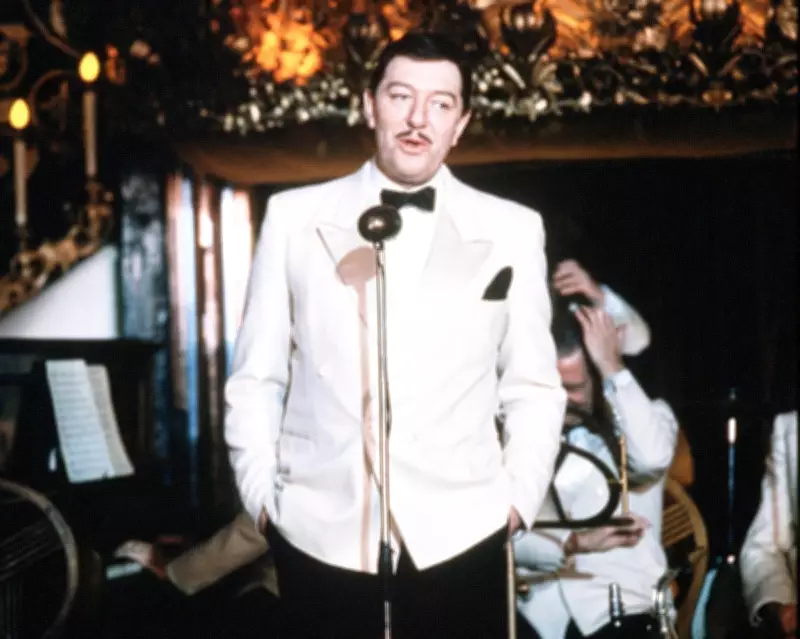
Trodd's collaboration with Potter bore fruit most notably in the serials Pennies from Heaven (1978) and The Singing Detective (1986). It was Trodd who gave Potter the opportunity to transition from writing single plays to crafting "television novels." Pennies from Heaven featured Bob Hoskins as a song sheet seller who travels the country, cheating on his wife while breaking into dance and mime to sentimental 1930s tunes, offering a stark contrast to the Depression era.
The Singing Detective, starring Michael Gambon as a crime fiction writer hospitalized with a debilitating skin condition—mirroring Potter's own affliction—delved into wartime childhood memories and 1940s music. The production sparked outrage with a scene where Gambon's nine-year-old character witnesses his mother's adultery from a tree.

Controversy and Innovation in Drama
The duo faced their most significant controversy with Brimstone and Treacle (1976), a play in which a brain-damaged young woman is cured after being raped by a charismatic "demon" visitor. The BBC refused to broadcast it, leading Trodd and Potter to remake it as a cinema film in 1982. The original television production was eventually aired five years later.
Groundbreaking drama was central to their work. Blue Remembered Hills, a 1979 Play for Today production, featured adult actors like Colin Welland and Helen Mirren portraying seven-year-old wartime children, blurring the lines between innocence and cruelty, and revealing little distinction between childhood and adulthood.
Political Convictions and Professional Rifts
Both Trodd, who flirted with the Socialist Labour League, and Potter, a failed Labour parliamentary candidate, shared similar leftwing political convictions. However, director Piers Haggard described them as "the odd couple," noting their frequent fights and Potter's teasing of Trodd as a "Trotskyite."
In 1978, they founded the independent production company Pennies from Heaven to produce Potter's future work. A rift emerged a decade later when Potter hired Rick McCallum as joint producer on Blackeyes (1989), leading Trodd to resign. Despite this, they reunited for Potter's final two serials, Karaoke and Cold Lazarus (both 1996), which Trodd produced as Potter was dying of cancer.
Early Career and Lasting Legacy
Born in Southampton to Winifred and Benjamin Trodd, Kenith was educated at King Edward VI grammar school. After national service in the Intelligence Corps and graduating in English from University College, Oxford, he taught in West Africa before entering television in 1965 as an assistant on the Wednesday Play.
He played a pivotal role in launching Potter's career with political dramas like Stand Up, Nigel Barton and Vote, Vote, Vote, for Nigel Barton in 1965. As a story editor, he worked on numerous plays, including those by David Mercer. Trodd later produced for ITV's LWT, forming Kestrel Productions with colleagues like Tony Garnett, and commissioned Jean-Luc Godard's controversial documentary British Sounds (1970).
After a stint at Granada, he returned to the BBC, producing 30 Play for Today dramas between 1973 and 1982, despite management initially refusing to renew his contract due to his leftwing politics being deemed a "security risk" by MI5. He also masterminded the BBC's Screen One and Screen Two drama strands, producing works by writers such as Simon Gray, Jimmy McGovern, and Stephen Poliakoff.
Trodd's accolades include the Royal Television Society's silver medal in 1987 and Bafta's Alan Clarke award in 1993. He is survived by his wife, Andrea, whom he married in 2002. Kenith Trodd's legacy endures through his revolutionary contributions to television drama, forever altering its creative possibilities.