When special effects artist Aaron Sims first read the script for Stranger Things, he was struck by how vague the description was for the show’s centrepiece monster. “It basically said, ‘The Demogorgon is a tall, lanky creature that eats children,’” recalls Sims. “I’m thinking, ‘OK, that’s scary – but what does that actually look like?’” What happened when he posed this question to the series creators Matt and Ross Duffer? “They said, ‘We have no idea – come up with something.’”
For Sims, who has worked on films such as The Incredible Hulk, Rise of the Planet of the Apes and X-Men, this was a relief. “When there’s already a fanbase, there is a lot of scrutiny and expectation. The fans either love it or hate it – and there’s nothing you can do. Working on The Incredible Hulk, for example, took years. So when it’s a new creature, a lot of people get excited.” This near-blank canvas led Sims to an unlikely source of inspiration: the snapping mouth of a turtle. “When a turtle opens its jaws,” he says, “it looks like it has rows of teeth – but they’re actually fibres that draw food inward.” He combined this with a Venus flytrap and the result was that uniquely terrifying head that blooms open like a flower, revealing concentric rings of teeth, then clamps down on its prey, usually a screaming child. The Duffer brothers wanted only one modification: no face.
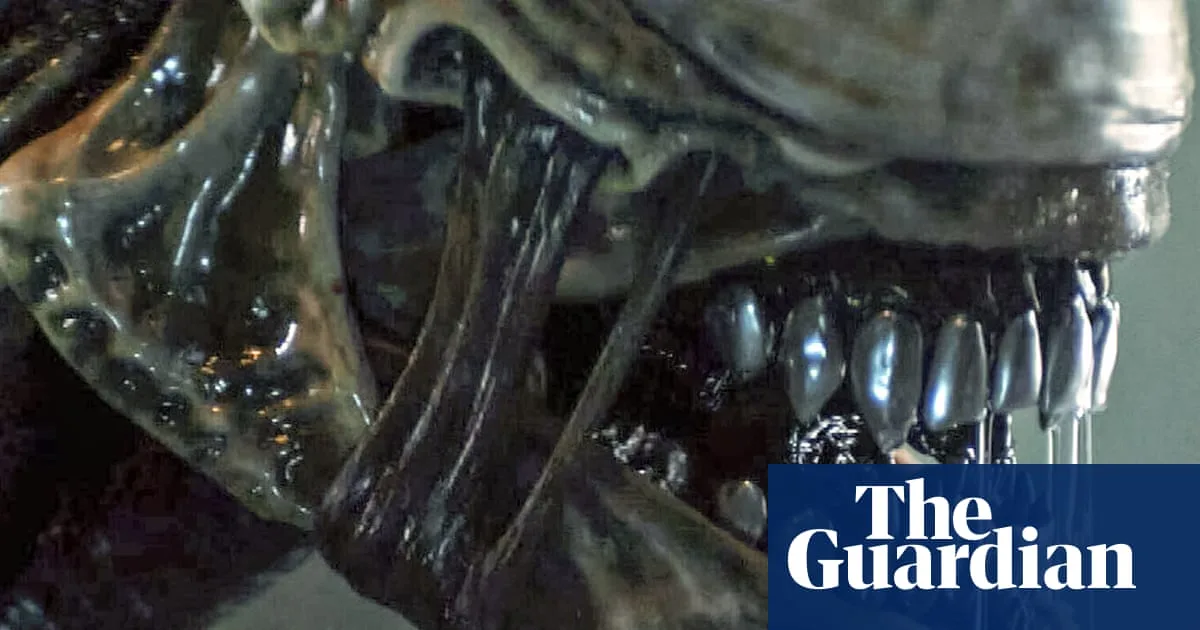
Fans of Stranger Things, which returns later this year, will find plenty to fear in Alien: Earth, which launches this week. Series creator Noah Hawley has promised a terrifying expansion of the film franchise’s already frightening monsters, introducing new creatures that will rival – and even surpass – the iconic, swoop-skulled, chest-bothering, teeth-within-teeth xenomorphs. “I think we’re giving them a run for their money, certainly,” Hawley has said. Alien: Earth, which is a prequel to the first 1979 film, leans heavily into unsettling body horror, too, with new creatures such as the T Ocellus, a jellyfish-like parasite that dislodges the eyes of other organisms in order to seize control of them from within.

Like Sims on Stranger Things, prosthetic makeup designer Barrie Gower leaned heavily on nature when he was creating his monstrous designs for The Infected, the term given to humans who get the brain infection in postapocalyptic zombie horror The Last of Us. Fungus became an integral part of the creative process, with Gower and his team buying so many bags of “grow your own mushroom kits” for the studio to photograph and 3D print that they soon had 15 species on their hands. “Fungus,” says Gower, “is just such an interesting and beautiful kind of growth. There’s so much to play with.” Gower effectively had a “superpower” for creating monsters out of mushrooms: he hates them, despising everything from their smell to their texture. “It became quite easy to come up with designs that repulsed me,” he says.
Along with his mushroom aversion, Gower also has trypophobia, an intense discomfort triggered by the sight of clusters of small holes or bumps. “It gives you goosebumps,” he says. However, rather than avoiding the formations that make his skin crawl, he employed them for maximum grotesqueness in his designs for how The Infected look, finding the perfect guinea pig in his daughter Lottie, who shares his trypophobia. “If she’s like, ‘Oh God no dad, I don’t like the look’, I know we’ve succeeded.” The White Walkers, those furrow-faced ice demons in Game of Thrones, required an entirely different approach. Costume designer Michele Clapton envisioned them wearing dark armour that looked salvaged and repurposed, resulting in an austere, unwieldy look. “It was so, so brutal to make,” Clapton says. “The cutting and the bending of the metal was incredibly labour intensive. The armorists just loathed it because they really cut themselves. It’s almost like a huge cheese grater.” The final pieces of armour proved so hazardous that the team actually had to create much safer leather duplicates for fight sequences, meticulously painted to mimic metal.