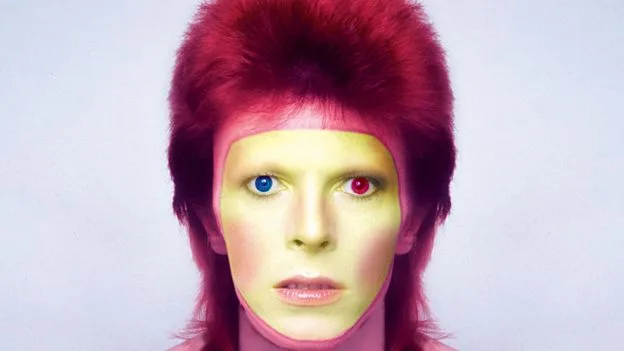
As the fifth anniversary of David Bowie's death approaches, photographers who worked with the late pop icon have revealed the truth behind some of his most famous images. The musician, known for his ever-changing personas, was as meticulous in front of the camera as he was in the studio, collaborators say.
Photographer Markus Klinko, who shot Bowie several times, including for the cover of the 2002 album 'Heathen', described the star as an ideal subject with a strong vision. For that album cover, Bowie insisted on a specific angle and whited-out eyes, inspired by Man Ray, and a 1940s-style suit. Klinko noted that while other celebrities might rely on stylists, Bowie knew exactly what he wanted.
Mick Rock, another close collaborator during Bowie's Ziggy Stardust era, recalled the ease of working together. Rock, who directed music videos and took defining photos of Bowie in his Kansai Yamamoto jumpsuit and red mullet, said the two had such a rapport that they barely needed to communicate on set. Their friendship was such that Bowie sent flowers when Rock was hospitalised for a heart bypass in 1996.

Bowie's visual legacy, from Ziggy Stardust to the Thin White Duke, predated later celebrity shape-shifting by artists like Lady Gaga and Harry Styles. His willingness to experiment, including wearing a dress on the cover of 'The Man Who Sold the World' in 1970, set a template for artistic freedom.