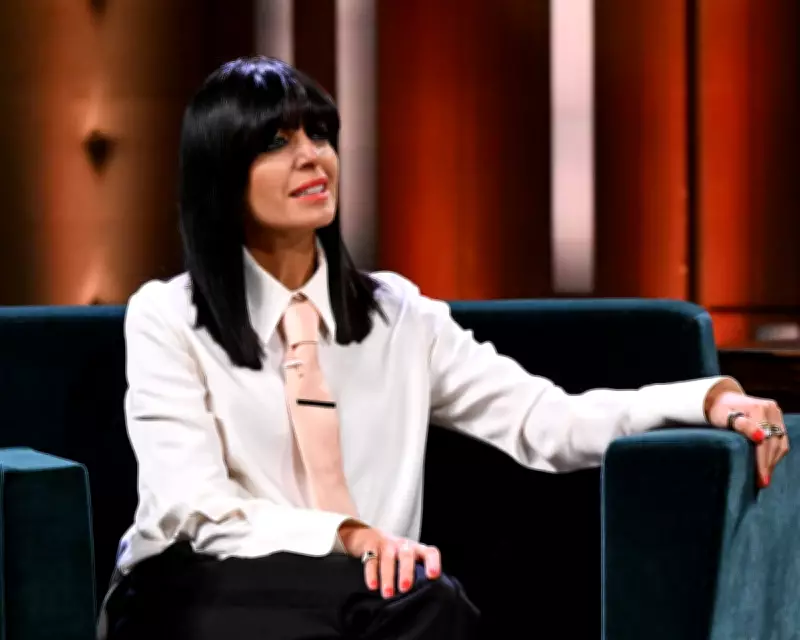
The Claudia Winkleman Show on BBC One is gradually finding its footing, yet it remains a formidable challenge for one of British television's most beloved presenters. This new venture has notably ended Winkleman's previously unbroken streak of successful TV formats, raising questions about its long-term viability.
A Dubious Career Move Amidst High Expectations
Just six weeks prior to the launch of her Friday night chat show, media profiles consistently highlighted Claudia Winkleman's "Midas touch" with television programmes. Having gracefully departed from Strictly Come Dancing, her portfolio still boasted three major hits: the sensational reality show The Traitors, its celebrity spin-off for the BBC, and Channel 4's heartwarming series The Piano.
However, after half a dozen episodes featuring sofa-based conversations, The Claudia Winkleman Show stands out as her least glittering work in several years. While the show hasn't suffered a catastrophic fate, it clearly hasn't matched the golden standard of her previous projects.

Reasonable Ratings But Persistent Comparisons
The programme's viewing figures are respectable by industry standards. Her debut episode on March 13 attracted slightly more viewers (1.5 million) than the final show of Graham Norton's 33rd series, which is widely regarded as the benchmark for the genre. Catch-up viewing, increasingly important in modern television metrics, added another 700,000 to the total audience.
Despite these numbers and Winkleman visibly relaxing into a format where she initially appeared understandably nervous, there persists a sense that this series represents a questionable career move. Her primary challenges stem from two key figures: Graham Norton and Hollywood star Timothée Chalamet.
The Graham Norton Problem
Launching a Friday night celebrity chat show at this juncture is akin to a young Northern Irish golfer entering the professional circuit in 2026. No matter their success, they will inevitably be measured against Rory McIlroy at every turn. Similarly, Winkleman faces constant comparison to Norton, the undisputed champion of British chat shows.
This difficulty was compounded by the BBC's decision to make Norton's production company, So Television, a co-producer of Winkleman's show. This arrangement created an unavoidable shadow, despite Winkleman's attempts to differentiate her programme through a differently coloured sofa and pre-credits "cold opens" in the studio—a technique Norton has largely abandoned.
Innovations and Audience Engagement
Winkleman's main innovation has been incorporating audience participation segments. These have included surprising a man who communicates with birds on social media, featuring identical twin opera singers, and interviewing two men on their first date. In a telling moment, when Winkleman revisited the dating couple at the end of an episode, one mentioned they might attend a Graham Norton recording—highlighting how Norton's presence looms over the show.
The Timothée Chalamet Factor
Chalamet's appearance on Norton's December edition, alongside other A-listers like Margot Robbie and Ben Stiller, underscores another challenge. Norton strategically schedules his annual run to coincide with Hollywood's awards season, securing top-tier film promotions. Consequently, when Winkleman stepped in during Norton's break, most major film stars were unavailable.
While her show's website promises guests from "film, TV and beyond," the lineup has predominantly featured personalities from television, theatre, and stand-up comedy rather than cinematic heavyweights. This was evident when Winkleman failed to tease any celebrities for a recent episode, which ultimately featured actors Phil Dunster, Cush Jumbo, Dan Levy, and comedian Josh Widdicombe—all promoting television projects.
The Changing Landscape of Celebrity Discourse
Chalamet also symbolises a broader shift in how celebrities share opinions and gossip. His controversial comments about ballet and opera emerged not during a traditional chat show interview but during a public appearance with Matthew McConaughey at the University of Texas. This reflects a growing trend where celebrity-to-celebrity live streams and podcasts have become the new platforms for unfiltered conversation, potentially diminishing the relevance of conventional chat shows.

Future Prospects and Format Challenges
The Claudia Winkleman Show will likely secure a second series due to its viewing figures and the potential brand damage to the BBC from cancellation. However, few would confidently predict a third season. Before the series began, concerns were raised that Winkleman, despite being a superb presenter, might be too nice and modest for the showoff nature of a chat show sofa—qualities where Norton balances charm with subtle snark.
Additionally, the talk show format is declining in broadcasting importance, with Norton possibly representing its last true star. These concerns appear well-founded as Winkleman's show prepares an end-of-series compilation of highlights, mirroring Norton's approach. Her producers may need to seriously reconsider the scale of the challenge they have presented to one of television's most talented hosts.