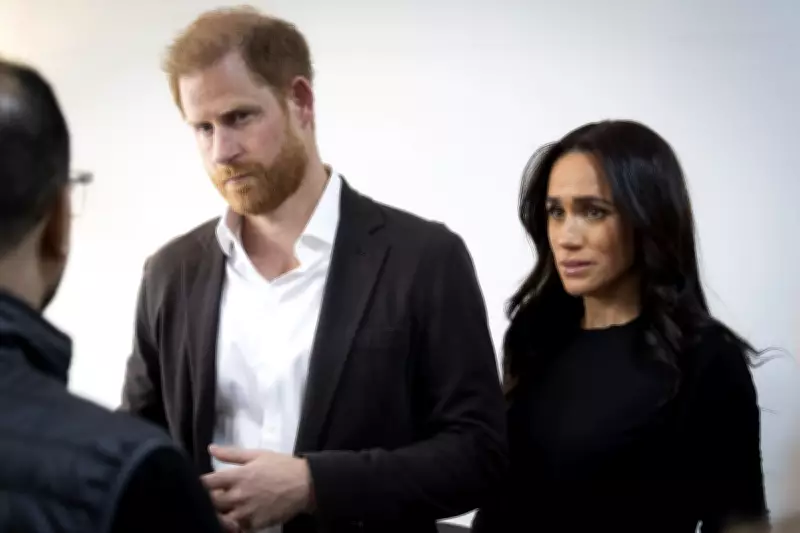
Sussexes' Jordan Tour Sparks Royal Copycat Debate
The Duke and Duchess of Sussex embarked on a two-day humanitarian visit to Jordan this week, orchestrated at the request of the World Health Organisation. This trip, their first international tour as a couple in eighteen months, immediately drew scrutiny for its timing and thematic overlaps with recent activities of Prince William and Kate, the Prince and Princess of Wales.
Striking Parallels in Engagement and Style
During their stay, Meghan participated in a football kickabout with young girls at the Za'atari refugee camp, while Prince Harry joined her for shooting practice. This occurred merely two weeks after Prince William, in his role as president of the Football Association, engaged in a football training session with female players in Saudi Arabia to promote women's sports. The similarity in sporting engagements was unmistakable.
Further comparisons emerged when the Sussexes visited the National Centre for Rehabilitation of Addicts in Amman. This echoed Kate's longstanding patronage of the Forward Trust, a UK charity supporting recovering addicts. Notably, Meghan opted for a £109 Zara jacket, a brand famously favoured by Kate for her professional wardrobe, blending high-street style with symbolic resonance.

Personal Connections and Perceived Snubs
Jordan holds a special significance for William and Kate, as Kate lived there as a child, and the couple later vacationed there with their children, featuring Petra on their Christmas card. The Sussexes' choice of destination thus appeared pointed. However, their visit faced a setback when King Abdullah II and Crown Prince Hussein of Jordan, close allies of King Charles and Prince William, reportedly declined a meeting request, hinting at diplomatic complexities.
At the addiction clinic, Harry left a handwritten note stating, "It's OK to not be OK," which some interpreted as a nod to Prince William's recent candid remarks about his mental state at the Bafta Awards. These subtle gestures fueled speculation about an underlying rivalry.
Patterns of Timing in Media Attention
Since stepping back from royal duties in 2020, Harry and Meghan have repeatedly made headlines coinciding with key moments for the Waleses. In March 2024, when Kate disclosed her cancer diagnosis, news surfaced about Meghan launching a limited edition strawberry jam and luxury dog biscuits. Later that September, as Kate announced completing chemotherapy, the Sussexes released a teaser for their Netflix polo docuseries.
Last October, the couple were named "Humanitarians of the Year" and spoke on social media's dangers for children, hours after Kate published a personal essay on screentime and disconnection. These instances suggest a pattern, whether intentional or coincidental, of overlapping narratives.
Future Speculations and Royal Dynamics
Looking ahead, potential clashes loom. Prince William's involvement in the summer World Cup in the United States, with matches in California, might see Harry attending, possibly avoiding a public encounter. Alternatively, the Sussexes could visit London with their children, Archie and Lilibet, for a high-profile family moment.
During Wimbledon, where Kate is expected to present trophies, Meghan might collaborate with friend Serena Williams on a podcast about women's sport or motherhood, upstaging the event. In November, as William's Earthshot Prize is unveiled in Mumbai, the Sussexes could visit the Taj Mahal, evoking Princess Diana's iconic bench photo, to capture media focus.
These scenarios, while speculative, underscore the ongoing tension. With the Sussexes having cycled through eleven publicists in five years, their strategy remains unpredictable. As royal observers watch closely, the interplay between these couples continues to shape public perception, blending philanthropy with personal dynamics in a modern royal saga.