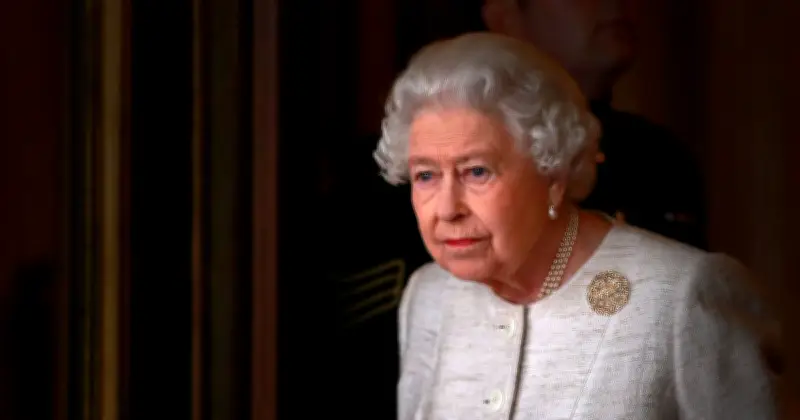
Queen Elizabeth II died peacefully at Balmoral Castle on September 8, 2022, at the age of 96, after a day of frantic activity involving secret notes, scrambled jets and code words. Buckingham Palace released the official announcement after a three-hour embargo: "The Queen died peacefully at Balmoral this afternoon. The King and The Queen Consort will remain at Balmoral this evening and will return to London tomorrow."
Huw Edwards read the statement live on BBC One, followed by the playing of God Save the King. Tom Bradby read the official statement live during an ITV News special broadcast, after which ITV aired a retrospective package on the Queen's life narrated by Royal Editor Chris Ship.
A nation's affection and a day that began routinely
Her Majesty was held in immense affection by the nation throughout her historic reign, with a YouGov survey finding that fully 82% of Britons held a favourable view of her. In another YouGov poll for The Sunday Times, she was crowned Britain's greatest-ever monarch, securing 27% of the public vote, ahead of Queen Elizabeth I (13%) and Queen Victoria (12%).
The tragic day began as a routine one in Westminster, with newly appointed Prime Minister Liz Truss preparing to unveil her energy relief package. Balmoral Castle had long served as the late queen's cherished private sanctuary, and she spent her final weeks at her Scottish Highlands retreat, having broken royal tradition just two days earlier by appointing Ms Truss there rather than travelling to Buckingham Palace.
From a sudden flight north to a note in the Commons
At 10.30am, after doctors raised immediate concerns regarding Her Majesty's health, Prince Charles was collected from Dumfries House by helicopter and flown directly to Balmoral Castle. Princess Anne was already by her mother's bedside, while Camilla, then Duchess of Cornwall, travelled to the estate by road.
At 12.12pm, while Liz Truss addressed the House of Commons on energy costs, Chancellor of the Duchy of Lancaster Nadhim Zahawi hurriedly entered the chamber and handed her a folded note. Minutes later, Deputy Labour Leader Angela Rayner passed a note to Sir Keir Starmer reading: "The Queen is unwell and Keir needs to leave the Chamber as soon as possible to be briefed." Commons Speaker Sir Lindsay Hoyle also received a note and looked visibly shaken.
Medical supervision and a race against the clock
At 12.32pm, Buckingham Palace issued a statement: "Following further evaluation this morning, the Queen's doctors are concerned for Her Majesty's health and have recommended she remain under medical supervision. The Queen remains comfortable and at Balmoral." Bargain Hunt was pulled from BBC One halfway through an episode as the broadcaster suspended all regular programming until 6pm. Huw Edwards appeared on air wearing a black suit, white shirt and black tie, following strict BBC protocol that instructs news anchors to dress in mourning attire as soon as a Category 1 royal health alert is issued.
Between 12.46pm and 2.39pm, the Royal Family scrambled across the country to reach the monarch's side. Clarence House confirmed Charles and Camilla were at Balmoral. Shortly after, Prince William, Prince Andrew, Prince Edward and Sophie boarded a private RAF jet from RAF Northolt bound for Aberdeen Airport. Prince Harry arranged independent travel from Luton.
Silence falls and London Bridge is down
At 3.10pm, Queen Elizabeth II died peacefully at Balmoral Castle, aged 96, with King Charles and Princess Anne at her bedside. The moment she passed, Charles automatically became King, but the world remained unaware as official "Operation London Bridge" protocols swung into motion behind closed doors.
At 4.30pm, Prime Minister Liz Truss was officially notified of the monarch's passing by Cabinet Secretary Simon Case, who delivered the code word "London Bridge is down". A black dress was brought for Ms Truss, and work began drafting her address to the nation. She later revealed her immediate thought was "Why me, why now?"
Arrivals after the passing and a nation in mourning
At 5.05pm, a fleet of vehicles driven by Prince William, carrying Prince Andrew, Prince Edward and Sophie, arrived through the gates of Balmoral Castle, having landed in Scotland shortly after 4.00pm - tragically after Her Majesty had already passed. At 6.40pm, staff attached a framed physical notice of the Queen's death to the railings at Buckingham Palace. Flags were lowered to half-mast across official buildings, from royal residences to Government offices along Whitehall, and worldwide at embassies, high commissions and landmarks including the US Capitol and the White House.
At 7.04pm, Buckingham Palace published the first official statement from King Charles III: "The death of my beloved Mother, Her Majesty The Queen, is a moment of the greatest sadness for me and all members of my family. We mourn profoundly the passing of a cherished Sovereign and a much-loved Mother. I know her loss will be deeply felt throughout the country, the Realms and the Commonwealth, and by countless people around the world."
At 7.07pm, Liz Truss paid tribute to the Queen, calling her "the rock on which modern Britain was built," before concluding her speech with "God save the King". At 8.00pm, Prince Harry arrived at Balmoral, having only learned of his grandmother's passing upon landing in Aberdeen. Initial plans for Meghan, Duchess of Sussex, to accompany him were altered after Charles personally requested that Harry travel alone, noting that Catherine was also staying behind in Windsor to look after her children.
Between 8.30pm and 10.00pm, Prince Harry was greeted by Princess Anne and taken to the Queen's bedroom to pay his final respects privately. King Charles, Queen Camilla and Prince William departed for Birkhall, Charles's nearby residence, where the new monarch and his heir discussed the King's historic first address to the nation and the official launch of the 10-day national mourning period. Government officials formally decided that evening to delay "D-Day" (D+0) of the official national mourning schedule to the following morning, September 9, allowing all state arrangements to be executed smoothly.