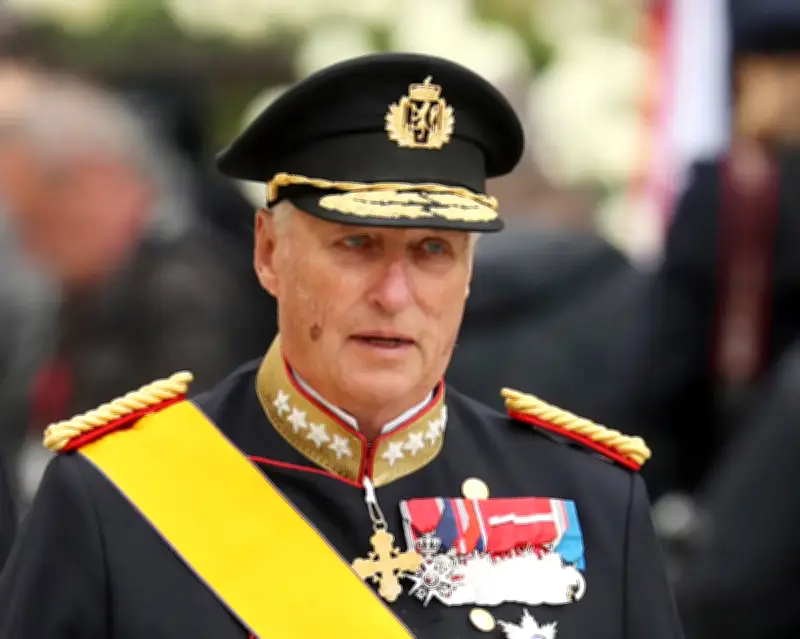
King Harald V of Norway, Europe's oldest reigning monarch, has died at the age of 87. He was king for 34 years, a period that saw the Norwegian monarchy modernise and adapt to a changing society.
A Life of Duty and Popularity
Harald was born on 21 February 1937, the son of Crown Prince Olav and Crown Princess Märtha. He became king on 17 January 1991, following the death of his father, King Olav V.
Throughout his reign, Harald was known for his deep commitment to his country and his people. He was widely respected for his efforts to unite Norwegians, particularly during times of national crisis, such as the 2011 terror attacks and the Covid-19 pandemic.
Modernising the Monarchy
Under his leadership, the monarchy became more open and accessible. He was the first Norwegian king to visit all 356 municipalities in the country, and he used his position to promote Norwegian culture and business interests abroad.
His personal story also captured public affection. In 1968, he married Sonja Haraldsen, a commoner, after a nine-year courtship that was initially opposed by his father. The couple had two children, Crown Prince Haakon and Princess Märtha Louise.
A Legacy of Stability
Despite occasional health issues in his later years, including heart surgery and a knee replacement, Harald remained a steady presence in Norwegian public life. He never abdicated, unlike some other European monarchs, and continued to carry out official duties until his final days.
His death marks the end of an era for Norway. He is succeeded by his son, Crown Prince Haakon, who will become King Haakon VIII. The nation will now enter a period of official mourning, with a state funeral expected in the coming days.