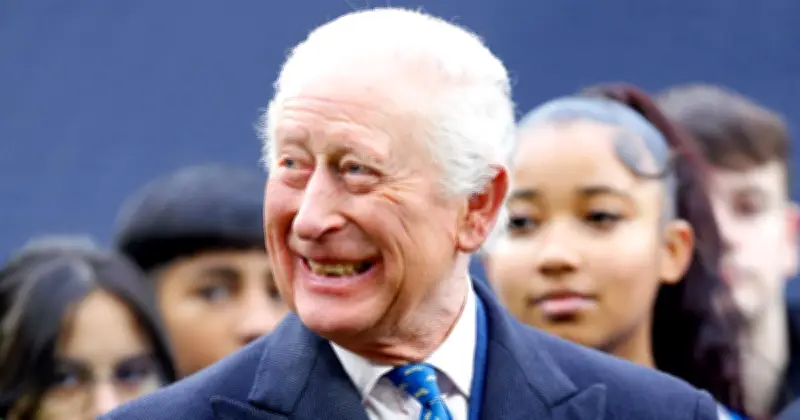
King Charles is reportedly supportive of efforts to confirm whether two children's skeletons resting at Westminster Abbey are the bodies of young King Edward V and his brother, Richard, Duke of York. The mystery of the Princes in the Tower has captivated historians for centuries.
Monarch's interest in history
The monarch studied archaeology at the University of Cambridge and is said to take a different view on the project than his late mother did. Chief curator of Historic Royal Palaces, Tracy Borman, previously said of King Charles: "He has said he would like an investigation to go ahead, so that we can determine, once and for all, how the young royals died."
Two bodies of young children were found near the chapel in the White Tower of the Tower of London in 1674 and were interred at Westminster Abbey on the orders of King Charles II. As the bodies were placed in the Royal Crypts, any further investigation requires the monarch's consent.
Historical background
Upon the death of King Edward IV in 1483, his 12-year-old son succeeded him as King Edward V and was escorted by his uncle, Richard III (then the Duke of Gloucester), who served as Lord Protector, to London. Edward and his nine-year-old brother, Richard, Duke of York, were sent to live at the Tower of London ahead of Edward V's coronation.
However, the Duke of Gloucester declared that his nephews were illegitimate and that he was the only true heir to the House of York. He gathered support from many powerful sources and was crowned on July 6. It is said that the two princes were taken to inner apartments within the tower and were not seen in public again after the summer of 1483.
Evidence and examination
The bodies of two children were found in a box under a staircase in the Tower of London during Charles II's reign and were interred in the Royal Crypts. While other children's skeletons have been found before, the belief that these bodies were those of the lost princes is supported by the box containing "rags of velvet" and by the fact that it matched the location given in an account by historian Thomas More.
In 1933, a team of experts examined the bones found in the Tower of London. While the examination suggested the remains belonged to two young boys, the ages of which matched the ages of the missing princes at the time of their disappearance, the conclusions were largely speculative and lacked modern scientific analysis like DNA testing. Without the ability to carbon date the bones, it's likely this examination provided only speculative data.