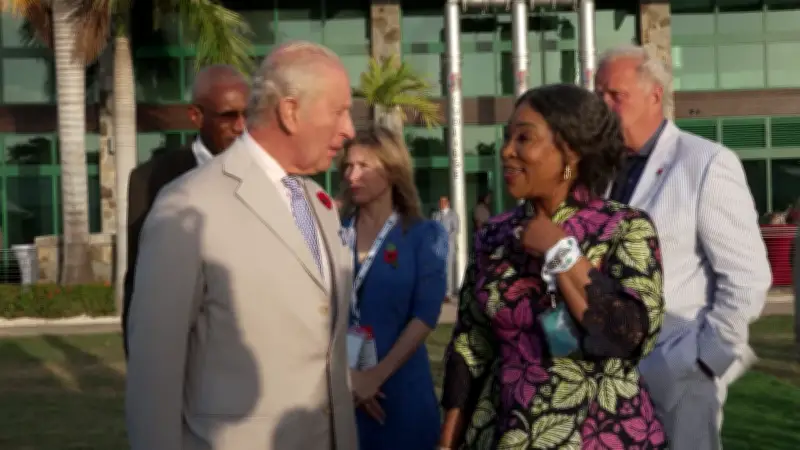
King Charles is “fully open” to being removed across Commonwealth realms where he is head of state, as he counts the cost of his tour of the Caribbean.
Following a nine-day visit to The Bahamas, Guyana and Antigua and Barbuda, where talk was dominated by calls for apologies for slavery and demands for reparations, Charles has determined that the world is changing and the royal family will not stand in the way of countries forging a new future.
Despite receiving a warm welcome across all three nations, which saw him dancing in the streets at a local Junkanoo festival and commemorating those affected by the horrors of the slave trade, the King’s position and future role was consistently questioned.
Caribbean leaders open to republic status
In The Bahamas, following comments by Charles where he recognised the “great suffering of the past in these islands and beyond”, Prime Minister Philip Davis admitted he was “open” to ditching the Crown. The sentiments were echoed by Antiguan Prime Minister Gaston Browne, who also did not shy away from becoming a republic.
But rather than fight a growing tide of republicanism in the Caribbean and beyond, the monarch and his aides will seek new partnerships “without rancour”.
A senior palace aide said: “The King and the royal family are there to serve the people of these regions for as long as they wish. But if they don't wish it anymore, then we really are fully open to that. The family serves when it’s wanted and if not, then a new arrangement can be found.”
Fourteen realms recognise the monarch
There are 14 countries around the Commonwealth, in addition to the United Kingdom, that recognise the British monarch as head of state. They include countries like Australia, Canada, Antigua and Barbuda and Jamaica.
However, the issue involving realms choosing to part ways with the Crown is not a new one. During the late Queen Elizabeth II's 70-year reign, 17 former realms transitioned to becoming republics.
Buckingham Palace pointed to the most recent example, Barbados, which became a republic in November 2021, as a prime example of the seamlessness of transition. Aides revealed “very close” contact and cooperation between the palace and the Bajan Prime Minister following the country signalling its wish to forge closer ties with the Commonwealth, away from the monarchy.
A senior aide to the King said: “We agreed how we would do it. It would be done without rancour. Barbados wanted to recommit itself to the Commonwealth. We said, look, if you basically want to change the name of the Governor General to President, which is, if you think about it, it is perhaps the most visible difference that it makes on the ground in these countries, then we've got absolutely no difficulty with that.”
World leaders praise the King's role
As Prince of Wales, Charles travelled to the Caribbean island for the official ceremony, which included performances celebrating Bajan culture, poems on its tortured history and links to slavery, and also an appearance alongside the now King by Barbados-born pop star Rihanna.
The aide continued: “You'll have seen that the King was delighted to go along to the events which marked Barbados's transition into a republic, it's also just worth remembering that there's actually nothing unusual in this. Seventeen countries transitioned from being realms to republics in the reign of the late Queen. So there is nothing unusual about it. It's really all a matter of what countries want to do.”
The King’s allies will point to his statesman role around the world, and despite apparent differences with certain countries, Charles still commands a great deal of respect among world leaders. One of those who supports a republic, but still maintains a warm relationship with the King, is Australian Prime Minister Anthony Albanese.
Speaking to British media at the Commonwealth Heads of Government Meeting last week, he said: “We talk regularly, we spoke about this nature initiative by phone a little while ago. So it’s a strong relationship. I think the Commonwealth can play a role as stable. It brings together 56 countries from all over the world, a majority of nations in the Pacific islands. Our participation here gives us connections with the Caribbean, with African nations, with nations who aren’t part of the forums in our region.”
Mr Albanese said the King “brings leadership” and it was possible to “have different position”. He added: “Look, my party supports a republic but the system that we have doesn’t mean we don’t have respect for His Majesty and the role that he plays. He’s pushing his agenda of action on the environment, on nature and urban development, the urban environment, on claimants change, are all significant issues the world is facing. On a range of issues he is forthright and I think that is a positive thing.”
A demonstration of the King still commanding support came from President Ali of Guyana. He said: “His Majesty has brought his convening power, his influence, his global position to the Commonwealth and there’s no value you can put on that. Without His Majesty there that convening power is lost. And if we are going to say that we can imagine a Commonwealth without that enormous convening power, that's not something that we would want to consider losing.”
Mr Ali also praised Charles' role “as a convener, as an influencer” adding that he uses “his position in the Commonwealth, and also in crisis” to instill safety and confidence. He added: “His calmness, his ability to walk across borders and walk across all dimensions of issues, allowed the Commonwealth to have some sort of stability. I think his calmness is so important, his leadership is so important.”