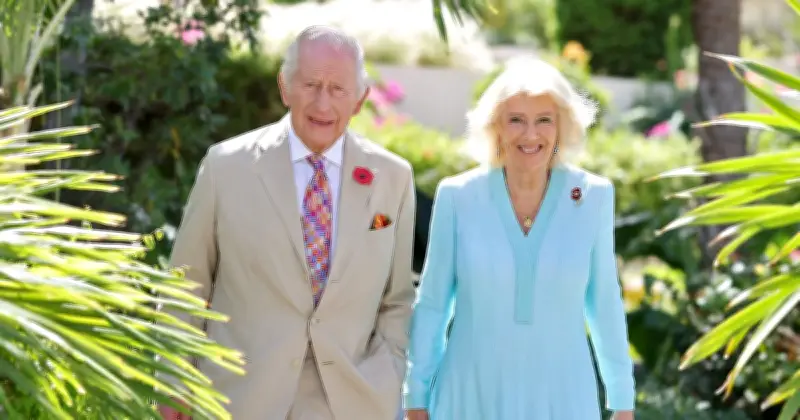
King Charles is being used as the Government's “secret weapon”, deployed to use his soft power and statesmanship to defuse “politically charged” and “challenging situations”, a senior Palace aide has said. The aide added that Charles is “not just the King for the easy parts of the job, but the tough parts of the job, too”.
Having landed back in London late Wednesday night after a nine-day tour of the Caribbean, Buckingham Palace reflected on another “very successful” trip, in which Charles handled “a complex, challenging, exhausting” visit across three stiflingly hot countries. “We return home with heads held high, including that which bears the crown,” the aide said.
King's role in politically charged situations
The aide said it is clear the King is being “parachuted in” to use his unique position as a constitutional monarch to help bridge divides in ways elected politicians cannot. “We’re just in the fifth year of the reign,” the aide said. “I think what we're seeing is a very clear pattern emerging of the Government asking the King to head into quite politically charged situations, quite challenging situations.”
The aide acknowledged the need to “tread quite a careful line sometimes between government policy and the king's role”, but said the King can help “reach the parts that dare I say politicians probably couldn’t quite have reached”.
Earlier in the year, the King handled a state visit to the US at a time when the White House and Downing Street were sharply at odds over the war in Iran, with public friction between US President Donald Trump and then-Prime Minister Sir Keir Starmer. Charles won plaudits for wooing the President and delivering a widely celebrated speech to Congress with pointed references to some of Trump’s policies, including NATO, Ukraine, environmental stewardship and mutual trade. At the start of his reign, he was sent to Europe to help smooth tensions after Brexit, followed by a trip to Australia as the question of it becoming a republic appeared to be reaching a fever pitch.
“It’s a great secret weapon to send the King,” the aide said, adding: “What I observe, and I hope you observe, is the King - with the Queen pitching in, charms everyone, as we've seen with the crowd reactions everywhere we've gone, and speaks both publicly and individually in a way that really connects with people… I think that speaks a lot about you know his character and about the way that he is defining this reign.”
Slavery issue and government policy
In the lead-up to the autumn tour, the issue of slavery was expected to dominate, as many Caribbean nations seek an apology and reparations for the UK’s historic role in the slave trade. The King, guided by the Government’s advice, was not expected to “shy away” from the issue but would not issue an apology or offer financial compensation. Within hours of arriving in the Bahamas, he acknowledged “the great suffering of the past”; in Guyana he visited the site where slaves were publicly executed; and in Antigua and Barbuda he viewed enslavement artefacts and former slave quarters. In his CHOGM speech, he said the UK’s role in the slave trade “fills my heart with horror and my soul with the most profound personal sorrow”.
The trip was threatened when the UK Prime Minister wrote in the Guardian that he was “open” to issuing an apology for slavery, marking a change in Government policy. The Palace insists the King was not blindsided by its publication on Friday night, just as Charles was landing in Antigua and Barbuda. “We were told in a timely manner by the Prime Minister,” the aide said. “We were told the terms in which he was proposing to write his op-ed and he’s perfectly entitled to do that.”
The aide added that the change did not cause a rift: “That’s how our democracy functions. If that’s what elected politicians want to do, it’s not for us to get in the way.” Any comments the King makes on slavery reflect the Government’s position, not his personal one, due to the issue’s sharp political divide in the UK. Asked if Charles could ever apologise for slavery, the aide said: “The King is the crown, the crown is the state, the state is run by an elected government, so we have to see how this whole situation plays through.”
Stamina and humour on tour
The tour included 34 engagements, the majority outdoors in sultry conditions. “This has been a complex visit. It's been challenging. It's been exhausting. It's been a hot tour across nine days, across three countries… But the takeaway is that it's been very successful, and I think the King has demonstrated his statecraft both by word and deed,” the aide said.
Despite his ongoing cancer treatment and approaching 78th birthday, the heat appeared not to faze him. Asked how he copes with the intensity, the aide said: “I think probably the best response to that is a picture of a man about to turn 78 wangling the cowbells as he jives down the street in nearly 40-degree heat.” The aide added: “When the engagement finished, I get in the car next to him and say 'Crikey, I'm hot'. He says, 'Oh, never mind'. So no, he copes. I mean, frankly, he copes better with it than I do, and I'm younger than him. This is literally what he was born to do, he's very good at it, and he enjoys the reaction he gets from people in the doing of it.”
The secret to the King and Queen’s stamina is stoicism, the strength of their relationship and a good sense of humour, with “umbrella-gate” a perfect example. During a sudden downpour at the start of the open-air Independence Parade in Antigua, the King later cracked jokes at his own expense. The Queen, caught in the rain but able to retreat under a marquee, also poked fun at her sodden dress and ruined hair. The aide recalled: “She came back up, as had always been the plan, and she looked round at me, and she just burst into sort of fits of laughter, saying, 'I don't think I've ever been so wet in my life.'” The King, the aide said, “was laughing about the watercress comment again, saying, 'I think that might be the last you see of that suit,' but he thought it was genuinely funny.”
“At the end of each day, and sometimes at the end of each engagement, they have a good laugh together about where things have gone,” the aide said. “It may have gone a bit wonky, but fundamentally underpinning it is that strength of their relationship and their determination to keep cracking on despite age and circumstance.”
Even the issue of realms becoming republics, or the Commonwealth deciding it no longer wants a royal at the helm, would not faze His Majesty. “The King and the Royal Family are there to serve the people of these regions for as long as they wish,” the aide said. “But if they don't wish it anymore, then we really are fully open to that. The family serves when it’s wanted and if not, then a new arrangement can be found.” Queen Elizabeth II saw 17 countries transition from realms to republics during her reign, with the aide adding: “There’s nothing unusual about it. It’s really all a matter of what countries want to do.”
The royal visits committee have not yet decided where the King will visit next, but it is clear they consider no trip beyond his reach.