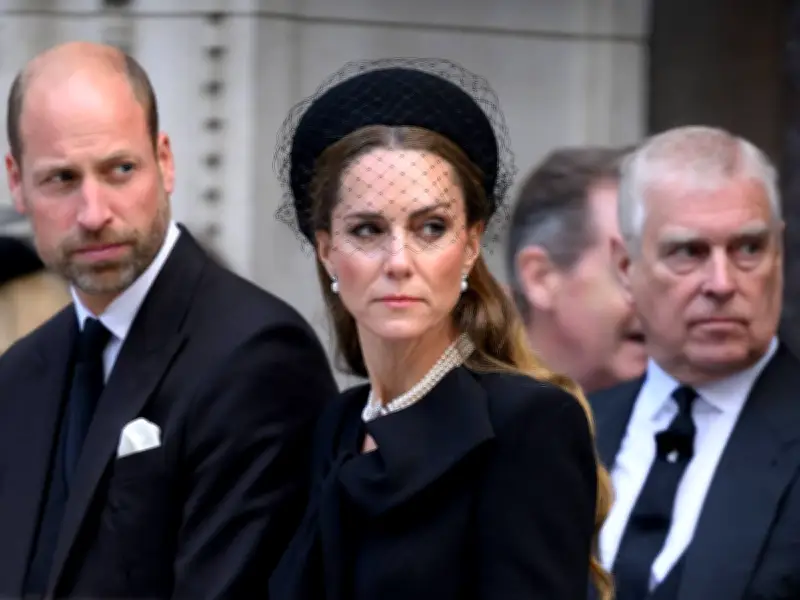
Princess Kate was likely a 'quiet yet powerful influence' over both her husband Prince William and her father-in-law King Charles when decisions were being made over how to deal with the ongoing scandal surrounding Andrew Mountbatten-Windsor, according to an expert.
Background of Andrew's Exile
In October last year, the disgraced former prince was stripped of all his titles and forced to hand back his lease on the Royal Lodge, where he had lived since 2004. It came as the scandal surrounding his association to convicted sex offender Jeffrey Epstein continued to lead to new allegations and tarnish the reputation of the Royal Family. Andrew has vehemently denied all allegations against him.
While it was King Charles who made the decision to exile his brother from the Windsor estate and the Royal Family at large, Katie Nicholl believes it was the influence of both Queen Camilla and the Princess of Wales that convinced the monarch to take drastic action.
Expert's Claims
Katie told the i Paper: “It’s very likely that Kate and Camilla wielded a quiet but incredibly powerful influence over both the King and Prince of Wales when it came to their response. Some describe them as the real power behind the throne.”
She added: “They never wish to eclipse William or Charles but they do have a lot of influence and when it comes to Andrew their guidance will have been sought.”
Katie explained that the two royal women share a sense of “integrity and a desire to protect the monarchy and its reputation.” She added: "Being outsiders they also will have had a more objective perspective on the situation with Andrew than a brother or nephew perhaps can.”
William's Stance
Earlier this year, the Mirror’s royal editor Russell Myers wrote in his biography William and Catherine: The Intimate Inside Story that the Prince of Wales had never got on with his uncle and questioned if his presence benefitted the wider monarchy. According to Myers, William demanded Andrew be immediately banished from the royal fold “before the rot set in”, following revelations of the former Duke of York’s close relationship with Jeffrey Epstein.
It was witnessing how Andrew behaved when it came to staff working for the royals that also led to William's negative view of his uncle. A source said: "He’d seen how Andrew behaved in front of staff, ordering people about, the aggressive or dismissive manner, they’d never seen eye to eye. William has a relationship with his cousins [Princesses Beatrice and Eugenie] … so he takes no umbrage with them, but there’s no love lost for Andrew or Sarah.
“In an alternate dimension, Andrew probably thought there would be a way back into public life if the scandal or the headlines died down, but it would have always had to be while his brother was King. William didn’t think either of them [Andrew or Sarah] should be anywhere near the family, publicly or otherwise, but he was overruled by his father.”
Impact on King's Decision
When the former Duke of York was booted from Royal Lodge and stripped of his titles last year, former BBC correspondent Jennie Bond told the Mirror that William’s opinions of his uncle may have impacted Charles’ decision to banish him. Jennie said: “Palace sources are making it absolutely clear that the King was the driving force in the decision to strip Andrew of his titles and force him out of Royal Lodge. William’s voice would certainly have been heard, and heeded, but this was the King’s decision.”
In February, Andrew Mountbatten-Windsor was arrested on his 66th birthday on suspicion of misconduct in public office. He was later released from custody under investigation, with Thames Valley Police confirming they were launching an investigation into the former prince, which is still ongoing.
At the time of his arrest, the Prince and Princess of Wales shared a statement fully supporting an earlier statement made by the King, which he said the police had the Firm’s ‘full and wholehearted support and co-operation’ as he said: “Let me state clearly: the law must take its course.”