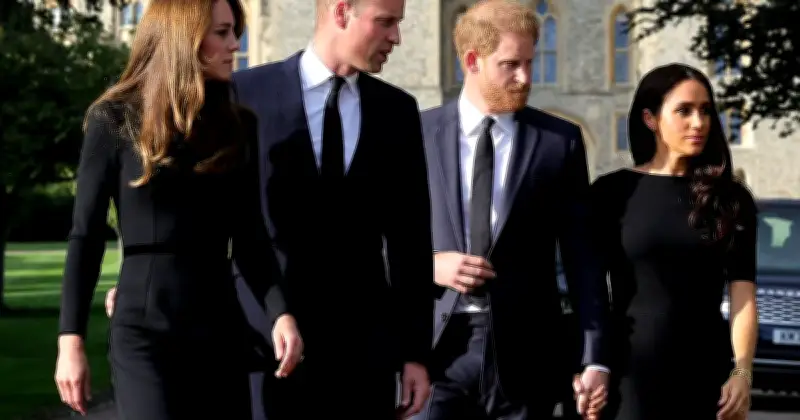
Prince Harry and Meghan Markle have reportedly criticised the term "working royal," a move that is likely to deepen tensions with the monarchy following their quasi-royal visit to Nottingham last week.
The Duke and Duchess of Sussex's trip to the East Midlands city bore all the hallmarks of an official royal engagement, yet they have now taken aim at the very concept of a "working royal" – the term traditionally used to differentiate those who carry out official duties on behalf of the monarch from those who do not.
Criticism of a 'lazy phrase'
A friend of the couple told The Sunday Times: "'Working members of the Royal Family' is a really lazy phrase. He hates it, she hates it. They are not 'working' for the institution, but they are members of the Royal Family, and they work."
Their objection to another historic element of how the Royal Family operates is sure to irk King Charles and Prince William, the latter of whom reportedly viewed the Nottingham expedition as "distasteful."
Palace boundaries and a rival court
The crux of the Palace's unhappiness with Harry and Meghan remains their disregard for the clear boundaries set by the late Queen Elizabeth II, who was adamant that a "half in, half out" arrangement – combining royal duties with commercial independence – was unworkable.
Yet the Sussexes' attempt to "work" ostensibly on their own behalf, rather than for the King, creates the distinct impression of a rival royal court. It appears to be a bid to capitalise on their proximity to the Crown while refusing to back down on their vehement criticism of the institution itself.
This approach contrasts jarringly with Prince William's vision for the monarchy, which balances modernisation with a strict respect for tradition. The estranged relationship between the brothers is well-documented, and the Duke of Sussex's apparent insistence on pitting himself against the Firm may be a preemptive strike against the hardline approach William is expected to take when he eventually succeeds King Charles.
Redefining royal precedent
Ultimately, Harry and Meghan's understanding of the "working royals" moniker appears fundamentally flawed. As their friend noted: "Things like Nottingham aren't done in the name of the institution or the Crown, but Harry is the son of the King, he's still a member of the Royal Family."
If the duke and duchess wish to continue supporting charities in their capacity as "private citizens," they are entirely free to do so. But the Nottingham visit – complete with a press pool and a highly coordinated walkabout – was virtually indistinguishable from an official royal undertaking. Now, by targeting the language used for decades to describe members of the Royal Family representing the Crown, they are attempting to redefine royal precedent through semantics.
In doing so, they diminish the efforts of working royals like Prince William and Princess Kate, once again framing the traditional monarchy as a dusty framework in need of their specific brand of disruption. The underlying problem for the Sussexes is also that continuing to function as quasi-royal figures necessitates some degree of continued ties to the Crown.
Potential consequences
William has not spoken publicly about his brother's return to Britain, but his failure to reunite with him speaks volumes. Multiple reports also now suggest that removing Harry and Meghan's titles upon his accession is a real possibility if they continue to flout royal boundaries on home soil.
The duke and duchess were reportedly highly satisfied with their Nottingham trip, but if they continue on their current trajectory, that happiness could be very short-lived. They can dictate their own terms all they like, but they cannot force the King, or his heir, to accept them.