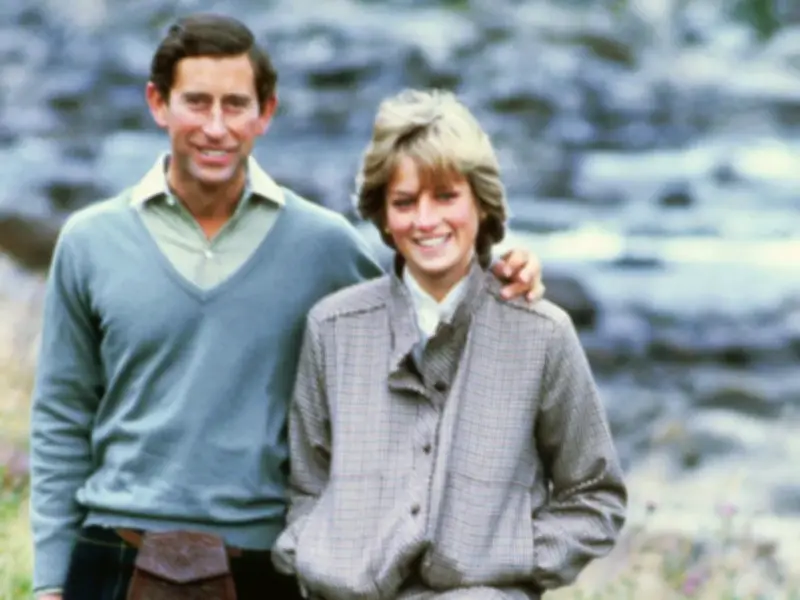
Royal fans marking the 29th anniversary of Princess Diana's death on 31st August have resurfaced a long-standing mystery surrounding photographs of the late Princess of Wales and her former husband, King Charles. This comes as Diana's brother, Earl Spencer, is set to release a new book about her life and death next month.
A 15-Year Marriage Captured in Countless Images
Diana and Charles were married for 15 years, from 1981 to 1996, and during that time, the couple were captured in countless official and public photographs. Whether attending royal engagements, posing for family portraits, or appearing at formal occasions, images of the two together were a staple of public life throughout the 1980s and into the 1990s.
But look closely at those photographs, and something does not quite add up. In the vast majority of pictures featuring the pair, Charles appears to stand several inches taller than Diana – a detail that has long puzzled those who know the truth about their respective heights. In reality, Diana and Charles were exactly the same height, both standing at 5ft 10in (1.78m).
Deliberate Choices and Staging
The two were perfectly matched in stature, something that is immediately apparent in certain photographs where the pair are captured standing side by side without any deliberate staging, such as their official engagement photographs and a number of family portraits. But, in so many other images, Diana appears considerably shorter than her then-husband.
Experts and royal observers point to a combination of factors that could have made this illusion possible. Diana is known to have made deliberate choices about her footwear, regularly opting for flat shoes or those with only a very modest heel. Her wedding shoes were also selected with this consideration in mind, ensuring she would not stand at the same height as, let alone above, Charles on their wedding day.
Beyond footwear, the staging of photographs appears to have played a significant role. In a number of images, Charles is believed to have been positioned on a higher step than Diana when the pair were photographed on staircases, lending him an artificial height advantage. In others, Diana was seated while Charles remained standing, creating a visual impression that the two were of markedly different heights.
Public Discussion and Academic Support
A social media post compiling a selection of these images prompted widespread discussion among royal followers, with many commenting on the extent to which the height difference had been engineered. One person noted: "That's why she always tilted her head down. She also wore flats or very short heels."
A Facebook video shared by a royal enthusiast explored the subject further, placing side-by-side photographs of Charles and Diana, some showing the pair at their true equal height, and others in which Charles appeared noticeably taller. The caption read: "Why did Princess Diana look shorter than Prince Charles even though they were the same height? Diana and Charles were both 178cm tall, but they were often photographed as if Diana were much shorter than Charles."
The post suggested the disparity came down to what it described as "old standards" – a prevailing expectation that a man should appear taller than his partner as a means of conveying authority. "These photos were taken in the 1980s, when the royal family still adhered to the old standards," it read. "The photographers were trying to portray the power and status of the future king by making him look taller than his wife. Diana, on the other hand, is in a more modest position."
Academic research lends some weight to this theory. Lisa Wade PhD, a professor at Occidental College, addressed the subject in a piece published by The Society Pages.
No official confirmation has ever been provided as to whether these techniques were deliberately employed, but the evidence visible across decades of photographs has led many to draw their own conclusions.