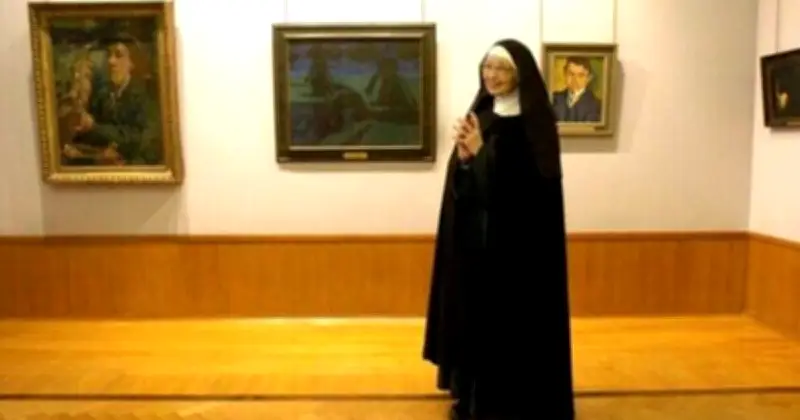
Sister Wendy Beckett, the BBC art presenter and nun, died in 2018 at age 88 with no personal fortune, having donated all of her earnings from broadcasting and publishing to the Carmelite order that housed her.
Despite a career that made her one of the BBC's most popular presenters, Beckett lived under vows of poverty and gave away every penny she received from her work. She passed away on 26 December 2018 at the Carmelite Monastery in Quidenham, Norfolk.
From hermit to household name
Born Wendy Mary Beckett on 25 February 1930 in Johannesburg, South Africa, she was the daughter of a physician. In 1954 she earned a teaching diploma from Notre Dame College of Education in Liverpool before returning to South Africa, where she taught English and Latin at convent schools in Cape Town and Johannesburg, and later lectured at the University of the Witwatersrand.
By 1970, deteriorating health forced her to abandon teaching. With papal permission, she left the Notre Dame order and became a consecrated virgin and hermit, moving back to England. She lived first in a caravan and later in a modest mobile home within the grounds of the Carmelite Monastery at Quidenham.
Television stardom and donations
A chance encounter transformed her life when a film crew, having overheard her commentary at an exhibition, asked to record her speaking about art. This led the BBC to commission her debut programme, Sister Wendy's Odyssey, in 1992. To everyone's surprise, including her own, she proved a natural performer on camera.
Her later series, Sister Wendy's Grand Tour (1994), took her across Europe. At the peak of her career, her programmes commanded a 25 per cent share of British viewers. In 1997 she entered the American market with Sister Wendy's American Collection on PBS, prompting The New York Times to call her "the most unlikely and famous art critic in the history of television."
Despite her fame, Beckett never abandoned her hermit life. She travelled for filming but always returned to her caravan, where she kept a simple lifestyle. She devoted up to seven hours daily to prayer, seldom watched films or visited museums outside her professional work, and stayed faithful to her vows of poverty.
Legacy and writings
She authored over 25 books, ranging from art criticism to spiritual contemplation, and presented a dozen major documentaries. She was known for her forthright approach to discussing nudity and sexuality in art, maintaining there was nothing disgraceful in honouring the human form as part of God's creation.
The Carmelite order announced her passing, noting she had lived on its grounds for nearly half a century, though never as a member of the Carmelite community itself.