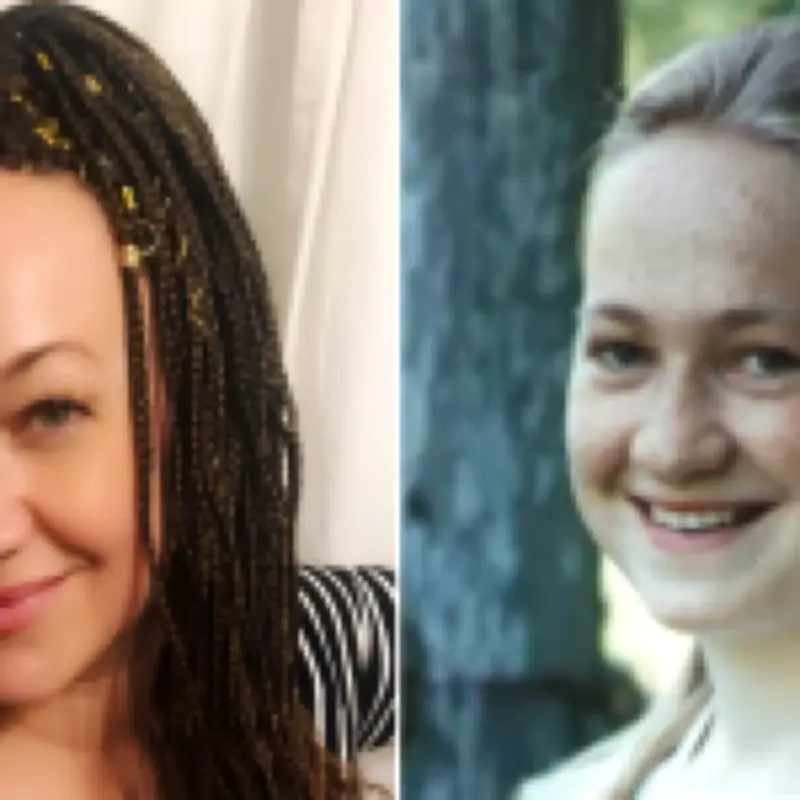
Nkechi Diallo, formerly known as Rachel Dolezal, has launched an unapologetic Substack letter in which she criticises news outlets for 'outing' her 11 years ago. The lengthy letter is titled: 'To everyone who has ever written the word “outed” about me, and to everyone who has ever had a story built around them without their consent.'
She writes: 'I want the next complicated person in the headlines to get kinder tools than I was given — because I have committed no crime — yet even people who have committed the worst ones are afforded trials, process, and pity.'
Who is Rachel Dolezal?
Rachel Dolezal was born on November 12, 1977, in Montana, to white fundamentalist Christian parents, Lawrence and Ruthanne Dolezal. She had one biological sibling, as well as four adopted siblings, who are African American. Rachel says she had a difficult upbringing — her parents followed a strict interpretation of the Bible, endorsing simple living and harsh punishments.
After finishing school, she enrolled in Belhaven, a Christian university in Jackson, Mississippi, where African-American religious leaders and civil rights activists, father and son duo, John and Spencer Perkins, lectured. There she studied art and claims Spencer became a father figure to her, while John became 'Grandpa Perkins'. While there, she lived with a couple in a predominantly Black neighbourhood, Sam and Donna Pollard.
When news of Rachel's story broke in 2015, Donna took to Facebook to share that Rachel had told her she 'knew in her heart she was supposed to be born Black'. She said Rachel referred to her as her mother and Sam as her father, which 'wasn't accurate'. Rachel married an African American man and had a son, Franklin, but got divorced in 2004, in part because he took issue with her wanting to wear Black hairstyles and taking an interest in Black history.
Why is Rachel Dolezal controversial?
Rachel began 'identifying as black' in 2006, according to The Guardian, but it meant some 'creative non-fiction' on her part. This didn't cause her any issues for years, and she rose in prominence as a civil rights activist. But in 2015, investigative reporter, Jeff Selle, noticed that Rachel had claimed to be the victim of hate crimes in two separate states, but both reports were unsubstantiated.
The journalist did some digging, and interviewed Albert Wilkerson, a former colleague of Rachel's, who she had said was her father. While in an interview, Albert said he was 'not going to throw her under the bus,' he did confirm that he was not her dad. Jeff then tracked down Rachel's biological parents who provided childhood pictures of Rachel, as well as a copy of her birth certificate.
Then, on June 11, Rachel gave her now infamous interview to KXLY4, which sparked a media firestorm. In the interview, she was asked if her father is really African American, to which she responded: 'I don’t know what you’re implying.' She was also asked if she is African American, to which she said she 'doesn’t understand the question', before walking out of the interview and taking off her microphone. Her parents said her claims that she was Black were a 'fabrication'.
The backlash
Rachel was immediately forced to resign her post at the NAACP, after allegations she was 'pretending to be Black'. She also lost her university gig and was kicked off the Office of Police Ombudsman Commission, where she had been outspoken about police racism. According to the Spokesman-Review newspaper, Rachel claimed she was a mix of white, black and American Indian on her application to serve on the city's citizen police ombudsman commission, which was subsequently investigated.
The hashtag #AskRachel began trending on Twitter, with questions it was felt only African Americans could answer correctly. People were quick to point out she tanned her skin to appear African American and that she would braid her hair, making herself look vastly different from the childhood photos her parents provided to the press. Rachel admitted to wearing a spray bronzer and weaves, and was accused of 'blackface' and 'cultural appropriation', with news outlets covering her story all over the world.
In the years since, she has continued to identify as Black, changing her name in 2016 to Nkechi Diallo. She has doubled down, telling The Guardian: 'I really feel it hasn’t affected it at all because I wasn’t identifying as Black in order to make people happy or make people upset or whatever… I was being me'
Where is Rachel Dolezal now?
In 2017, Rachel, by then Nkechi, published a book talking about her experience and why she identifies as Black. Titled 'In Full Colour: Finding My Place in a Black and White World.' It was described by The Spokesman-Review as a book with an 'all-around inability to properly see one’s privileged place in the world'. She also starred in a documentary film about her life on Netflix called 'The Rachel Divide' in 2018.
Then, in May of this year, she briefly made headlines when she shared she was training to become a certified sex coach. But, it was October 4, 2026, when Nkechi truly burst back onto the scene, announcing on TikTok that she was launching a Substack letter discussing her experience. In the letter, she claims she's spent 11 years being 'scrutinised through a radicalised lense'.
She writes: 'Discrimination alone is not the Black experience. What makes the Black experience survivable is precisely what I no longer have: community, tradition, language, legal recourse, elders who say we know, come in, sit down, we have a name and a remedy for this. 'I was offered the punishment and stripped of the belonging — discrimination with no protections attached, no collective support to fall back on, no category under which to file a complaint. 'It is just me, on an island, for eleven years.'
She adds that the media made her a victim of 'narrative closeting', which she defines as the non-consensual confinement of a person inside a story about their own identity, authored by others and enforced as public fact. Those on TikTok have been quick to react. 'Rachel, there’s too much going on in the world,' wrote one. Another said: 'Girl, you’re dedicated to the plot.' Another woman wrote: 'Rachel, truth is, we’re tired. And so is this song and dance.'
Nkechi, who is also a newly qualified sex coach, signs her Substack post 'without apology', placing herself back under the public microscope once again.