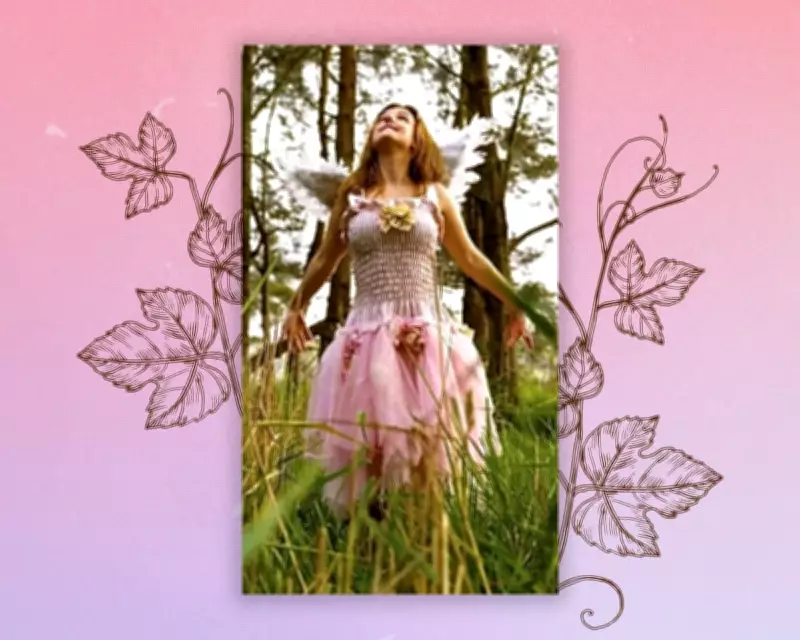
Before I entered the fairy business, it had never crossed my mind just how many varied motivations could drive the throwing of a children's birthday party. From the age of 16 to 22, I worked as a professional children's entertainer, most often donning the guise of a fairy, but sometimes transforming into a witch, ballerina, princess, or mermaid—with my legs conspicuously visible beneath the tail. On one memorable occasion, I even portrayed a hilariously awkward ladybug.
The Magical and Mundane of Fairy Work
The hourly pay was excellent, the costumes were undeniably cute, and the tiny customers were even more adorable. My special skills included memorising every child's name, preparing hundreds of fairy-bread triangles, vacuuming a party space while still in full costume, singing as I applied sparkles to the eyelids of my pint-sized revellers, and navigating a small hatchback car filled with 50 bubblegum-pink helium balloons.
Oh, and the position demanded a strong tolerance for the behaviour of parents, which often proved to be the most challenging aspect of the job.

Insights into Childhood and Group Dynamics
Naturally, the role taught me a great deal about children. Their belief in magic typically begins to wane around age four but lingers until shortly after they reach double digits. When presented with a choice of prizes, boys and girls are equally likely to select lipstick, nail polish, and glitter eye shadow, revealing early glimpses of their personalities.
Group dynamics among children don't change that much from adults. Observing two dozen six-year-olds often reminded me of fully grown colleagues at a work event: there was tension, competition, humour used as deflection, and delicate alliances that could shift within an hour. Victory in a game of pass the parcel, disqualification during musical statues, or scarcity of a certain snack could unveil a child's true character and hint at their future self.
The Revealing Behaviour of Adults
While I had been babysitting for years and was recently a child myself, the insights into adult behaviour were far more striking and have stayed with me all these years later. My knowledge of parenting was minimal at the time, but watching parents up close—how they treated their small kids, each other, and me, the young woman they paid to enchant their children—was eye-opening.
Sometimes I hosted parties inside a fairy shop, but it was during home visits that I observed the most. For the loveliest families, a birthday party was simply a celebration, a gesture of joy and relief that their child had made it another year around the sun.
Complex Motivations Behind Parties
For others, it was more complicated. The especially lavish parties were clearly displays of wealth, declarations of status, and ways to stake a claim in the kindergarten hierarchy. Outfits, expensive presents, and the politeness of guests all affected how hosts received their visitors.
Some parties weren't even really for the kids—my job was to distract them while the parents drank, ate, and engaged in the type of socialising only parents of small children can do.
Gender Dynamics and Unpleasant Encounters
The gender dynamics at these events were often a nightmare. Overwhelmingly, mothers were the planners, caterers, and the ones who greeted and paid me, either making me feel welcome or not. Fathers mostly gathered in small circles around a barbecue, clearing their throats and discussing golf. There were exceptions, but not as many as I would have liked.
One mother teased me for not driving a nicer car. When I was half an hour late to a Beauty and the Beast-themed party—mortifying but genuinely unavoidable—the parents threatened to write into the local paper about me and then, while their child begged me to stay at increasing volume, practically manhandled me out of their home.
I lost count of the creepy dad and uncle figures who would find excuses to stand too close, make lurid comments within earshot, or ask if I did grown-up parties.
The Sweet and Sour of the Job
Sometimes, I was treated like a princess—thanked warmly and profusely, offered refreshments, and reviewed enthusiastically. I witnessed real, gorgeous love between children and their doting family members.

Other times, I was treated as a lowly employee—ordered around, spoken down to, or admonished in front of other guests for not fulfilling some specific but unspoken expectation. Or worse, I was sexualised.
The Magic of Children
As for the kids, yes, they could be rude too. They accused me of not really being magic (fair), snapped my wings against my back (ouch), and flouted the rules of basic party games.
But when they asked for things nicely, were gentle with each other, shared their presents, or gave away their best treats to little friends, it was unbelievably sweet. When they looked up at me as though I might actually be magical, it was an honour to be who they thought I was—a real-life fairy, witch, ballerina, princess, mermaid, or ladybug.
It's the kids who made that job magical, but it's the parents I still think about today, reflecting on the complex tapestry of human behaviour revealed in the simple setting of a children's birthday party.