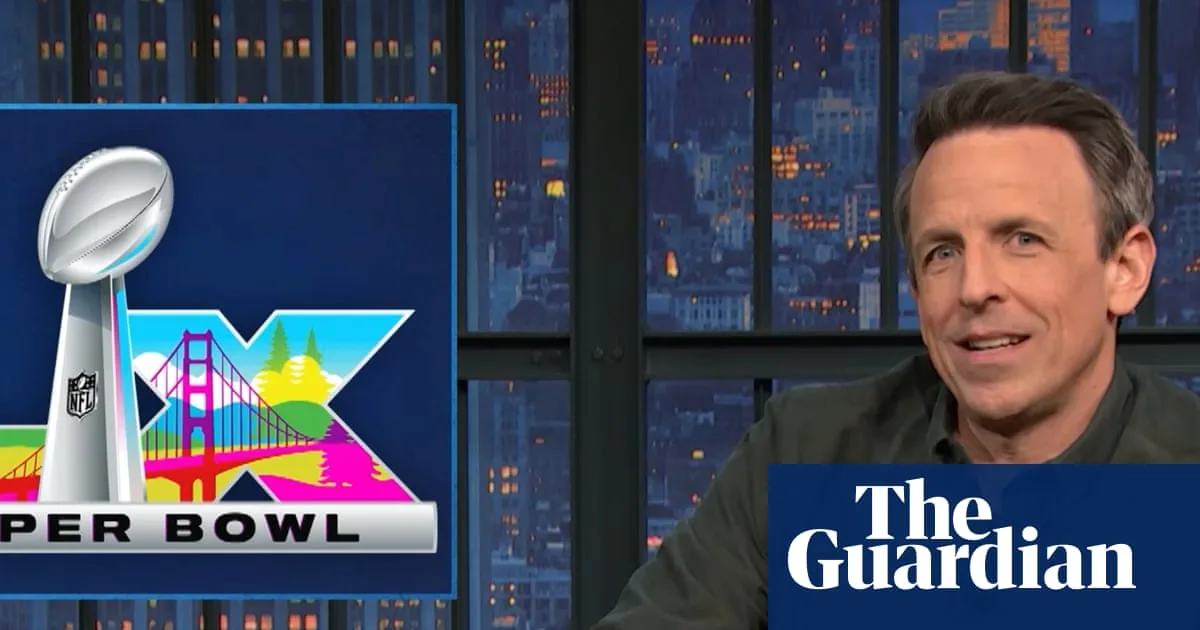
Late-night hosts have taken aim at Donald Trump's decision to skip the Super Bowl, with Seth Meyers suggesting the real reason is fear of being booed. Trump claimed he would not attend because the game is in Santa Clara, California, which he said is 'too far away', despite having his own plane. Meyers noted Trump attended last year's Super Bowl and has travelled extensively, questioning the excuse.
'Of course Trump is worried about getting booed,' Meyers said, pointing to Trump's low approval ratings and his party's electoral struggles. He showed a clip of Trump being loudly booed at an NFL game in November.
On the Late Show, Stephen Colbert mocked Trump's attempts to move on from the Epstein files. Trump said it was 'time for the country to get on to something else' after nothing emerged about him, but Colbert retorted: 'You're on like 5,000 of the pages.' Colbert also criticised Trump's attack on CNN's Kaitlan Collins, calling it 'disgusting and misogynistic'.
Jimmy Kimmel focused on the Melania documentary, which earned $7m against a $75 budget. He cited reports that blocks of tickets were bought and distributed to Republican activists and senior citizens. The film has a 5% Rotten Tomatoes score, with Kimmel joking that the 99% audience score was suspiciously high.