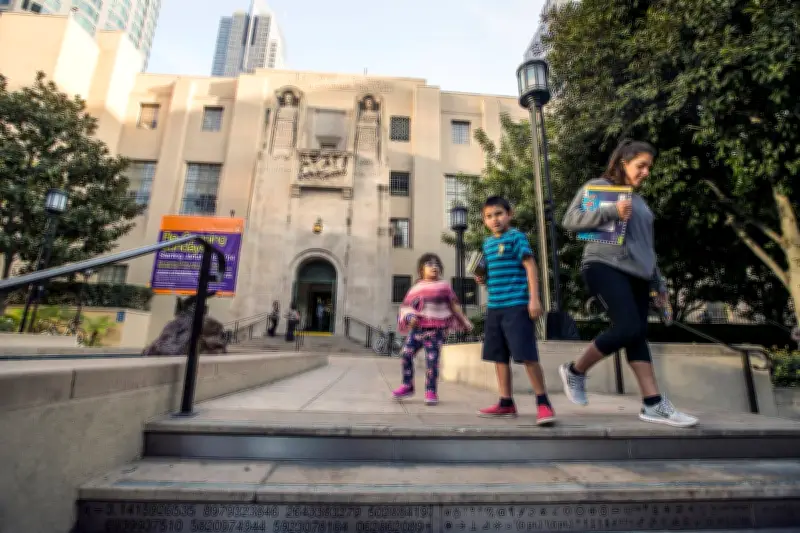
The Los Angeles Central Library, an architectural masterpiece blending Spanish, Egyptian, Byzantine, and Islamic influences, celebrated its 100th anniversary this week with an estimated 12,000 visitors flooding its corridors, rotunda, and gardens. The library, which opened in 1926 and houses nearly 3 million books across 89 miles of shelves, remains a vital public institution in downtown Los Angeles.
A Century of History and Hollywood
The library has served as a backdrop for iconic films and television shows, including the street battle in Heat and the first ghost encounter in Ghostbusters. TV series such as Moonlighting, Murder, She Wrote, and LA Law also filmed there. However, darker moments include a visit from serial killer Richard Ramirez in 1985, who asked for books on astrology and torture, and a 1986 arson that destroyed 400,000 volumes, shutting the library for seven years.
Design and Architecture
Designed by architect Bertram Goodhue, the library features a central rotunda with Dean Cornwell's murals of California history and a Zodiac chandelier. The building's exterior includes a colored mosaic pyramid topped with a torch symbolizing learning, and two black-gold sphinxes. Stephen Gee, author of Los Angeles Central Library: A History of Its Art and Architecture, described it as "one of the city's great civic spaces, a place that's used, loved, and valued every single day."
Centennial Celebrations
Highlights of the centennial included a vintage injection-mold vending machine called "Mold-A-Central," producing replica wax sphinxes, and a 31-by-20-foot pop-up book titled Luceros y Penumbras by Daniel González, weighing 1,800 pounds. Patrons typed poems on vintage typewriters using old catalogue cards. Senior librarian Christina Rice noted that the library remains relevant, offering services for job hunters, citizenship seekers, and literacy assistance. The Octavia lab provides 3D printing and other technologies, named after science fiction author Octavia Butler.
Community Impact
During the celebration, 588 people were issued new library cards. Kelly Wallace, California history specialist, observed that "Los Angeles has come of age in terms of taking an interest in its own history." The library's continued importance was underscored by its role as a welcoming space for all, regardless of background.