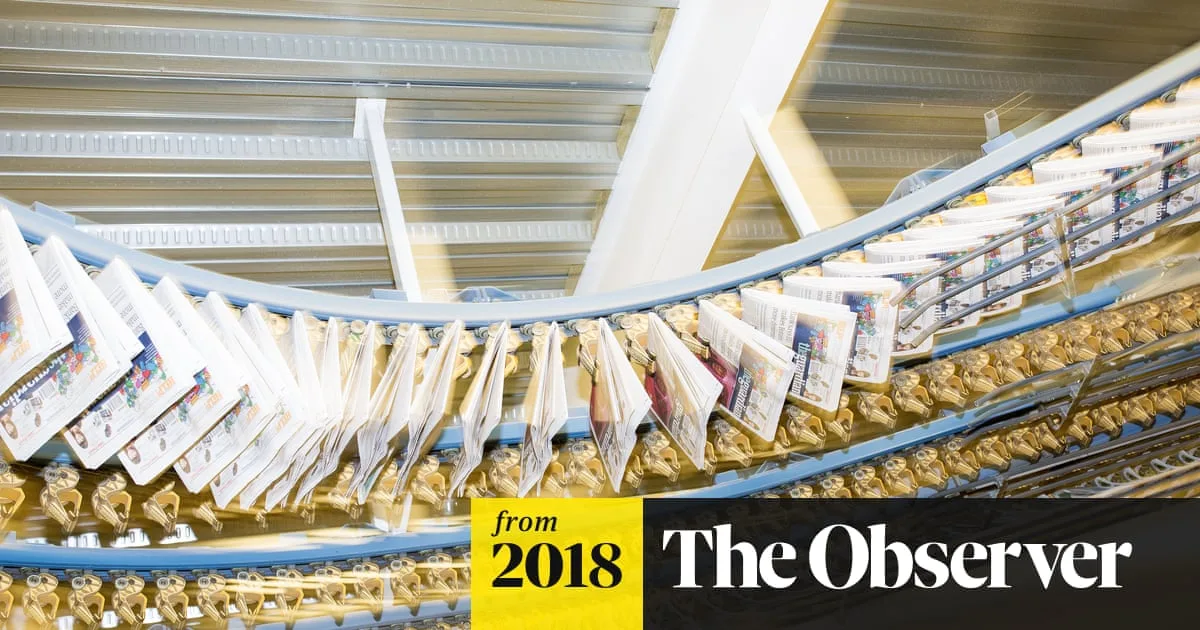
Alan Rusbridger's memoir 'Breaking News: The Remaking of Journalism and Why It Matters Now' offers a compelling account of his two decades as editor-in-chief of the Guardian, from 1995 to 2015. The book, reviewed by a former editor of the Sunday Times and The Times, traces Rusbridger's journey from a cub reporter at the Cambridge Evening News in the mid-1970s to leading the Guardian's transformation into a 24/7 digital news operation that overtook the New York Times as the largest serious English-language newspaper in the world.
The review highlights Rusbridger's central mission: defending traditional journalistic standards while embracing the chaotic world of social media. The book is described as three works in one: a personal memoir, an account of the Guardian's digital reinvention, and a penetrating analysis of social media's corruptions. Rusbridger grapples with how traditional media can survive in a post-truth era, where verifiable facts compete with rumour and falsehoods on backlit screens.
Rusbridger's early career included a stint as a TV critic for this newspaper, following Clive James and Julian Barnes, but he found the role unsuited to his temperament. His real passion lay in the internet, which he explored with then-editor Peter Preston and a team of technocrats in the Guardian's Product Development Unit. Preston's decision to step down after 20 years paved the way for Rusbridger, at 41, to become editor with a mission to prioritise digital and boost investigative reporting without a paywall.
The book's standout achievement is the Guardian's exposure of phone hacking by News Corp, a criminal conspiracy at the heart of Rupert Murdoch's media empire. Rusbridger and reporter Nick Davies faced threats, smears, spying, and police subornation during the investigation, which the reviewer describes as a classic of investigative journalism. The narrative leaves the reader newly sickened by the hostility they endured.
Rusbridger's memoir also touches on lighter moments, such as a reader bringing in a potato resembling Winston Churchill to the Cambridge Evening News, and a dog that befriended an owl. Yet the book's core is a serious examination of journalism's evolution, from hot metal to digital, and the challenges of maintaining integrity in a fragmented media landscape.